
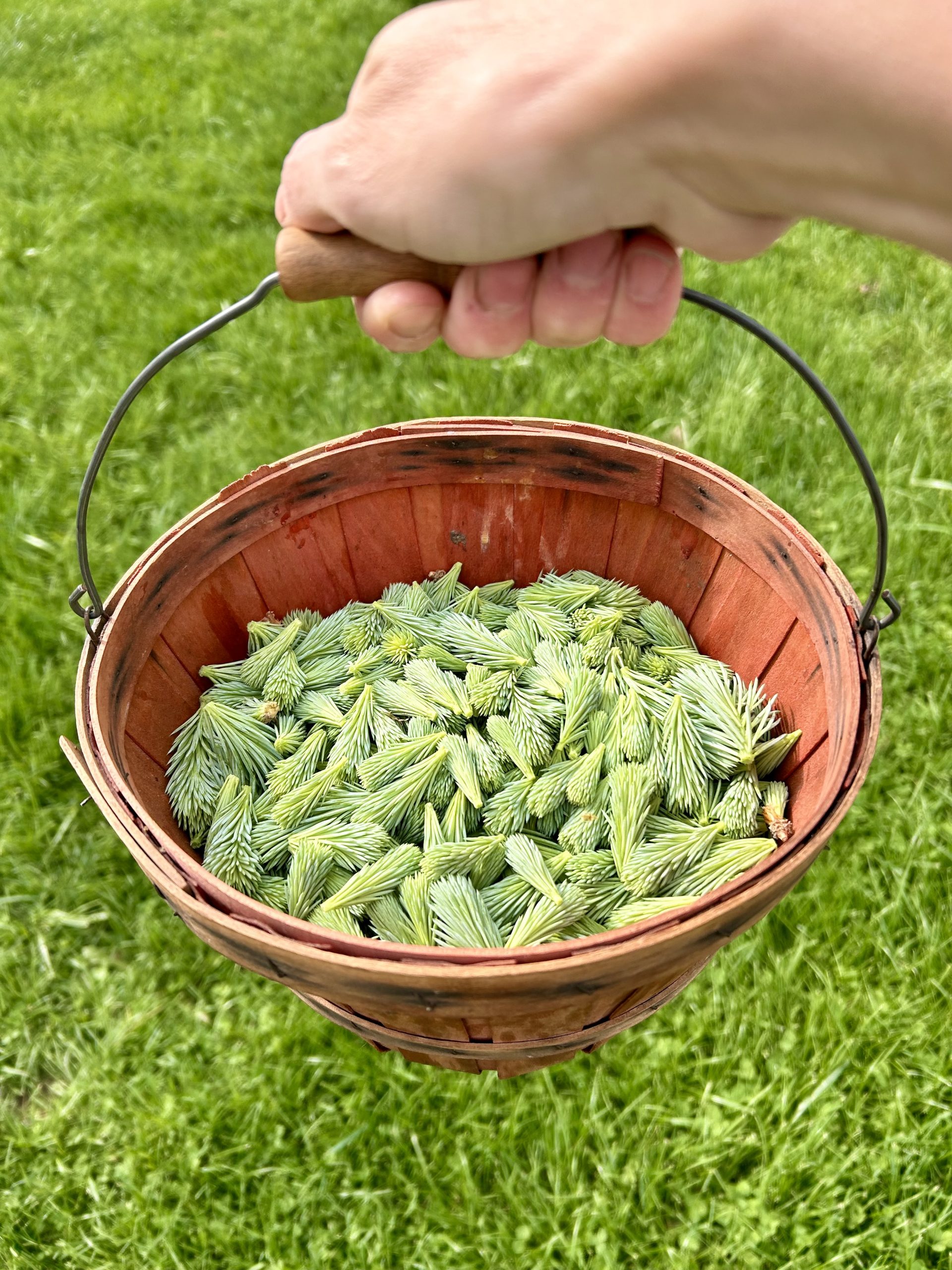
Spruce Tips
Disclosure: This post may contain affiliate links. Learn more here.
Spruce tips arrive quietly each spring—soft, bright green growth at the ends of evergreen branches, signaling a brief window of nourishment and renewal. These tender tips from trees in the Picea genus have long been used in traditional practices as both food and medicine, offering a gentle yet powerful way to support the body after winter.
What Are Spruce Tips?
Spruce tips are the newly emerging growth on spruce trees, typically appearing in early to mid-spring. At this stage, they are soft, citrusy, and resinous, lacking the sharp bitterness of mature needles. Their flavor is often compared to lemon with subtle pine notes, making them both enjoyable and versatile.
Herbal Energetics
In traditional Western herbalism, spruce tips can be understood through their energetic qualities:
- Temperature: Warming
- Moisture: Slightly drying
- Taste: Sour, aromatic, mildly bitter
- Tissue State: Stimulating to stagnant, damp conditions
Spruce tips gently warm the body while helping to move stagnation—particularly in the respiratory system. Their slight dryness makes them helpful in situations of excess mucus or dampness.
Medicinal Actions
Tips of spruce offer a variety of supportive actions:
- Expectorant – helps loosen and expel mucus from the lungs
- Antimicrobial – supports the body in resisting unwanted microbes
- Anti-inflammatory – soothes irritated tissues
- Antioxidant – protects against oxidative stress
- Circulatory stimulant – encourages movement of blood and energy
- Vitamin-rich tonic – especially high in vitamin C
How Fresh Spruce Tips Support the Body
Spring is often a time when the body is clearing out the heaviness of winter—lingering congestion, sluggish digestion, and low energy. Spruce tips meet the body here.
Their high vitamin C content supports immune resilience and helps replenish depleted nutrient stores. Their aromatic resins open the дыхательные passages, making them particularly useful for coughs, chest congestion, and sinus pressure.
Spruce tips also gently stimulate circulation, bringing warmth to cold, stagnant conditions. This can be especially supportive when you feel weighed down, foggy, or slow to transition into the energy of spring.
There is also a subtle uplifting quality to spruce—many find its scent and taste clarifying to the mind, helping to cut through mental heaviness.
Tip: Freezing herbs using a resealable Ziplock bag for later use is one of the most effective ways to preserve it until you're ready to use it!
How to Harvest Spruce Tips
Harvesting spruce tips is one of the simplest and most rewarding spring foraging tasks. It’s best done in early spring when the new growth is still soft, bright green, and tender to the touch. This stage is short-lived, so timing matters.
Look for the fresh “candles” at the ends of spruce branches. They should feel soft and flexible, not hardened or fully extended. Gently pinch or snip the tender tips off the ends of branches, taking care not to remove too much from any single tree. A light, respectful harvest helps ensure the tree continues to thrive and grow.
Choose trees growing in clean, unpolluted areas away from roadways or chemical exposure. As always, proper identification is important—only harvest from true spruce (Picea species), not look-alike evergreens.
Take only what you need and leave plenty behind. Spruce tips are one of those gifts that should be gathered lightly and with intention, allowing the forest to continue its own rhythm of growth.
Supplies Needed for Harvesting Spruce Tips
- Small basket or breathable foraging bag
- Sharp scissors or small garden snips (optional but helpful)
- Gloves (optional for resin sensitivity)
- Field guide or plant identification app for confirmation
- Long sleeves/pants if harvesting in dense woods or brush
- Clean jar or container if processing immediately in the field
Ways to Use Spruce Tips Medicinally
1. Spruce Tip Tea
A simple infusion highlights their respiratory benefits.
- Add a small handful of fresh spruce tips to hot water
- Cover and steep for 10–15 minutes
- Drink warm to soothe the throat and lungs
This is especially helpful during seasonal transitions or at the first sign of respiratory discomfort.
2. Spruce Tip Syrup
A traditional preparation for coughs and sore throats.
- Layer fresh spruce tips with sugar or honey
- Allow to macerate over time until a syrup forms
- Strain and store
This creates a soothing, shelf-stable remedy that children often enjoy.
3. Spruce Tip Oxymel
Combining vinegar and honey extracts both mineral and aromatic qualities.
- Fill a jar with fresh herb material
- Cover with equal parts raw honey and apple cider vinegar
- Let infuse for 2–4 weeks, then strain
Take by the spoonful for immune and respiratory support.
4. Infused Honey
A gentler version of syrup.
- Cover fresh tips with raw honey
- Let sit for several weeks
- Strain or leave as is
Perfect stirred into tea or taken straight for throat support.
5. Steam Inhalation
Helpful for congestion and sinus pressure.
- Add fresh tips to a bowl of hot water
- Cover your head and inhale the steam
The volatile oils help open the дыхательные passages and ease breathing.
6. Spruce Tip Salve or Oil
For external use on sore muscles or chest rubs.
- Infuse fresh tips in oil over low heat or time
- Strain and use as-is or turn into a salve
The warming, stimulating nature supports circulation and comfort.
7. Spruce Tip Tincture
If you’re wanting to preserve spruce tips beyond their short spring window, learning how to make a tincture is a simple and practical next step. Tinctures allow you to capture the fresh, aromatic qualities of this herb in a shelf-stable form, making it easy to keep this seasonal plant on hand for months to come.
Safety & Precautions of Spruce Tips
Spruce tips are generally considered safe when used appropriately, but there are important considerations:
- Not for use during pregnancy:
Spruce tips contain volatile oils and stimulating compounds that are not recommended during pregnancy. It is best to avoid internal use entirely during this time. - Proper identification is essential:
Ensure you are harvesting true spruce (Picea species). Some evergreens, such as yew, are toxic. - Use in moderation:
Their potency means small amounts are effective. Overuse may irritate sensitive individuals. - Allergies or sensitivities:
Those sensitive to conifers should use caution. - Medical conditions or medications:
Consult a qualified healthcare provider if unsure, especially for internal use.
A Closing Note on Spruce Tips
Spruce tips remind us that nourishment often comes right when we need it most. After a long winter, they offer brightness—both in flavor and in function—supporting the lungs, the immune system, and the gentle awakening of the body into a new season.
Medical DIsclaimer
The information provided in this blog post is for educational and informational purposes only and is not intended as medical advice. I am not a licensed healthcare professional, and the content shared on this website is not a substitute for professional medical guidance, diagnosis, or treatment.
Always consult a qualified healthcare provider before making any changes to your health regimen, especially if you are pregnant, nursing, taking medications, or have any existing health conditions. Do not disregard medical advice or delay seeking it because of something you have read on this website.
Herbal remedies and natural wellness practices can support the body, but they are not one-size-fits-all. Every individual is unique, and what works for one person may not be suitable for another.
While I strive to share accurate, up-to-date, and well-researched herbal knowledge based on traditional and modern sources, I make no guarantees regarding the results you may experience.
By using this blog and engaging with its content, you acknowledge that you do so at your own risk. I am not responsible for any adverse effects or consequences resulting from the use or misuse of any information provided here.
