
Elderberry
Disclosure: This post may contain affiliate links. Learn more here.
Elderberry syrup is one of the first herbal remedies I ever attempted to make for my family. My oldest son was only five months old when he developed a head cold. As a new mother trying to learn traditional skills and care for my family naturally whenever appropriate, I found myself searching for information about herbs and homemade remedies. After watching several videos, I eventually settled on an elderberry syrup tutorial by Amy Fewell of The Fewell Homestead.
I remember standing in my kitchen, carefully measuring ingredients and hoping I was doing everything correctly. To my surprise, the syrup turned out beautifully. Even better, my son loved the taste. If given the opportunity, he would happily drink elderberry syrup every day.
What started as a single batch of homemade syrup eventually opened the door to learning about herbalism, foraging, preserving food and medicine, and building a home apothecary from the plants growing around us.
Today, elderberry remains one of my favorite herbs to work with. Although we have elderberry bushes planted on our homestead, they are still young and not yet producing heavily. Until then, I continue to forage elderberries from country fence rows throughout rural Indiana. My children now help harvest both the flowers and berries each season, making elderberry a plant that has become woven into our family's yearly rhythm.
For many homesteaders, elderberry is often one of the first herbs they learn to identify, harvest, and preserve. It is easy to recognize once you know what to look for, grows abundantly throughout many parts of the United States, and can be transformed into syrups, teas, tinctures, infused honey, and other preparations for the home apothecary.
Botanical Overview
Elderberry (Sambucus nigra) is a deciduous shrub belonging to the Adoxaceae family. It has a long history of use throughout Europe and remains one of the most recognized herbs in traditional folk herbalism today.
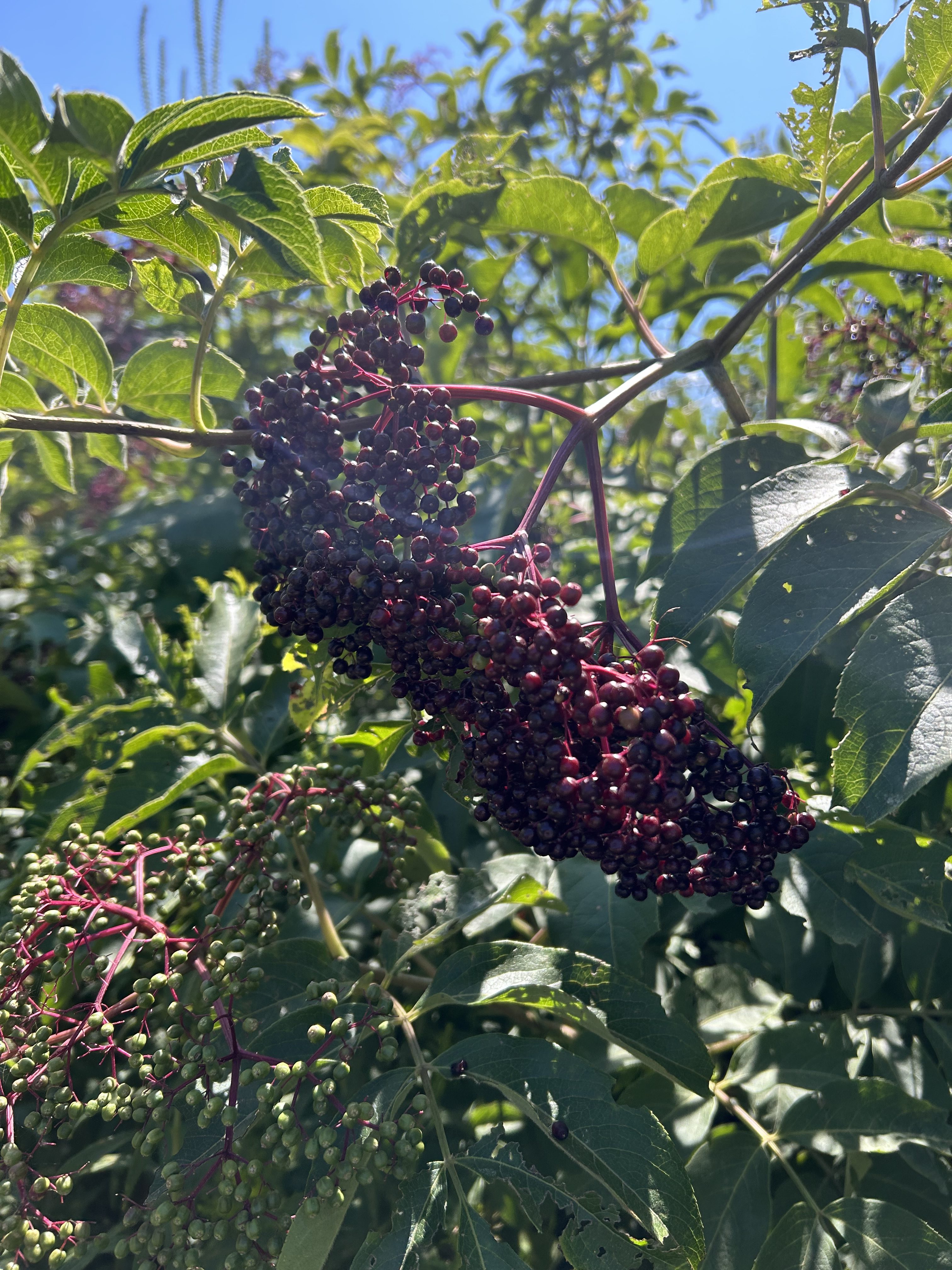
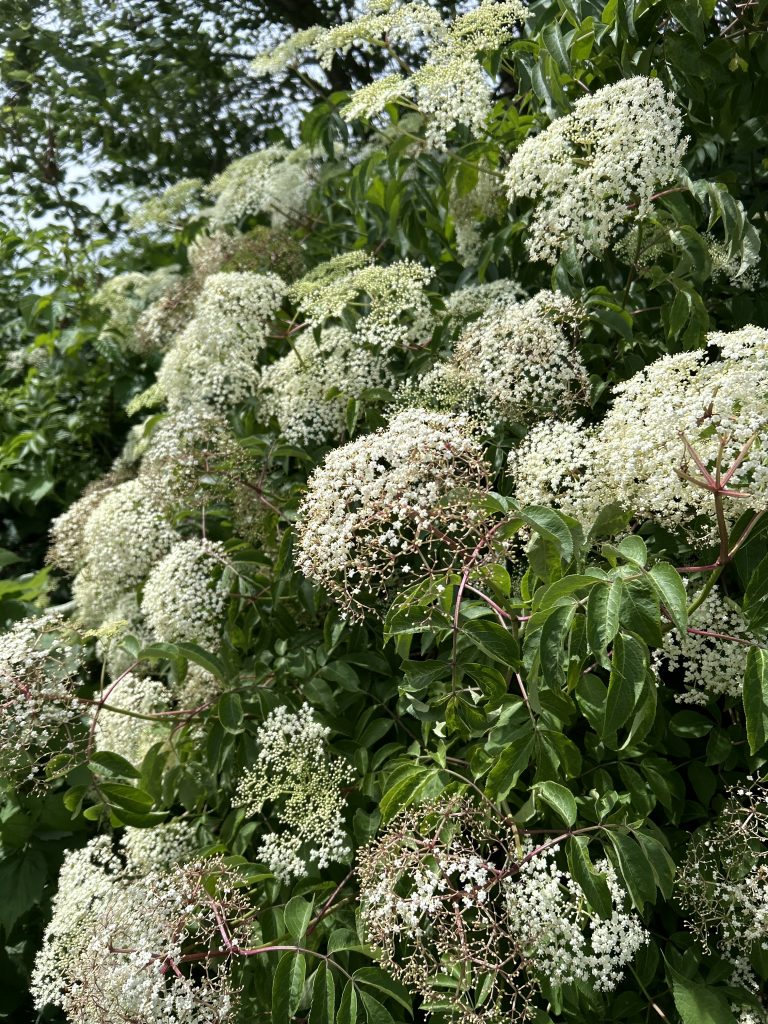
In late spring and early summer, elderberry produces large clusters of creamy white flowers known as elderflowers. These blossoms eventually develop into clusters of deep purple-black berries that ripen later in the growing season. Both the flowers and berries have been valued for generations and continue to be widely used in traditional herbal preparations.
Historically, elderberry was often considered a household herb. Families harvested the flowers and berries during the growing season and preserved them for use throughout the year. Elderberry wines, syrups, cordials, teas, and preserves were common throughout many parts of Europe long before commercially produced herbal products existed.
Today, elderberry remains popular among herbalists, homesteaders, and gardeners who appreciate both its traditional uses and its versatility in the kitchen and home apothecary.
Identification and Growth Habit
Learning to identify elderberry correctly is one of the most important skills for anyone interested in harvesting this plant.
Elderberry typically grows as a large multi-stemmed shrub ranging from 6 to 20 feet tall. Mature plants often spread into dense colonies and can become quite productive once established.
The leaves grow opposite one another along the stems and are compound, meaning each leaf is made up of several individual leaflets. These leaflets are elongated with serrated edges and pointed tips.
During late spring and early summer, elderberry produces large flat-topped clusters of tiny white flowers. These flower heads can reach several inches across and are often covered in pollinators.
As the season progresses, the flowers give way to clusters of berries. The berries begin green, gradually darken, and eventually ripen to a deep purple-black color.
Natural Habitat and Growing Conditions
Elderberry thrives in areas with adequate moisture and sunlight. It is commonly found growing along:
- Country fence rows
- Creek banks
- Woodland edges
- Ditches
- Hedgerows
- Field margins
- Disturbed ground
The shrub prefers fertile, well-drained soil but adapts well to a variety of growing conditions. Once established, elderberry is generally low maintenance and can remain productive for many years.
For homesteaders interested in cultivating elderberry, the shrub grows well throughout much of the Midwest and is a valuable addition to edible landscapes, food forests, and medicinal gardens.
Herbal Energetics
In traditional herbal systems, elderberry is generally considered slightly cooling and moistening.
Elderflowers are often viewed as more cooling in nature, while the berries are considered slightly more balancing and supportive during the colder months of the year. Traditional herbalists frequently turned to elderberry during times of seasonal illness and periods when the body needed additional support.
Although herbal energetics may seem unfamiliar to beginners, they offer insight into how generations of herbalists understood and worked with plants long before modern scientific analysis became available.
Medicinal Actions and Overview
Throughout European folk traditions, elderberry earned a reputation as an herb used to support the body during seasonal challenges.
Traditional herbal texts commonly describe elderberry as:
- Immune supportive
- Respiratory supportive
- Antioxidant rich
- Alterative
- Diaphoretic
While elderberry is often associated with modern wellness products, its use stretches back hundreds of years. Historical preparations included syrups, teas, wines, cordials, tinctures, and preserves that were incorporated into everyday life.
Modern research has focused on elderberry's naturally occurring anthocyanins and flavonoids, compounds responsible for the berry's rich purple coloration. These compounds continue to generate interest among researchers and herbalists alike.
How Elderberry Supports the Body
Traditional Immune Support
Perhaps the most well-known traditional use of elderberry is its role in supporting normal immune function.
For generations, families prepared elderberry syrups and tinctures to keep on hand throughout the colder months. Because the berries ripen during late summer, they could be preserved and stored long after fresh food from the garden was no longer available.
Even today, many homesteaders make elderberry syrup as part of their annual pantry stocking routine.
Respiratory Wellness
Both elderberries and elderflowers have a long history of traditional use for supporting respiratory wellness.
Historically, herbalists often prepared teas, syrups, and other remedies from elderberry during periods of seasonal respiratory discomfort. Elderflower in particular has a long history of use in traditional European herbalism.
If you would like to learn more about elderflower, be sure to read my complete elderflower guide.
Support During Seasonal Illness
One reason elderberry has remained so popular throughout the centuries is its longstanding reputation for supporting the body during seasonal illness.
Before modern conveniences, families relied heavily on preserved foods, herbal preparations, and practical knowledge passed from one generation to the next. Elderberry became one of the plants commonly incorporated into these traditions.
Antioxidant Content
The dark purple color of elderberries comes from naturally occurring pigments known as anthocyanins.
These same compounds are also found in blueberries, blackberries, and other dark-colored fruits. Because of their naturally occurring antioxidant compounds, elderberries are often appreciated as both a traditional herb and a nutrient-rich food.
Foraging and Harvesting Elderberry
Elderberry is one of the easier shrubs for beginning foragers to learn once they become familiar with its identifying characteristics.
Because I currently harvest most of my elderberries from wild stands rather than from our young cultivated bushes, proper identification is especially important. Taking time to learn the plant throughout each stage of growth helps build confidence and reduces the likelihood of mistakes.
Recommended Equipment
Harvesting elderberries requires very little specialized equipment.
I typically bring:
- Harvest basket
- Pruning shears
- Small scissors
- Buckets or containers for berries
- Gloves (optional)
Pruning shears allow you to remove entire berry clusters quickly while minimizing damage to the plant.
Seasonal Timing
Elderflowers
Elderflowers are generally harvested from late spring through early summer when the blossoms are fully open and fragrant.
Choose flower heads that appear fresh and avoid those that have begun browning or declining.
Elderberries
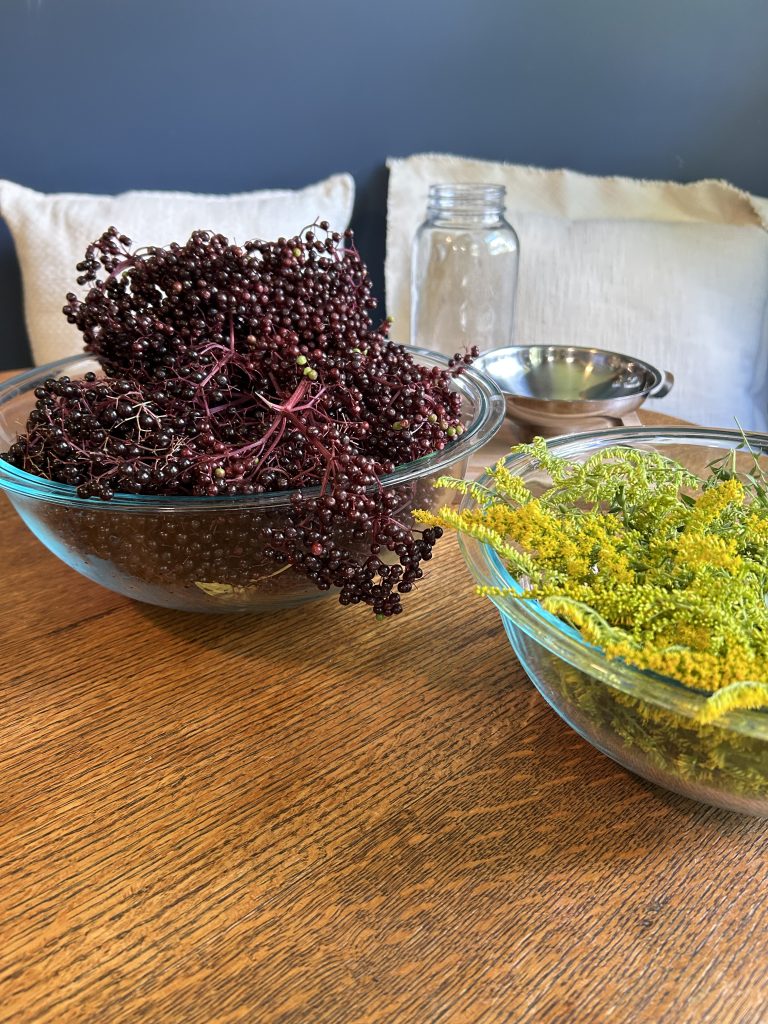
Elderberries are typically harvested from mid to late summer depending on your location and weather conditions.
Look for berries that are:
- Deep purple-black
- Fully ripe
- Slightly soft
- Easy to remove from the cluster
Avoid harvesting green berries or clusters that have not fully ripened.
Ethical Harvesting Practices
Responsible foraging helps ensure healthy elderberry populations for years to come.
When harvesting elderberry:
- Never strip an entire shrub.
- Leave berries for birds and wildlife.
- Harvest only from abundant populations.
- Avoid areas that may be contaminated by chemicals or heavy traffic.
- Respect private property.
- Take only what you can realistically use.
These simple practices help protect wild stands while allowing others to enjoy them as well.
Preservation
One of the reasons elderberry is such a practical herb for homesteaders is the number of ways it can be preserved.
Drying Elderberries
Dried elderberries store well and can be used throughout the year in teas, syrups, tinctures, and other preparations.
Drying Elderflowers
Elderflowers can be dried shortly after harvest and stored in airtight containers for future use.
Freezing
Freezing is one of the simplest methods of preservation. Fresh berries freeze well and can be used later for syrup making and other recipes.
Tinctures
Elderberries can be tinctured fresh or dried depending on your preferred method. If you're new to tincture making, be sure to read my guide on how to make a tincture.
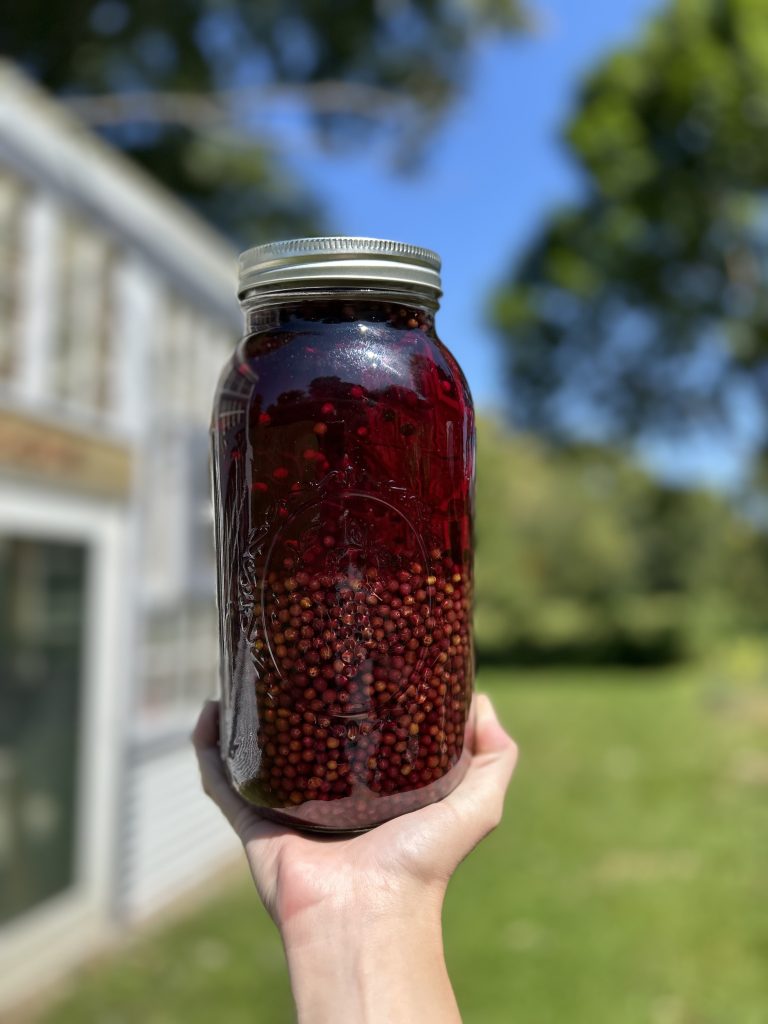
Infused Honey
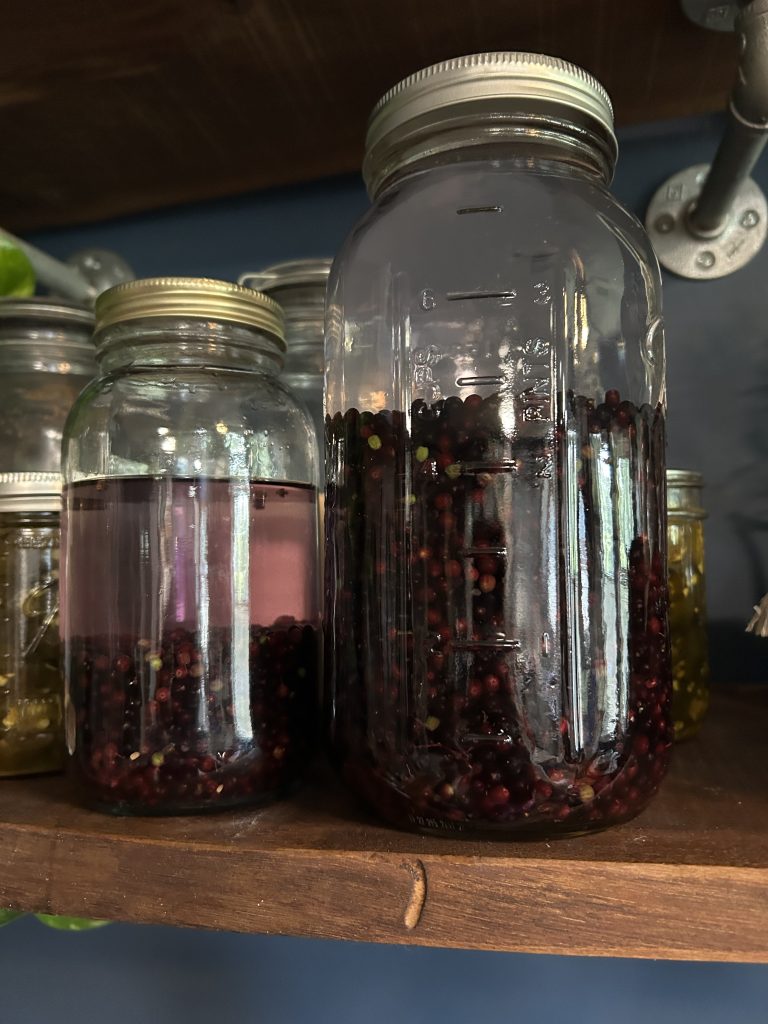
Elderberries can also be infused into honey, creating a flavorful preparation that combines two traditional pantry staples. An elderberry infused honey is currently one of the preparations I am most interested in experimenting with.
Understanding Elderberry Safety
While elderberry is a valuable herb, proper identification and preparation are essential.
Only fully ripe elderberries should be harvested and used. Green or unripe berries contain naturally occurring compounds known as cyanogenic glycosides, which may contribute to digestive upset when consumed.
The leaves, stems, roots, and bark also contain higher concentrations of these compounds and are not typically used in modern home preparations.
When processing elderberries, it is generally recommended to remove as much stem material as possible before use. While a small stem fragment occasionally making its way into a batch of syrup is unlikely to be problematic, careful preparation is considered best practice.
This is particularly important when harvesting with children. Teaching young foragers to recognize fully ripe berries and avoid consuming plant parts indiscriminately is an important part of safe foraging.
As with any wild plant, positive identification is essential before consumption. If you are new to foraging, seek guidance from an experienced forager, herbalist, or reliable field guide before harvesting elderberry on your own.
Ways to Use Elderberry Medicinally
One of the reasons elderberry has remained popular for generations is its versatility.
Elderberry Syrup
Homemade elderberry syrup remains one of the most common elderberry preparations and is often the first recipe many people learn to make. If you'd like to make your own, be sure to read my elderberry syrup recipe.
Elderberry Tincture
An elderberry tincture offers a shelf-stable way to preserve elderberries for long-term storage while taking up very little space in the apothecary.
Elderberry Tea
Dried elderberries can be brewed into tea on their own or blended with complementary herbs.
Dried Elderberries
Keeping dried elderberries in the pantry allows you to prepare teas, syrups, tinctures, and other remedies whenever needed.
Elderberry Infused Honey
Infusing elderberries into honey creates a simple preparation that combines the nedicinal benefits and flavor of elderberries with the convenience of shelf-stable honey. This preparation can be a wonderful addition to a home apothecary to add to teas during times of need.
Elderberry Jam
Elderberry jam is another practical way to preserve the harvest. It transforms a traditional herbal berry into a pantry staple that can be enjoyed on homemade bread, biscuits, and other from-scratch foods.
Conclusion
Elderberry has earned its place as one of the most recognized herbs in traditional herbalism. From its fragrant spring flowers to its dark summer berries, nearly every stage of the plant's growth offers something useful to the herbalist, homesteader, or gardener.
Whether you harvest elderberries from wild fence rows, grow your own shrubs at home, or purchase dried berries for your apothecary, learning to work with this plant is a valuable skill. Elderberry can be preserved in numerous ways, incorporated into a variety of preparations, and enjoyed as part of a well-stocked pantry and home apothecary.
For those interested in traditional herbal practices, elderberry is an excellent herb to become familiar with and one that continues to be appreciated generation after generation.
Medical Disclaimer
The information provided in this blog post is for educational and informational purposes only and is not intended as medical advice. I am not a licensed healthcare professional, and the content shared on this website is not a substitute for professional medical guidance, diagnosis, or treatment.
Always consult a qualified healthcare provider before making any changes to your health regimen. Especially if you are pregnant, nursing, taking medications, or have any existing health conditions. Do not disregard medical advice or delay seeking it because of something you have read on this website.
Herbal remedies and natural wellness practices can support the body, but they are not one-size-fits-all. Every individual is unique, and what works for one person may not be suitable for another.
While I strive to share accurate, up-to-date, and well-researched herbal knowledge based on traditional and modern sources, I make no guarantees regarding the results you may experience.
By using this blog and engaging with its content, you acknowledge that you do so at your own risk. I am not responsible for any adverse effects or consequences resulting from the use or misuse of any information provided here.
