
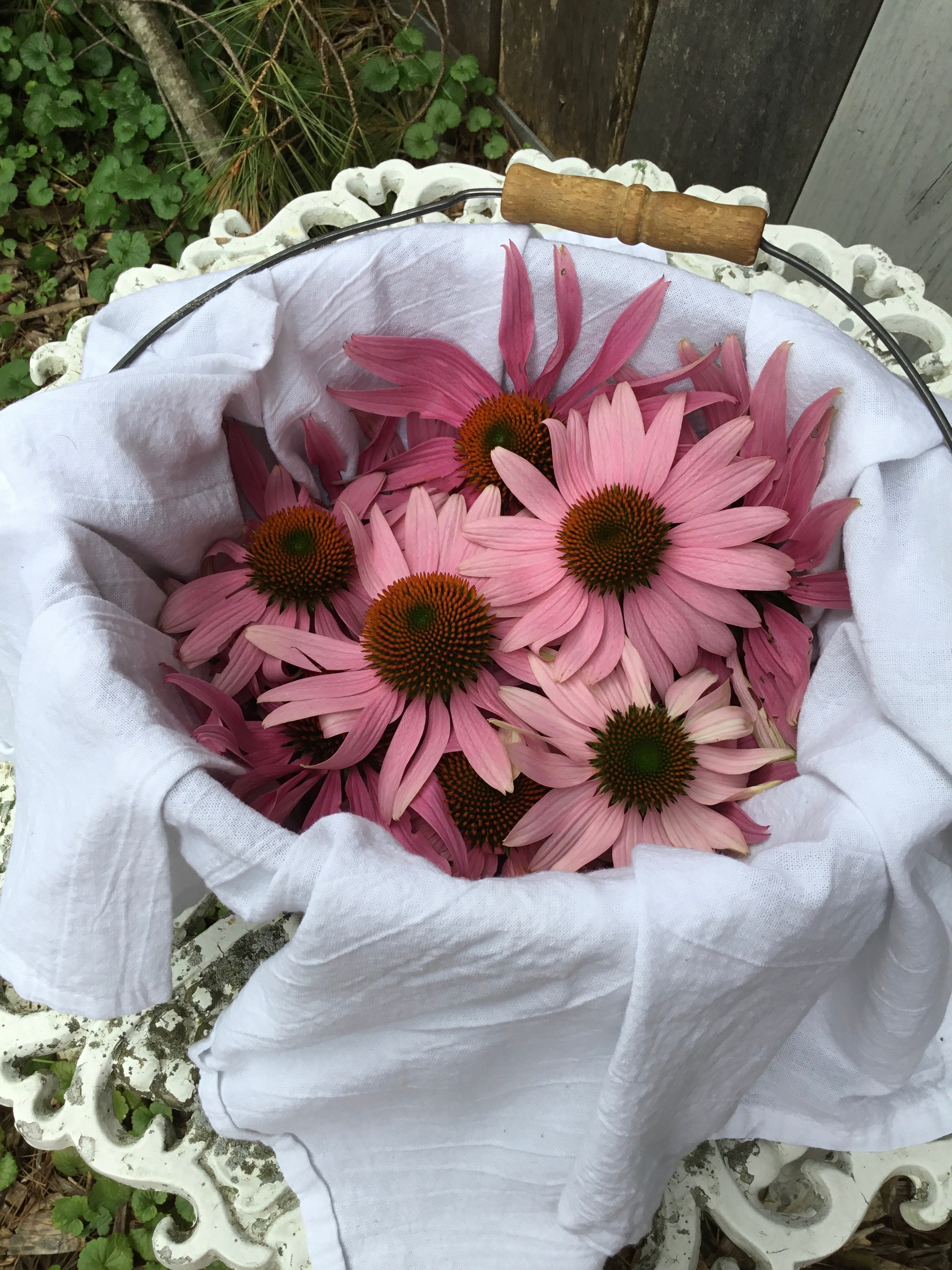
Echinacea
Disclosure: This post may contain affiliate links. Learn more here.
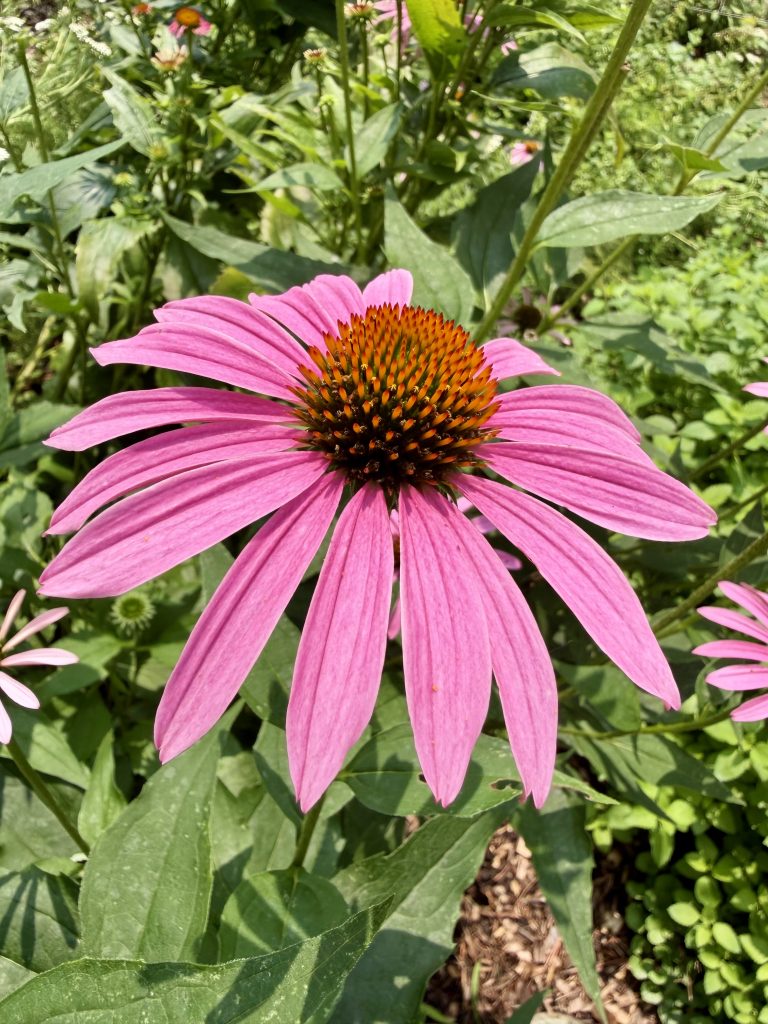
Echinacea is one of the first medicinal herbs I recommend adding to a homestead garden. It is beautiful enough to earn a place in a flower bed, productive enough to supply your home apothecary for years, and valuable enough that many gardeners find themselves reaching for it season after season.
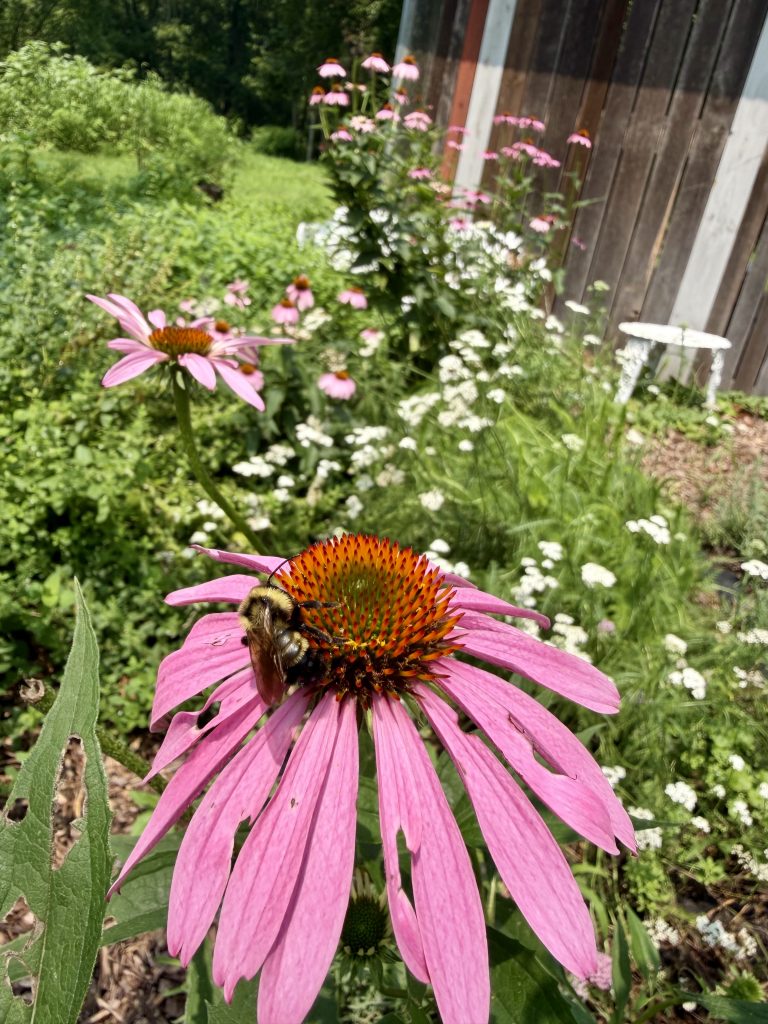
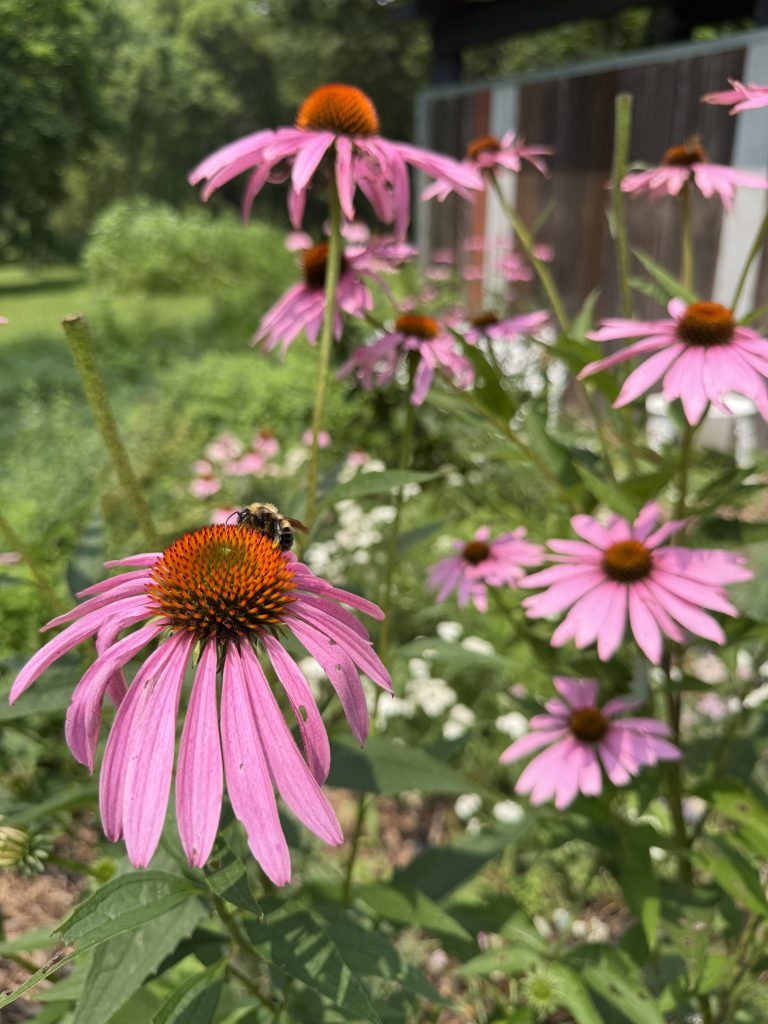
Every year, I start my own echinacea from seed alongside the rest of my medicinal garden. I enjoy watching tiny seedlings mature into hardy perennial plants that serve more than one purpose on our homestead. Throughout the summer, their vibrant blooms find their way into fresh-cut flower bouquets while honey bees and countless native pollinators visit the blossoms from morning until evening.
My children rarely walk past the flowers without asking if they can pick one. We often stop to watch the bees work from bloom to bloom, and I never tire of seeing the garden buzzing with life. Even after the flowers fade, I leave many of the seed heads standing through the winter so birds and squirrels have another food source during the colder months.
I first learned about growing and using echinacea through Elizabeth Peck's Home School Herbs course and by studying Rosemary Gladstar's book Medicinal Herbs: A Beginner's Guide. Since then, I've appreciated knowing exactly how my plants are grown because I know what goes into my soil—and just as importantly, what doesn't. While wild echinacea can occasionally be found growing along roadsides, fields, and ditches, I choose not to harvest those plants unless I know they haven't been exposed to herbicides, road salt, oil, fuel, rubber residue, or other contaminants.
For several years I've enjoyed harvesting the flowers for tea, but this season my plants have finally reached the point where they'll provide enough roots and aerial parts to make my first batch of homemade echinacea tincture. My goal is to keep it stocked in our herbal apothecary before cold and flu season arrives.
Whether you're interested in growing medicinal herbs, creating your own herbal remedies, attracting pollinators, or simply adding another beautiful perennial to your garden, echinacea is well worth learning about.
Botanical Overview
Common names: Echinacea, Purple Coneflower
Botanical genus: Echinacea
Most commonly cultivated species:
- Echinacea purpurea
- Echinacea angustifolia
- Echinacea pallida
Plant family: Asteraceae (Daisy Family)
Although most gardeners simply refer to the plant as "echinacea," the genus contains several species native to North America. Each species has a history of traditional use, but Echinacea purpurea remains the most common choice for home gardens because it establishes easily, produces abundant flowers, and grows well from seed.
The name Echinacea comes from the Greek word echinos, meaning "hedgehog" or "sea urchin." Once you've looked closely at the distinctive spiny center cone of the flower, the name makes perfect sense.
Unlike many herbs commonly found in American gardens, echinacea is native to the United States and parts of southern Canada. Long before it appeared in seed catalogs or herbal books, Indigenous peoples throughout North America developed extensive traditional knowledge surrounding the plant. Various tribes, including the Lakota, Cheyenne, Kiowa, Pawnee, Comanche, and others, valued different species of echinacea and prepared the roots, leaves, flowers, and seeds in a variety of ways depending on their traditions and intended use.
During the late nineteenth and early twentieth centuries, echinacea gained widespread recognition among Eclectic physicians, a group of American medical practitioners who emphasized the therapeutic use of botanical medicines. They documented its traditional applications extensively, helping establish echinacea as one of the best-known medicinal herbs in North America.
Today, echinacea remains one of the most widely researched medicinal herbs available. While modern research continues to explore its constituents and potential biological activity, many homesteaders still appreciate it for the same practical reasons generations before them did: it's beautiful, dependable, perennial, and easy to grow at home.
Identification and Growth Habit
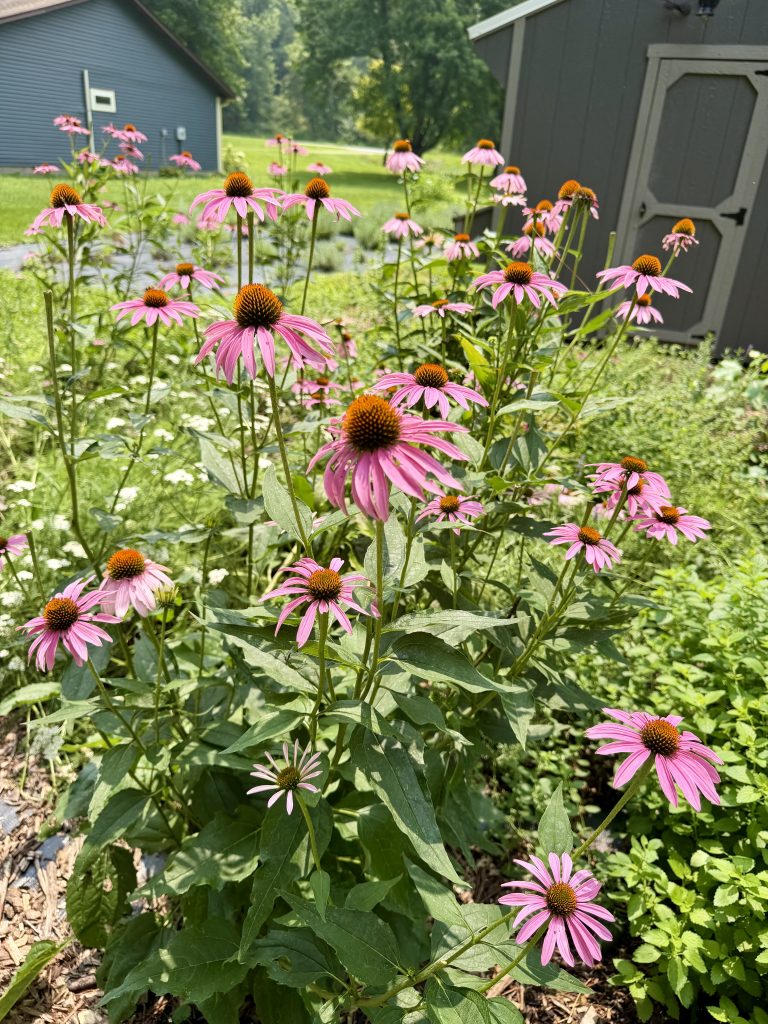
Echinacea is an upright herbaceous perennial that typically grows between 2 and 5 feet tall, depending on the species and growing conditions. Mature plants develop sturdy stems that emerge from a fibrous crown each spring before producing large daisy-like flowers throughout the summer.
One of the reasons I enjoy growing echinacea is because it offers beauty over such a long season. The plants begin filling out in late spring, bloom repeatedly throughout much of the summer with regular harvesting, and continue providing visual interest well into winter after the flowers have gone to seed.
Leaves
The leaves vary somewhat among species.
Echinacea purpurea produces broad, rough-textured, deep green leaves with noticeable veins and coarse margins. Lower leaves are generally larger and attached by longer stems, while upper leaves become progressively smaller as they climb the flowering stalk.
The foliage feels slightly rough or sandpaper-like due to tiny hairs covering the surface.
Flowers
The flowers are unmistakable.
Each bloom consists of drooping petals surrounding a raised, spiny central cone that gradually enlarges as the flower matures. Most wild and traditional varieties display shades of purple to pink, although modern ornamental cultivars are available in white, yellow, orange, red, and even green.
For medicinal purposes, many herbalists prefer the straight species rather than highly hybridized ornamental cultivars because the traditional medicinal literature is based primarily on those original species.
Individual flowers often measure 3 to 5 inches across and continue attracting bees, butterflies, beneficial insects, and other pollinators throughout the flowering season.
Seeds
As the petals fade, the central cone hardens and dries.
Each cone contains dozens of individual seeds that can be collected for future planting or left in the garden for goldfinches and other seed-eating birds throughout fall and winter.
If you're hoping for volunteer seedlings, allow a few seed heads to remain on the plants until they naturally shatter.
Root System
While the flowers receive most of the attention, the roots are traditionally considered one of the most valuable parts of the plant.
Echinacea purpurea develops a fibrous root system that gradually expands as the plant matures. Other species, particularly Echinacea angustifolia, produce a more pronounced taproot. Because harvesting roots removes the plant, many gardeners dedicate a separate bed specifically for medicinal harvest while allowing other plants to remain as permanent landscape specimens.
Similar Plants
Several ornamental coneflowers resemble echinacea, particularly newer hybrid cultivars. Black-eyed Susan (Rudbeckiaspp.) also belongs to the daisy family and may appear similar at first glance, but its dark center cone, yellow petals, and different leaf structure make it relatively easy to distinguish.
When harvesting wild plants, positive identification is essential. Never rely solely on flower color or a plant identification app. Learn the complete identifying characteristics—including leaves, stems, roots, habitat, and growth habit—before harvesting any wild medicinal plant.
Natural Habitat
Echinacea is native to the central and eastern regions of North America, where it grows naturally across open prairies, meadows, grasslands, and lightly wooded areas.
These native prairie ecosystems shaped the plant into the hardy perennial we know today. Deep root systems allow many species to tolerate periods of drought, while sturdy stems withstand summer heat and wind remarkably well.
Although wild populations still exist, they have declined in some areas because of habitat loss and overharvesting. For that reason, many herbalists encourage growing your own whenever possible instead of relying on wild harvests.
Growing Conditions
One of the reasons echinacea has become a favorite among homesteaders is because it asks very little once established. Unlike annual herbs that require replanting every spring, echinacea is a hardy perennial that returns year after year with minimal maintenance. A healthy planting can continue producing flowers for many years, making it a worthwhile investment for both the medicinal garden and the flower garden.
USDA Hardiness Zones: 3–9
Sunlight: Full sun is ideal. Aim for at least six to eight hours of direct sunlight each day. While plants will tolerate partial shade, fewer blooms and weaker stems often result.
Soil: Echinacea prefers well-drained soil with moderate fertility. Heavy clay soils can be amended with compost to improve drainage, while overly rich soils may encourage lush foliage at the expense of flowers.
Moisture: Keep young seedlings evenly watered while they establish. Once mature, echinacea becomes remarkably drought tolerant thanks to its extensive root system. During prolonged dry periods, occasional deep watering encourages healthy growth, but consistently wet soil should be avoided.
Spacing: Space plants approximately 18 to 24 inches apart to allow for good airflow and mature growth. Proper spacing also helps reduce humidity around the foliage, minimizing the likelihood of fungal issues.
Starting from Seed
Like many perennials, echinacea requires a bit of patience. Seeds often benefit from cold stratification before germination. In nature, this occurs naturally as seeds overwinter in the soil. Gardeners can mimic this process by refrigerating seeds in a slightly damp medium for several weeks before sowing or by winter sowing outdoors.
I start all of my echinacea from seed. Although the plants take longer to reach maturity than many annual flowers, I appreciate watching them establish into productive perennial clumps that return larger each year. By the third season, many plants are producing enough flowers to enjoy fresh bouquets while still supplying the herbal apothecary.
Maintenance
Deadheading spent blooms encourages additional flowering throughout the growing season if your goal is maximum flower production. However, resist the temptation to remove every flower. Leaving some seed heads standing provides winter food for birds while allowing beneficial insects to complete their life cycles.
Divide mature clumps every three to five years if plants become crowded or flowering begins to decline.
Herbal Energetics
Traditional Western herbalism often describes herbs according to their energetic qualities. While modern science generally focuses on measurable plant constituents, herbal energetics offers another way of understanding how herbs have historically been selected and combined.
If you're new to herbal energetics, think of it as a traditional framework rather than a scientific measurement.
Echinacea is generally considered:
- Temperature: Slightly cooling to neutral
- Moisture: Drying
- Taste: Pungent, slightly bitter, tingling
- Primary tissues: Mucous membranes, lymphatic tissues, skin
One of echinacea's most recognizable characteristics is the tingling sensation it produces when fresh root or tincture is placed on the tongue. Herbalists have long viewed this sensation as one of the plant's identifying features.
Traditional herbalists often selected echinacea during times when the body appeared sluggish or overwhelmed by seasonal illness. Rather than viewing it as an herb intended for everyday, long-term use, many herbal traditions reserved echinacea for periods when additional support seemed appropriate.
Its drying energetic quality also explains why many herbalists pair echinacea with more moistening herbs when preparing teas or tincture formulas, creating more balanced herbal preparations.
As with all energetic systems, individual herbalists may interpret these qualities somewhat differently depending on their training and tradition.
Medicinal Actions and Overview
For well over a century, echinacea has remained one of North America's most recognized medicinal herbs. While many people immediately associate it with cold and flu season, its traditional uses extend far beyond winter wellness.
Historically, Indigenous peoples throughout North America prepared echinacea using fresh and dried roots, leaves, flowers, and seeds. Different tribes developed their own preparations and applications, passing this knowledge from one generation to the next. Later, Eclectic physicians incorporated many of these observations into American botanical medicine during the late nineteenth and early twentieth centuries.
Today, herbalists continue to value echinacea for many of the same traditional reasons while researchers investigate the plant's unique phytochemicals, including alkylamides, caffeic acid derivatives such as cichoric acid, polysaccharides, flavonoids, and essential oils.
Traditional Herbal Actions
Historically, herbalists have described echinacea using actions such as:
- Alterative
- Immune-supportive
- Lymphatic
- Antimicrobial (traditional herbal action)
- Anti-inflammatory (traditional herbal action)
- Vulnerary
- Sialagogue
- Diaphoretic
These traditional actions describe how herbalists have historically categorized the herb rather than guaranteed physiological effects.
Modern researchers continue studying echinacea to better understand how its many naturally occurring compounds interact with the body's immune system and inflammatory pathways. Although numerous studies exist, results remain mixed because different studies evaluate different species, plant parts, extraction methods, and preparation techniques.
For that reason, it's important to distinguish traditional herbal practice from scientific conclusions. Many homesteaders continue growing echinacea because of its long history of traditional use while recognizing that ongoing research continues to develop our understanding of the plant.
How Echinacea Supports the Body
Rather than viewing echinacea as a remedy for one specific concern, traditional herbalists have historically considered it a broad-support herb that interacts with multiple body systems. Different preparations and different plant parts have been used depending on the intended purpose.
Immune System
When most people think of echinacea, immune support immediately comes to mind.
For generations, Indigenous communities and later American herbalists traditionally reached for echinacea during seasonal illnesses, particularly during cold and flu season. Today, many families continue that tradition by keeping echinacea tea or tincture stocked in their home apothecaries throughout the winter months.
Modern research continues investigating how compounds naturally present in echinacea may interact with components of the immune system. Researchers have explored the activity of alkylamides, polysaccharides, and other constituents, although study results vary depending on the species used and the preparation evaluated.
Many herbalists traditionally recommend beginning echinacea at the first signs of seasonal illness rather than using it continuously throughout the year, although practices differ among herbal traditions.
Respiratory System
Traditional Western herbalists have also incorporated echinacea into formulas intended to support the respiratory system during seasonal discomforts.
Historically, it has often been paired with herbs such as elderberry, thyme, peppermint, yarrow, or mullein depending on the desired preparation and the herbalist's preferred tradition.
Warm teas, tinctures, syrups, and oxymels have all been used as traditional methods of preparation.
Rather than relying on echinacea alone, many herbalists prefer combining multiple herbs whose traditional actions complement one another, creating balanced seasonal formulas that address a variety of supportive roles.
Lymphatic System
Echinacea has a long history of traditional use as a lymphatic herb. Herbalists have historically included echinacea in formulas intended to support the body's natural cleansing and defense systems, particularly during times when seasonal illness was common.
The lymphatic system plays an important role in maintaining fluid balance and supporting immune function. Traditional herbalists often paired echinacea with other lymph-supportive herbs, such as cleavers, calendula, or red clover. They selected each combination based on the purpose of the formula and their herbal tradition.
Modern research continues to investigate the relationship between echinacea's naturally occurring compounds and immune-related activity. While research continues, many herbalists continue to value echinacea because of its long history of traditional use.
Skin
Historically, traditional practitioners valued echinacea as a vulnerary herb, meaning they used it to support the skin in traditional herbal practices.
Various echinacea preparations supported traditional external applications throughout herbal history. Practitioners often combined it with other skin-supportive plants, including calendula, plantain, and yarrow.
The roots, leaves, and flowers have all been used in traditional preparations depending on the herbal tradition and intended application.
Oral Health
Echinacea has also appeared in historical herbal practices related to the mouth and throat.
The tingling sensation associated with fresh echinacea root is one of the plant's most recognizable characteristics. Traditional herbalists have long appreciated this quality and have incorporated echinacea into seasonal herbal preparations.
Today, researchers continue exploring the plant's chemical constituents and how they may contribute to its traditional reputation.
Foraging and Harvesting Echinacea
Although echinacea grows wild in parts of North America, many herbalists and homesteaders choose to cultivate their own plants. When you grow echinacea at home, you know exactly how you cared for the soil, what amendments you added, and whether the plants came into contact with contaminants.
This is especially important when considering wild plants growing near roadsides, agricultural fields, or areas maintained by municipalities. Road runoff, vehicle emissions, herbicide drift, and chemical applications can all affect the safety and quality of wild-harvested plants.
For my own herbal garden, I prefer growing echinacea because I know how I care for my soil and exactly what I do—or do not—apply to my garden.
Recommended Equipment
If you are growing echinacea for your home apothecary, a few simple tools make harvesting easier:
- Clean garden scissors or pruning shears
- Harvest basket or breathable cloth bag
- Garden gloves
- Plant labels for identifying varieties
- Clean drying racks or screens
- Notebook for recording harvest dates and plant observations
Keeping harvest tools clean helps prevent transferring soil, plant diseases, or contaminants between plants.
Seasonal Timing
Echinacea provides several harvest opportunities throughout the growing season depending on which part of the plant you are collecting.
Flowers
The flowers are typically harvested when they are fully open and vibrant. Harvesting blooms throughout the summer encourages continued flowering and provides fresh material for bouquets while still allowing enough flowers to mature into seed heads.
Leaves and Aerial Parts
Harvest the plant's aerial parts during the active growing season before it begins directing its energy back to the roots.
Many herbalists prefer harvesting before the plant begins to decline in the fall, when the plant's energy begins shifting back toward the roots.
Roots
Harvest echinacea roots in the fall after the plants have matured for several growing seasons.Because harvesting roots removes the plant, many gardeners dedicate specific plants for root harvest while allowing others to remain as permanent perennial flowers.
When growing echinacea from seed, patience is rewarded. Allowing plants time to establish creates stronger roots and healthier perennial growth.
Ethical Harvesting Practices
Whether harvesting from your own garden or responsibly gathering from the wild, stewardship should always come first.
Good harvesting practices include:
- Never harvesting more than you need.
- Leaving enough flowers and seed heads for pollinators and wildlife.
- Allowing plants to reproduce naturally.
- Avoiding harvesting from questionable areas.
- Respecting private property and local regulations.
- Protecting native plant populations.
I intentionally leave many of my echinacea seed heads standing throughout the winter. The dried flowers continue adding structure to the garden while providing food for birds and wildlife during a season when natural resources become more limited.
Growing medicinal herbs is not only about what we take from the garden. It is also about creating spaces where plants, pollinators, wildlife, and people can thrive together.
Preservation
You can preserve echinacea in several traditional ways, depending on how you plan to use it.
Drying
Drying is one of the simplest ways to preserve herbs for long-term storage. Properly dried plant material should be stored away from heat, moisture, and direct sunlight.
Glass jars with tight-fitting lids work well for storing dried herbs, and labeling jars with the herb name and harvest date helps maintain an organized apothecary.
You can learn more about proper herb drying techniques in my article: How to Dry Herbs.
Other Traditional Preparations
Throughout herbal history, echinacea has also been included in preparations such as teas, infused vinegars, honey preparations, and seasonal herbal blends.
The preparation chosen often depends on the part of the plant being used, the herbal tradition being followed, and personal preference.
Safety Considerations
Echinacea is one of the most recognizable medicinal herbs, but familiarity should never replace careful use and proper identification.
Before harvesting or using any herb, make sure you have correctly identified the plant. This is especially important when harvesting wild plants because many species can resemble one another.
Individuals with known allergies to plants in the Asteraceae family, including ragweed, daisies, and related plants, may want to use caution with echinacea.
Anyone who is pregnant, nursing, taking medications, managing chronic health conditions, or considering echinacea for a specific health concern should consult a qualified healthcare professional before use.
When growing echinacea, cultivating your own plants is often the safest option because you can control growing conditions and avoid plants exposed to roadside pollutants, pesticides, or unknown chemicals.
Ways to Use Echinacea Medicinally
Throughout history, herbalists have prepared echinacea in several traditional forms.
Tea
Echinacea has traditionally been enjoyed as an herbal tea using various parts of the plant. Many herbalists combine it with other seasonal herbs to create balanced blends.
Tincture
Tinctures have long been used in herbal traditions as a way to preserve plants and create concentrated herbal extracts.
Many home herbalists keep echinacea tincture in their apothecaries as part of their seasonal preparations.
You can learn more about tinctures here: How to Make a Tincture.
Herbal Blends
Echinacea is commonly combined with other traditional herbs depending on the herbalist's preferred approach. Herbs such as elderberry, thyme, ginger, peppermint, and elderflower are often found alongside echinacea in seasonal herbal traditions.
As with any herbal practice, understanding each plant individually is important before combining herbs together.
Conclusion
Echinacea has earned its place in many homestead gardens because it offers so much beyond a single purpose. It provides beautiful flowers for bouquets, supports pollinators throughout the summer, creates habitat and food sources for wildlife, and has a long history of traditional herbal use.
For me, growing echinacea represents the kind of relationship I want to build with my garden.
I enjoy the beauty of the flowers and watching my children interact with the plants. They provide forage for my honey bees and support our family herbal apothecary.
Whether you grow one plant or an entire medicinal garden, echinacea serves many purposes. Few plants offer as much beauty, usefulness, and ecological value in one perennial.
When we learn to identify, grow, harvest, and preserve herbs like echinacea, we preserve valuable skills. We also continue caring for the land and passing those traditions to future generations.
References & Further Reading
The information shared throughout this echinacea profile draws from a combination of historical herbal texts, ethnobotanical research, and modern botanical references. These resources provide additional reading for those interested in learning more about echinacea's history, traditional uses, cultivation, and place within herbal traditions.
Kindscher, Kelly. Echinacea: Herbal Medicine with a Wild History. Springer, 2016.
A comprehensive resource covering echinacea's botanical history, ecology, cultivation, Indigenous ethnobotanical uses, and its development as one of North America's most recognized medicinal herbs.
Moerman, Daniel E. Native American Ethnobotany. Timber Press, 1998.
A detailed reference documenting traditional plant uses among Indigenous communities throughout North America, including historical uses of various native plant species.
Lloyd, John Uri, and Harvey W. Felter. King’s American Dispensatory. 1898.
A historical reference from the Eclectic medical tradition documenting the traditional use of botanical medicines, including echinacea.
Ellingwood, Finley. The American Materia Medica, Therapeutics and Pharmacognosy. 1919.
A historical herbal medicine text documenting plant-based preparations and the practices of early American botanical medicine.
Hostettmann, Kurt. “History of a Plant: The Example of Echinacea.” Phytotherapy Research, 2003.
A review exploring echinacea's history, traditional use, and transition from Indigenous plant knowledge into modern herbal medicine.
United States Department of Agriculture (USDA) Natural Resources Conservation Service. Plant Database: Echinacea Species.
A botanical resource for information regarding echinacea species, native range, growth habits, and ecological characteristics.
For additional Wild Woods Homestead herbal education:
Wild Woods Homestead Herbal Apothecary Collection
Medical Disclaimer
The information provided in this blog post is for educational and informational purposes only. It is not intended as medical advice. I am not a licensed healthcare professional. The content shared on this website is not a substitute for professional medical guidance, diagnosis, or treatment.
Always consult a qualified healthcare provider before making changes to your health regimen. This is especially important if you are pregnant, nursing, taking medications, or have an existing health condition. Never disregard professional medical advice or delay seeking care because of something you have read on this website.
Herbal remedies and natural wellness practices may support the body, but they are not one-size-fits-all. Every individual is unique. What works well for one person may not be appropriate for another.
I strive to share accurate, current, and well-researched herbal information based on both traditional and modern sources. However, I make no guarantees regarding the results you may experience.
By using this blog and engaging with its content, you acknowledge that you do so at your own risk. I am not responsible for any adverse effects or consequences resulting from the use or misuse of the information provided on this website.at you do so at your own risk. I am not responsible for any adverse effects or consequences resulting from the use or misuse of any information provided here.
