Herbal Infused Honey
Disclosure: This post may contain affiliate links. Learn more here.
Every summer, my herb gardens produce far more than my family can use fresh. Before the first frost arrives, I preserve that abundance so our apothecary stays stocked through winter. Some herbs become tea, tinctures, or herbal-infused oils. One preparation, however, always follows the same method: herbal infused honey.
Unlike my herbal oils, which I formulate with weight-based ratios, I always make herbal infused honey using the traditional folk method. Instead of weighing herbs, I fill a glass jar completely with fresh or dried herbs and cover them with raw local honey. This simple process creates a rich infusion that continues developing until I decide to use it.
I first made thyme herbal infused honey after my family battled a stubborn winter illness. Persistent coughs, sore throats, and chest congestion lingered for weeks. Nights proved especially difficult because coughing interrupted everyone's sleep. I wanted a preparation ready before illness returned instead of scrambling to make something while caring for sick children.
Growing food and medicinal herbs taught me that preserving the harvest matters just as much as producing it. Every basket of herbs represents months of planning, planting, watering, weeding, and harvesting. I refuse to let that work go to waste. Instead, I preserve herbs in practical ways my family actually uses throughout the year.
Herbal infused honey remains one of my favorite preparations because it combines two traditional ingredients. Raw honey offers exceptional keeping qualities and naturally sweet flavor. Herbs contribute their own unique aromas, flavors, and beneficial plant compounds. Together, they create a preparation that belongs in every well-stocked home apothecary.
In this tutorial, I'll show you exactly how I make herbal infused honey using the folk method. I'll explain how to choose herbs, why I prefer raw local honey, how to prepare the infusion, and how I store it. I'll also answer common questions and share important safety information before you make your own batch.
How to Make Herbal Infused Honey
Making herbal infused honey requires very little equipment, yet the finished product can serve your family for months. Success begins with choosing quality herbs and good honey. After that, the process becomes surprisingly simple.
Choosing Your Herb
Choose herbs based on how you plan to use the finished honey.
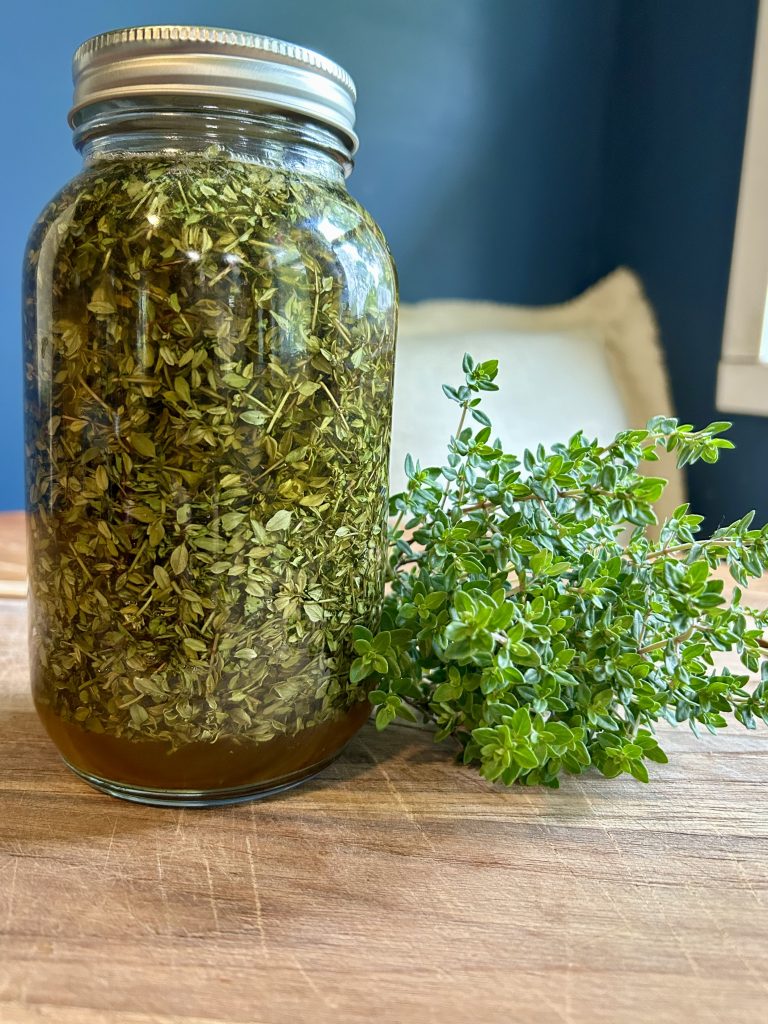
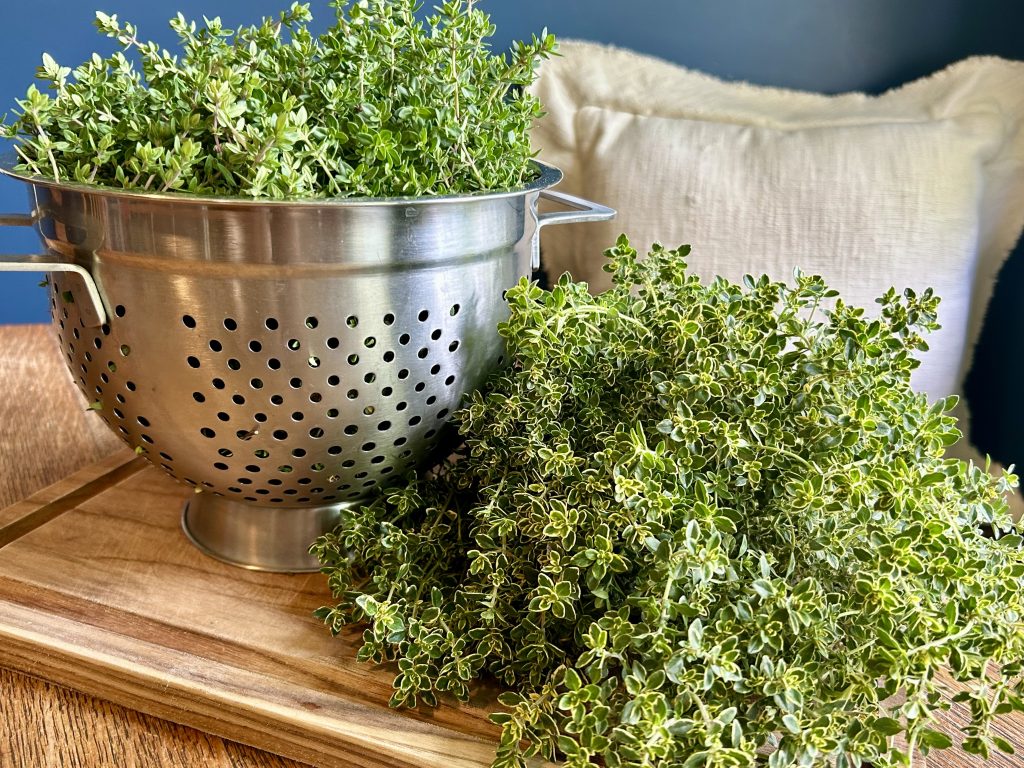
For respiratory support during cold and flu season, I often choose English thyme (Thymus vulgaris), lemon thyme (Thymus × citriodorus), or sage (Salvia officinalis). These herbs have long histories of traditional use for seasonal respiratory discomfort.
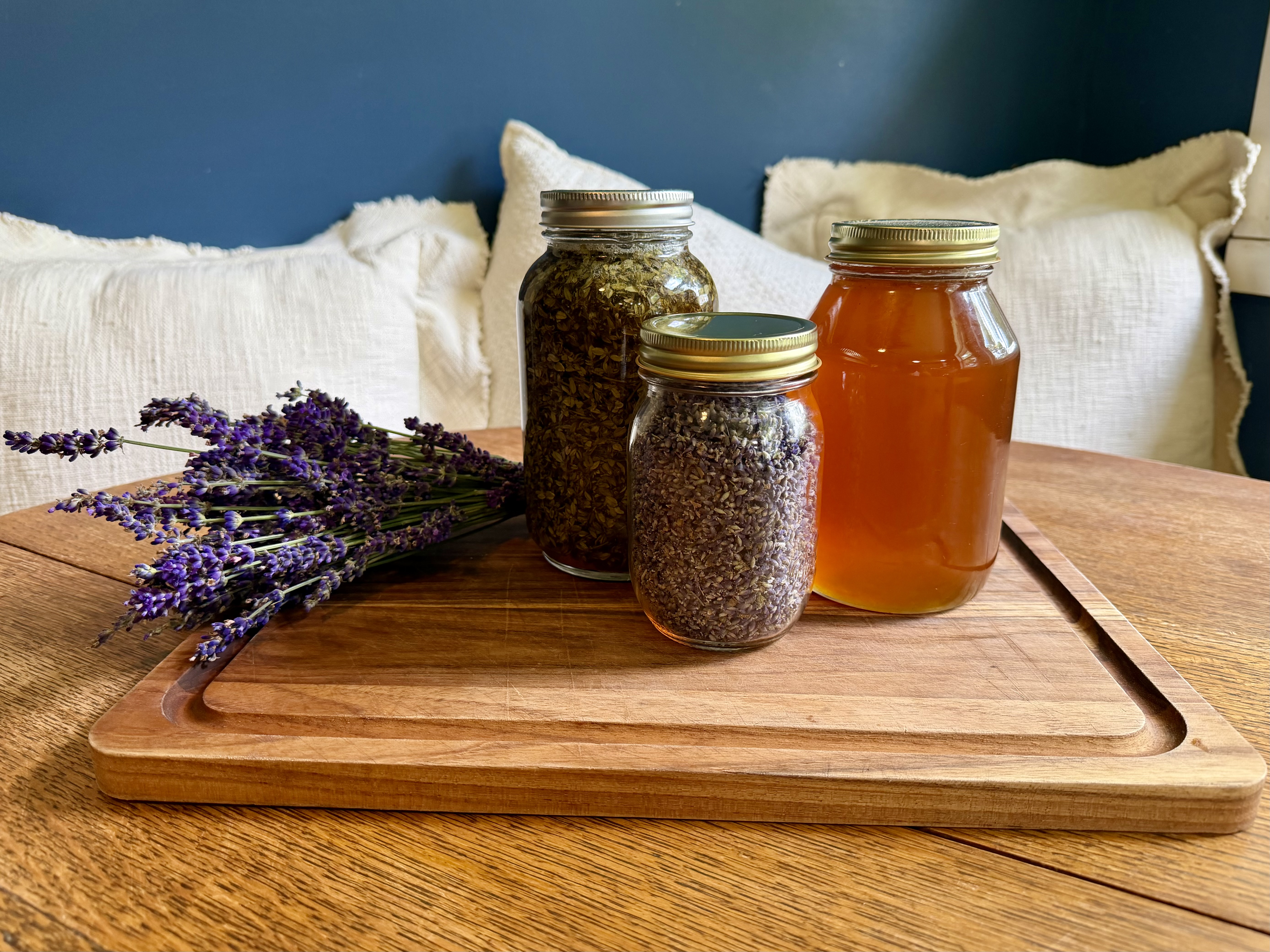
For relaxing evening teas, I prefer lavender (Lavandula angustifolia), chamomile (Matricaria chamomilla), lemon balm (Melissa officinalis), or bee balm (Monarda fistulosa). Peppermint (Mentha × piperita) creates a refreshing honey that works beautifully in tea, coffee, or homemade lemonade.
Fresh and dried herbs both work well. During summer, I usually harvest fresh herbs directly from the garden. During winter, I reach for herbs I dried earlier in the season.
Harvest herbs after the morning dew dries completely. Inspect each stem carefully and discard damaged or diseased growth. Remove woody stems before chopping the leaves and flowering tops into small pieces.
Using Raw Local Honey for Best Results
I only use raw honey purchased from local beekeepers. Buying local honey supports small businesses in my community while allowing me to know exactly where my honey comes from. Until our own hives produce enough honey, I gladly support beekeepers who care for healthy colonies.
Raw honey also retains the natural qualities that make it my preferred choice for herbal preparations. I avoid heavily processed honey because I want the finished infusion to reflect both the quality of the herbs and the honey itself.
Equipment for Herbal Infused Honey
- Quart-size glass canning jar
- Canning lid and band
- Permanent marker
- Label
Utensils
- Sharp chef's knife
- Cutting board
- Bamboo chopstick
- Spoon
Recipe for Folk Method Herbal Infused Honey
This recipe uses the traditional folk method rather than weight-based ratios. Instead of measuring ingredients, completely fill the jar with herbs before adding honey.
Ingredients
- Fresh or dried herbs of choice
- Raw local honey
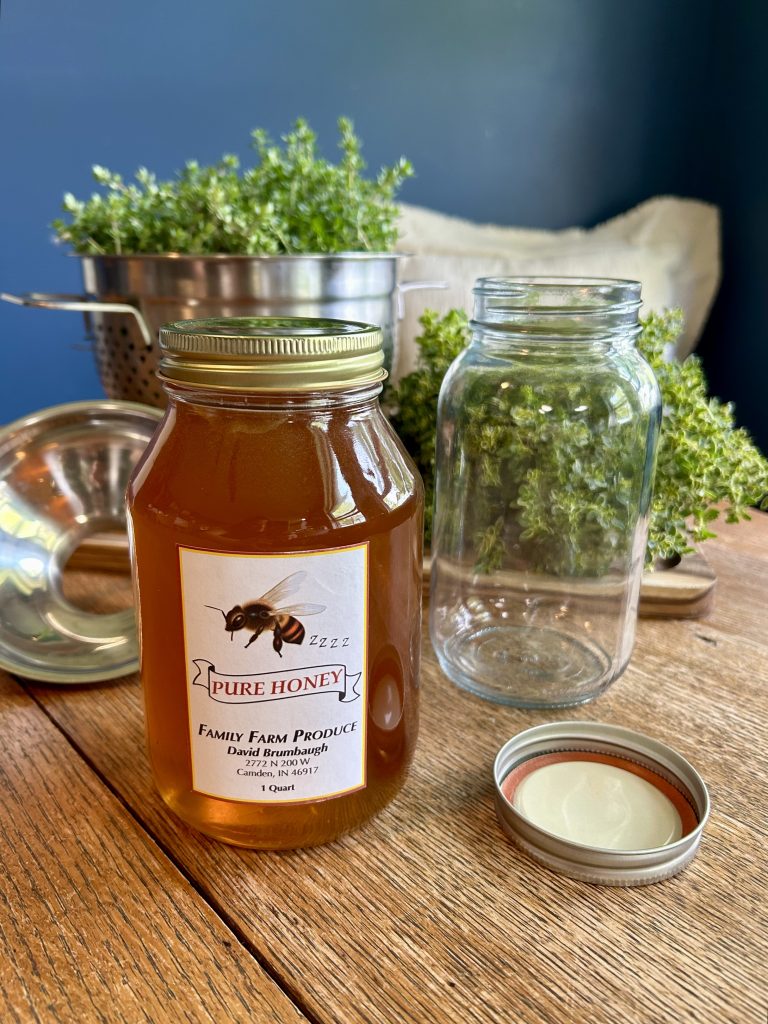
Pack the Jar with Herbs
Remove woody stems from fresh herbs before chopping the leaves and flowering tops. Roughly chop the herbs to expose more surface area. Pack them tightly into a clean glass jar until it is completely full.
If using dried herbs, fill the jar generously while leaving enough room for the honey to flow between the plant material.
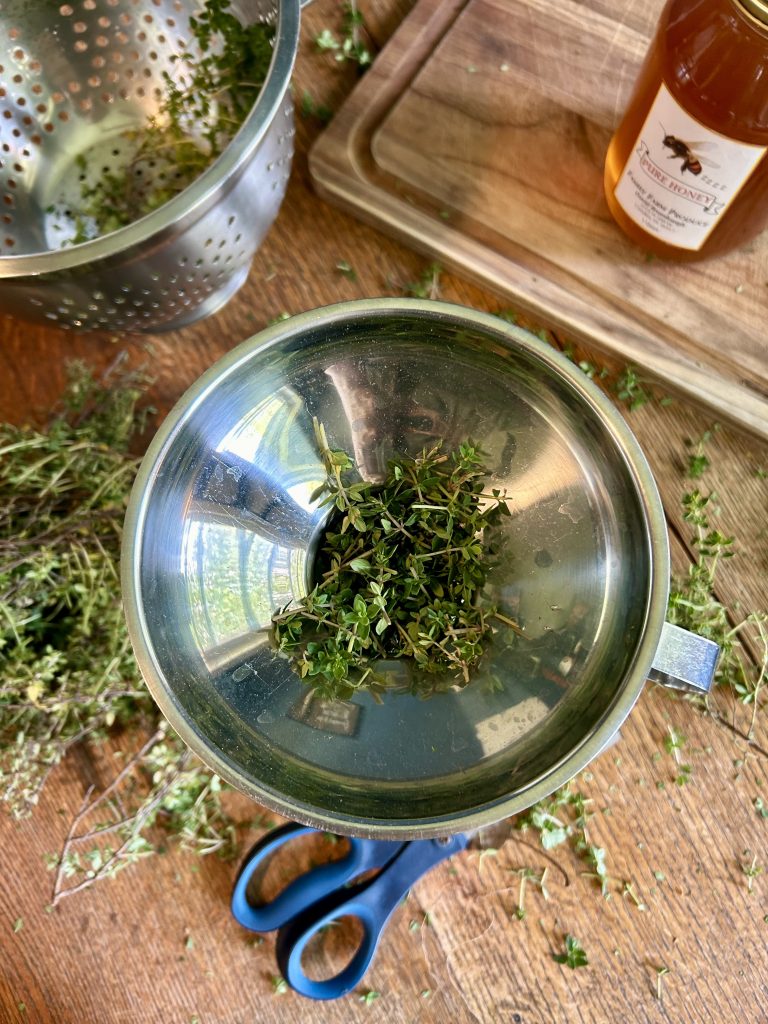
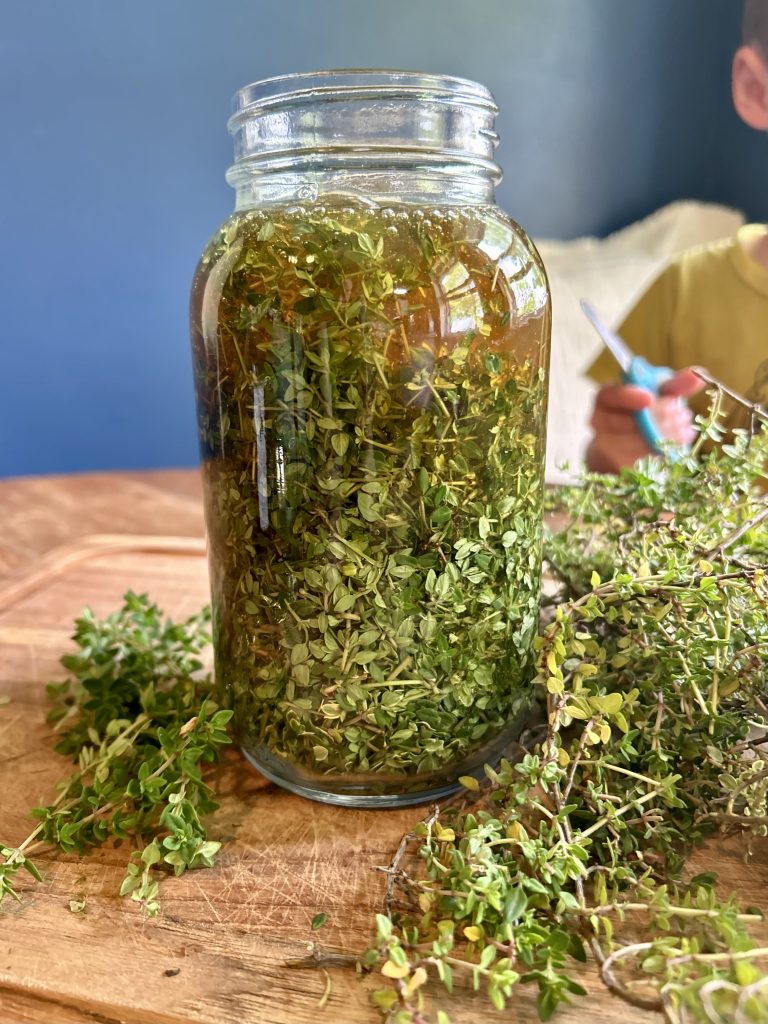
Cover with Honey
Slowly pour raw honey over the herbs. Give the honey time to settle through the jar before adding more. Continue filling until every piece of plant material remains completely submerged.
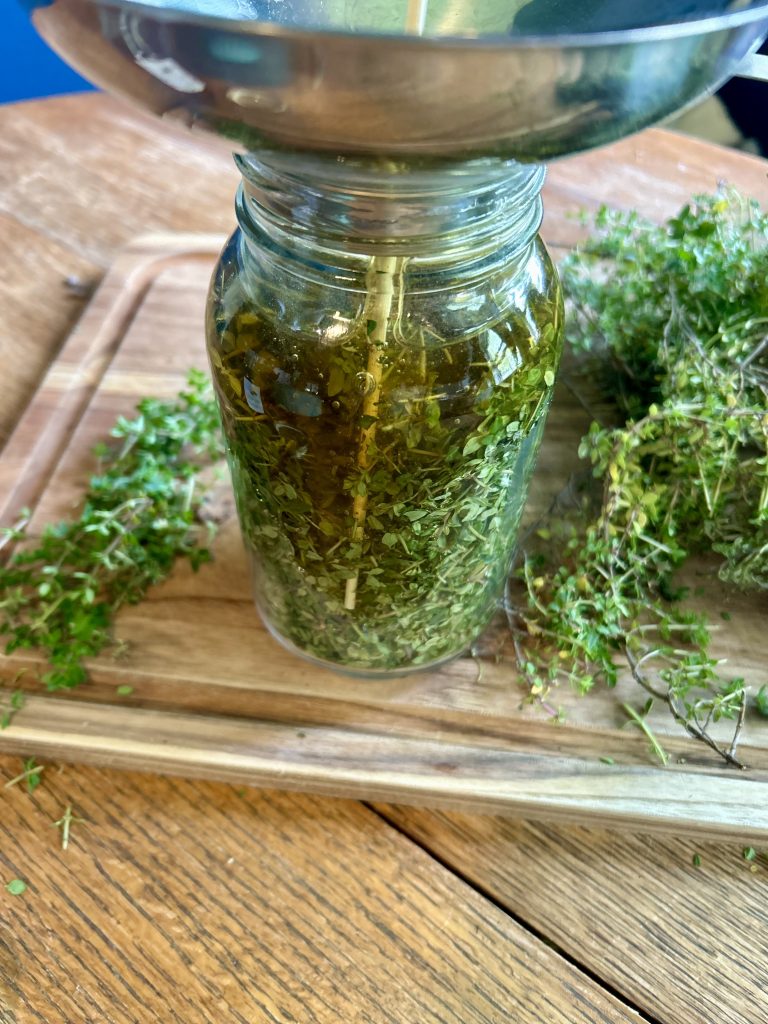
Agitate with a Bamboo Chopstick
Insert a bamboo chopstick into the jar and gently work it around the herbs. This process releases trapped air bubbles and helps the honey reach every pocket within the jar.
Seal the jar, label it with the contents and date, and place it in a cool, dark location. Flip the jar occasionally to keep the herbs coated as the infusion develops.
Storage & Shelf Life of Herbal Infused Honey
Store herbal infused honey in a cool, dark place away from direct sunlight. I keep my jars in our apothecary cabinet at normal room temperature.
I leave the herbs in the honey until I need the preparation. The infusion continues developing while it sits on the shelf, so I see no reason to strain the herbs immediately.
Honey naturally has an excellent shelf life, but every infusion deserves regular observation. Always inspect the honey before using it. If anything appears unusual or develops an unpleasant odor, discard the entire jar.
FAQ & SAFETY
Can I use fresh herbs?
Yes. I make herbal infused honey with both fresh and dried herbs. Fresh herbs create vibrant flavor, while dried herbs offer another excellent option during the winter months.
Do I have to strain the herbs?
No. I leave the herbs in the jar until I use the honey. You may strain the herbs whenever you prefer.
How long should herbal infused honey infuse?
I don't follow a specific timeline. I allow the herbs to infuse until I need the honey. Some jars rest for several weeks, while others remain untouched for months.
Can children eat herbal infused honey?
Honey should never be given to children younger than one year because of the risk of infant botulism. Choose herbs carefully for older children and consult a qualified healthcare professional whenever questions arise.
Can I use grocery store honey?
You can, but I recommend raw local honey whenever possible. I believe quality ingredients produce the best finished preparation.
Medical Disclaimer
The information provided in this blog post is for educational and informational purposes only. It is not intended as medical advice. I am not a licensed healthcare professional. The content shared on this website is not a substitute for professional medical guidance, diagnosis, or treatment.
Always consult a qualified healthcare provider before making changes to your health regimen. This is especially important if you are pregnant, nursing, taking medications, or have an existing health condition. Never disregard professional medical advice or delay seeking care because of something you have read on this website.
Herbal remedies and natural wellness practices may support the body, but they are not one-size-fits-all. Every individual is unique. What works well for one person may not be appropriate for another.
I strive to share accurate, current, and well-researched herbal information based on both traditional and modern sources. However, I make no guarantees regarding the results you may experience.
By using this blog and engaging with its content, you acknowledge that you do so at your own risk. I am not responsible for any adverse effects or consequences resulting from the use or misuse of the information provided on this website.
