

Sage
What is it?
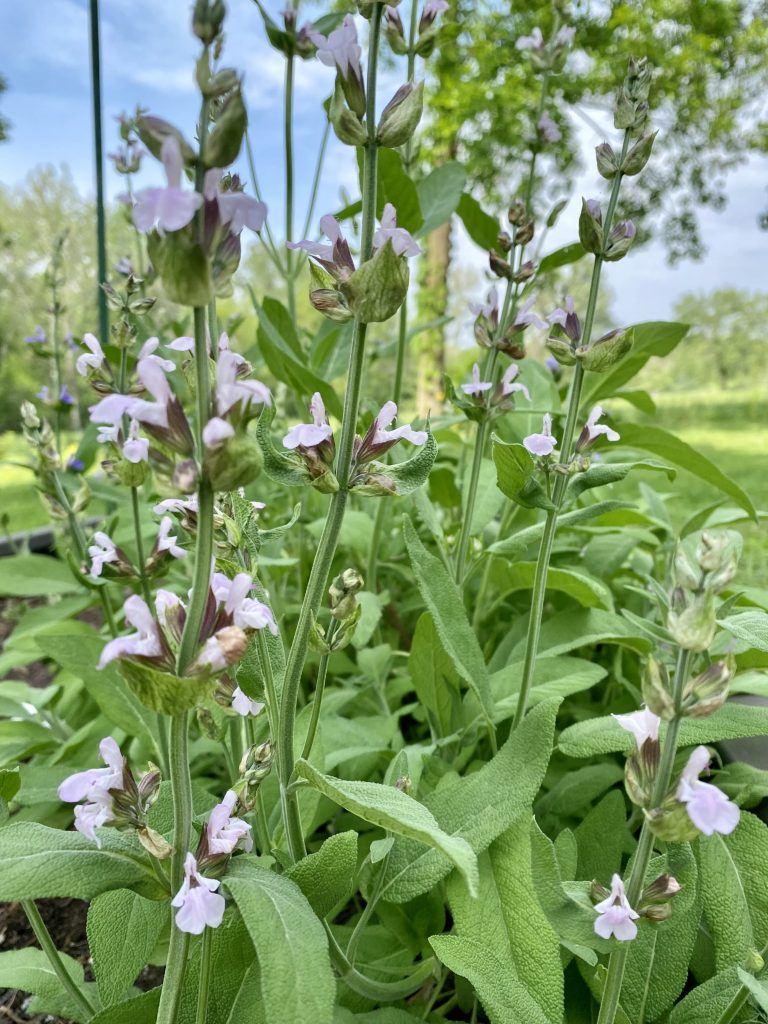
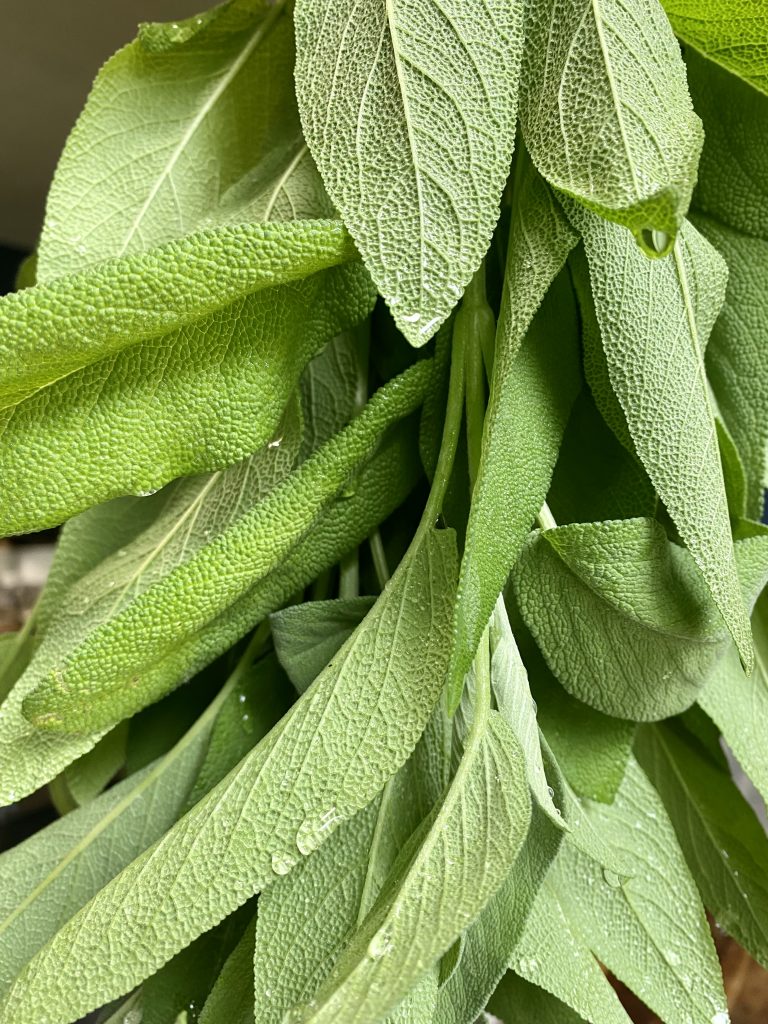
Salvia officinalis, the common garden sage is a perennial. A green shrub with woody square stems, velvety-grayish leaves, and pink to purplish flowers. Sage is a member of the Lamiaceae (mint) family and native to the Mediterranean region. This herb has been naturalized in many places worldwide and grows hardy in zones 4-10. It has a long history of culinary use but is also of great medicinal importance. In modern times, it has been used as an ornamental garden plant, flowering beautifully.
KEY HERBAL ACTIONS:
anti-galactagogue, antiseptic, anti-diaphoretic, aromatic, antioxidant, astringent, anti-catarrhal, antimicrobial, nerve tonic, carminative (anti-flatulence), osteogenic, and emmenagogue (menstrual flow stimulant).
KEY CONSTITUENTS:
camphor, cineole, thujone, diterpenes, triterpenes, flavonoids, phenolic compounds such as caffeic acid, chlorogenic acid, rosmarinic acid, ellagic acid and rutin, tannins, and essential oils and bitters.
ENERGETICS:
- Temperature: Warming
- Moisture: Drying
- Tissue State: Constricting
- Taste: Strong, Minty, Pine/Peppery
HERBAL NUTRITION:
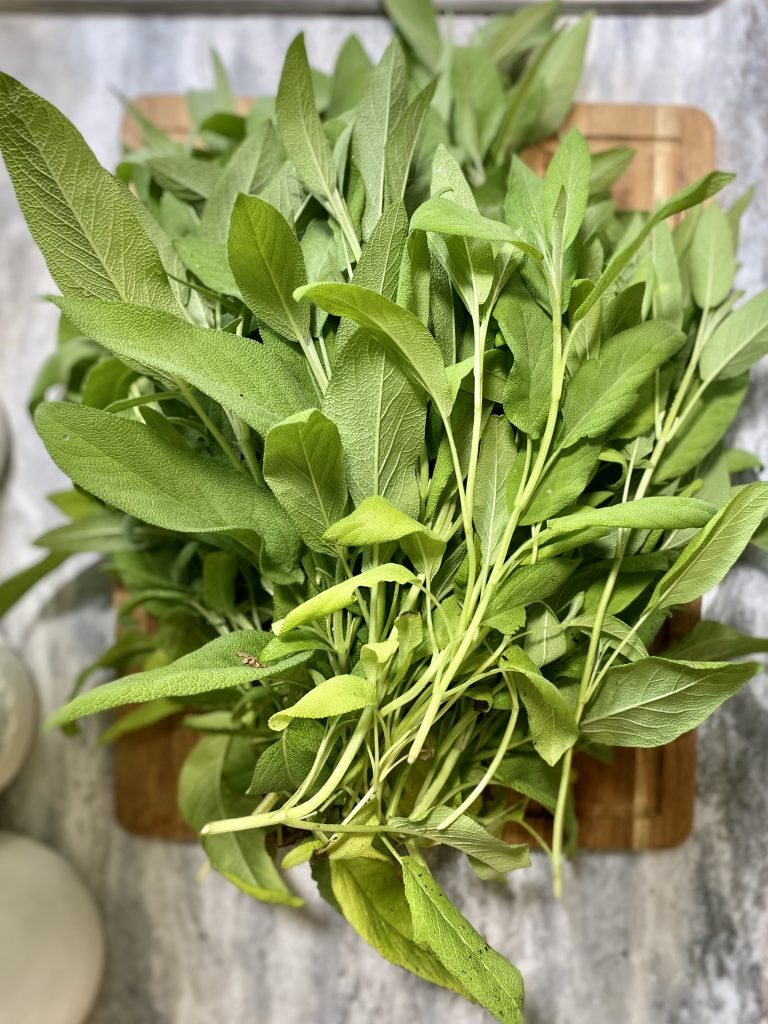
The edible parts used are the aerial leaves, which can be eaten raw or cooked. Sage is used in preparing poultry, red meats, and vegetable dishes.
Sage contains vitamins and minerals such as Vitamin A, B6, E, C, and K, Iron, Calcium, Manganese, Zinc, and Copper.
TO USE SAGE MEDICINALLY:
There are many medicinal uses of sage today. From sore throats to hormonal imbalances, the diversity of sage provides excellent remedies.
Purple sage, S. officinalis purpurascens, is the preferred medicinal variety – note its purple leaves.
Dried or fresh leaves can be made into an herbal infusion, tincture, and poultice.
Due to sage’s astringent and antiseptic properties, it makes an ideal throat gargle to soothe a sore or infected throat. Another beneficial use of sage’s fresh leaves can be crushed and rubbed on the skin to help with bites and stings.
SORE THROAT?
To make an herbal infusion for a mouth and throat gargle, boil 2 cups of water. Measure 1 teaspoon of dried sage herb or 2 teaspoons of fresh herb and add 1 cup (8oz) of freshly boiled water. Cover the cup with a cap to infuse for 5-10 minutes. To check liquid’s the temperature, hold the inside of your wrist over the cup after removing the lid. If you feel comfortable with the temperature, take a few ounces of liquid in your mouth, gargle, and swish around. After a few minutes, you may spit the liquid into another cup to dump or directly in the sink. Since you are not ingesting the liquid, this can be done many times a day, especially during times of discomfort. Using a sage throat gargle should reduce the ill effects of a sore or infected throat compared to not gargling.
Menstruation Issues?
Sage provides a valuable herbal remedy for irregular or scant menstrual cycles.
Encouraging better blood flow during menstruation and improving hormonal activity. Sage has a long-standing use during menopause, thought to reduce or prevent sweating during hot flashes or night sweats. In addition, sage has a calming and relaxing effect when taken as a tea or tincture.
Sage can also be made into a tincture for a more concentrated extract.
GROWING, HARVESTING, & STORING SAGE:
Growing sage is exceptionally easy because it is a perennial; it’ll come back year after year.
This hardy herb thrives in a well-drained, sandy, loamy soil. After barely covering the seeds with a light dusting of soil, give a nice soaking with your watering can. Within 10-20 days of planting, you should see little sprouts begin to poke through.
It is best harvested early in its life before producing its flower buds. Once sage has started to flower, all of its energy goes into making seeds, which takes away from the beneficial medicinal properties.
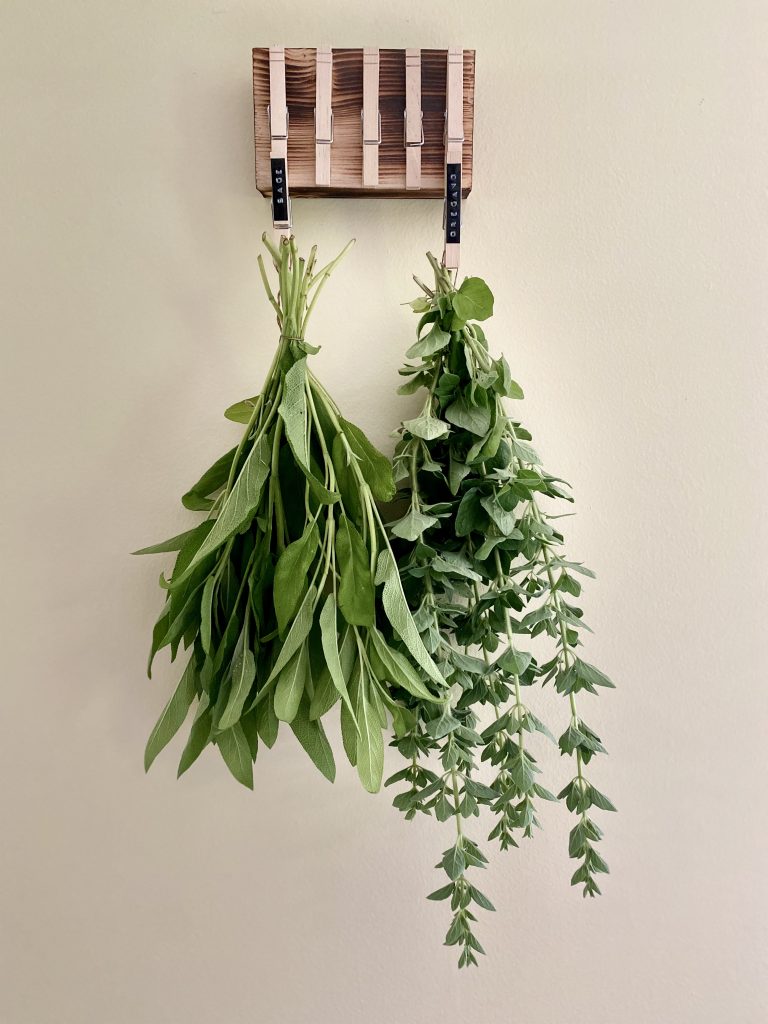
Early in the morning, after the dew has dried, cut long-stem bouquets of the stalk with leaves. The easiest way to dry sage is by hanging it in a cool, dry place for a few weeks. You can even place the sage in a paper bag to help keep the dust particles and bugs from getting to it. Be sure to keep an eye on your sage because you will want to transfer it to an airtight container as soon as it is dry. Then, store it in a dark cabinet or closet free of moisture.
Precautions:
A warning for using sage: this herb is not intended for pregnant or breastfeeding women. Just one cup of sage tea will significantly reduce the quantity of a nursing mother’s milk.
*Consult your physician before the use of any herbal plant remedies. None of this herbal information has been verified by the FDA; therefore, use extreme caution when using plants as medicinal remedies. This is not medical advice.
