How To Make A Tincture
Disclosure: This post may contain affiliate links. Learn more here.
There is a slow, steady rhythm to working with herbs in their fresh form, especially when learning how to make a tincture at home. Jars begin to gather on the counter, hands stay lightly stained from harvest, and over time the process becomes less about precision and more about consistency.
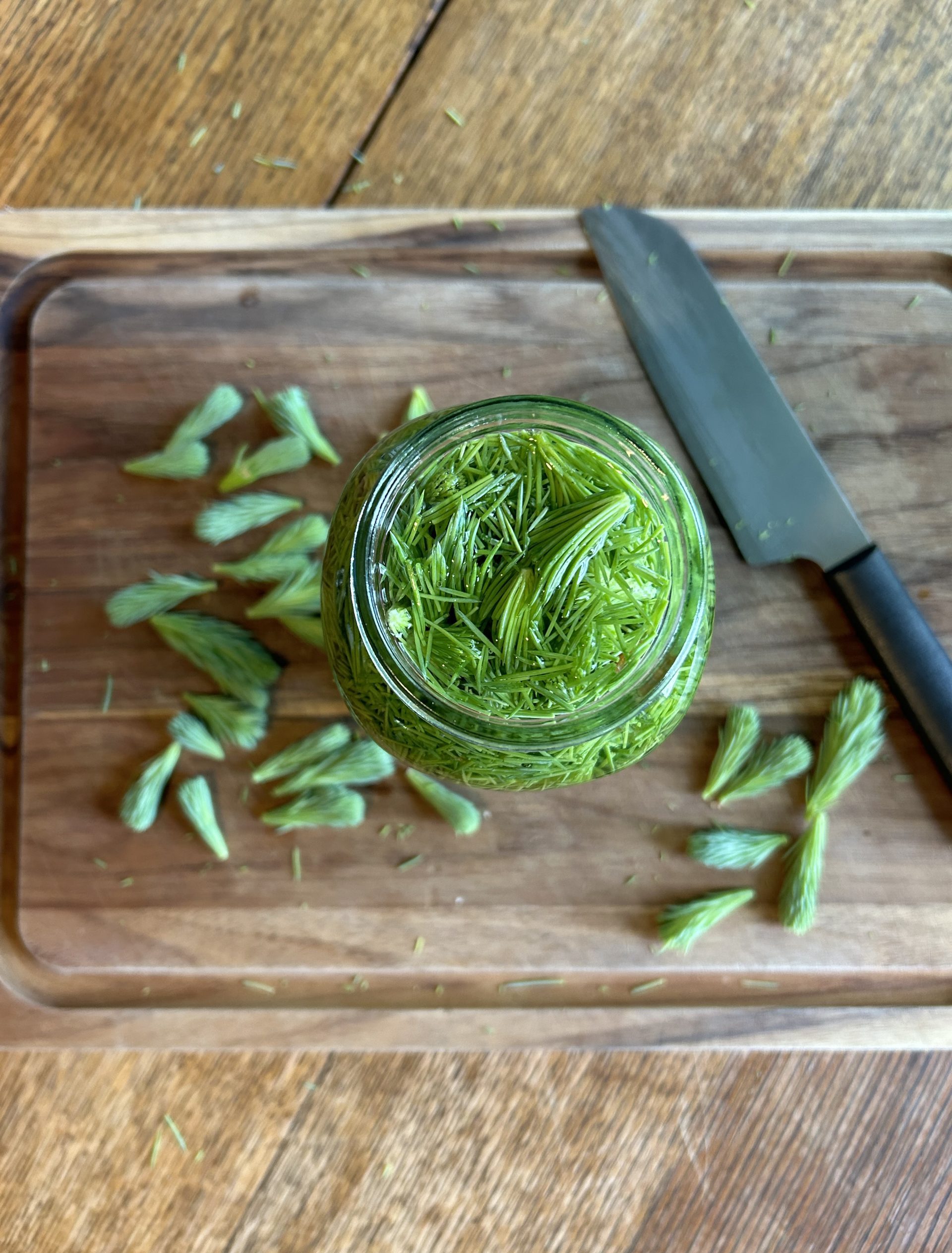
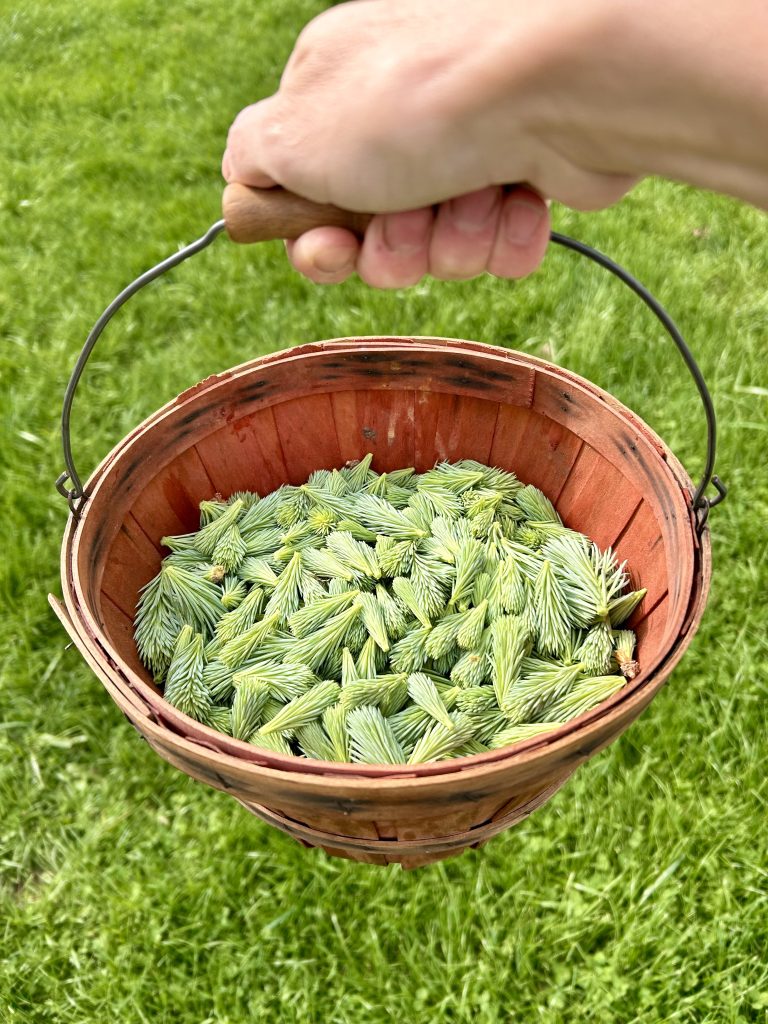
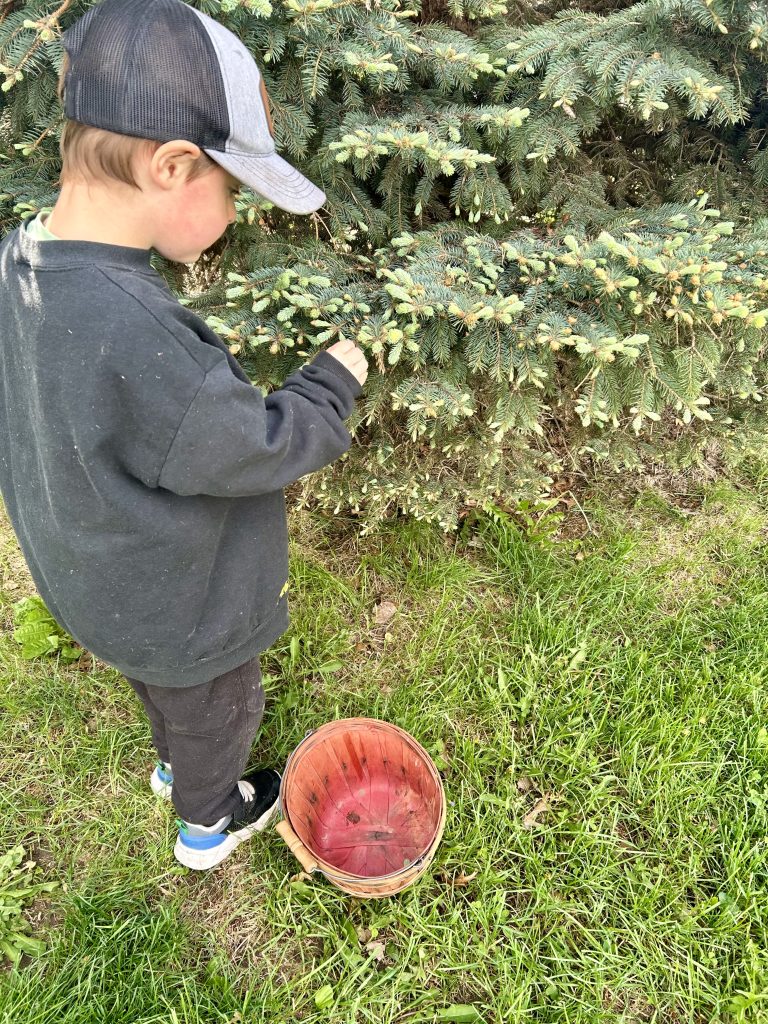
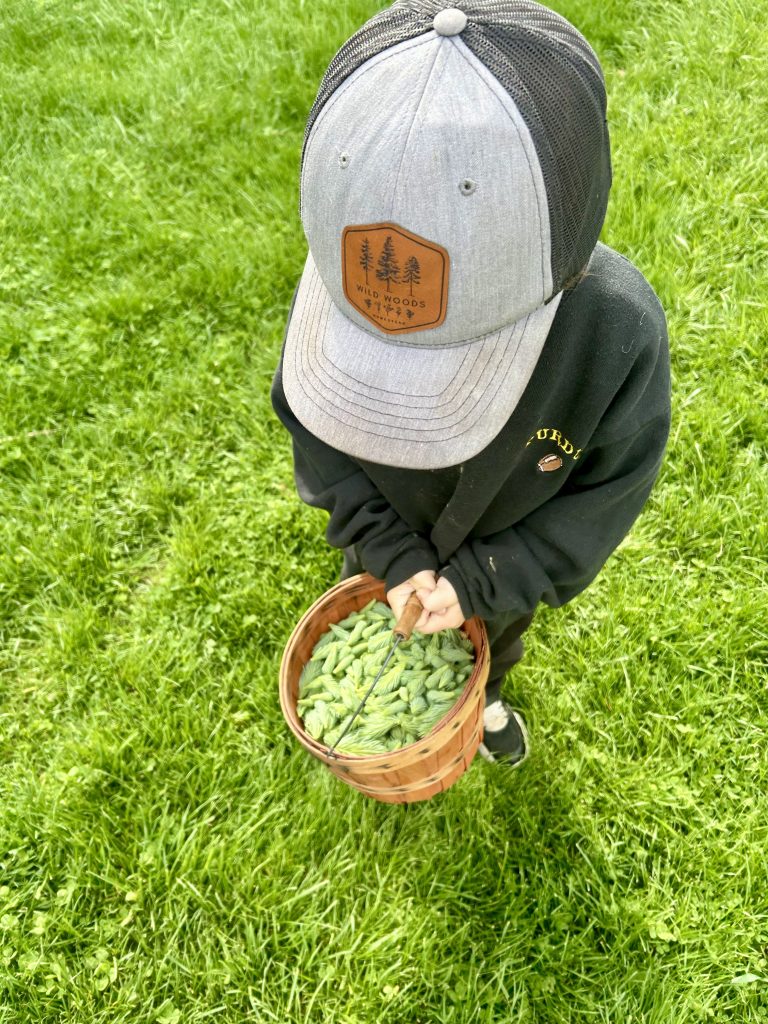
A spruce tip tincture is currently being prepared in my homestead kitchen using fresh spring nettle and 80 proof vodka. Spruce tips have long been gathered in traditional herbal practices as a vibrant seasonal offering, often worked into simple home apothecaries as a refreshing spring remedy. In seasons when the body feels weighed down by winter’s lingering dampness—such as times of congestion or sluggish transition into spring—having a prepared syrup, tincture, or infused honey on hand can be especially supportive, offering a simple way to bring gentle respiratory and immune support through plant-based nourishment when it is needed most.
Altogether, this is a grounded and repeatable way of learning how to make a tincture using fresh herbs and a consistent ratio system that removes guesswork from the process, while also building a small home supply of herbal preparations that can be reached for when nourishment and support are needed.
What Is A Tincture
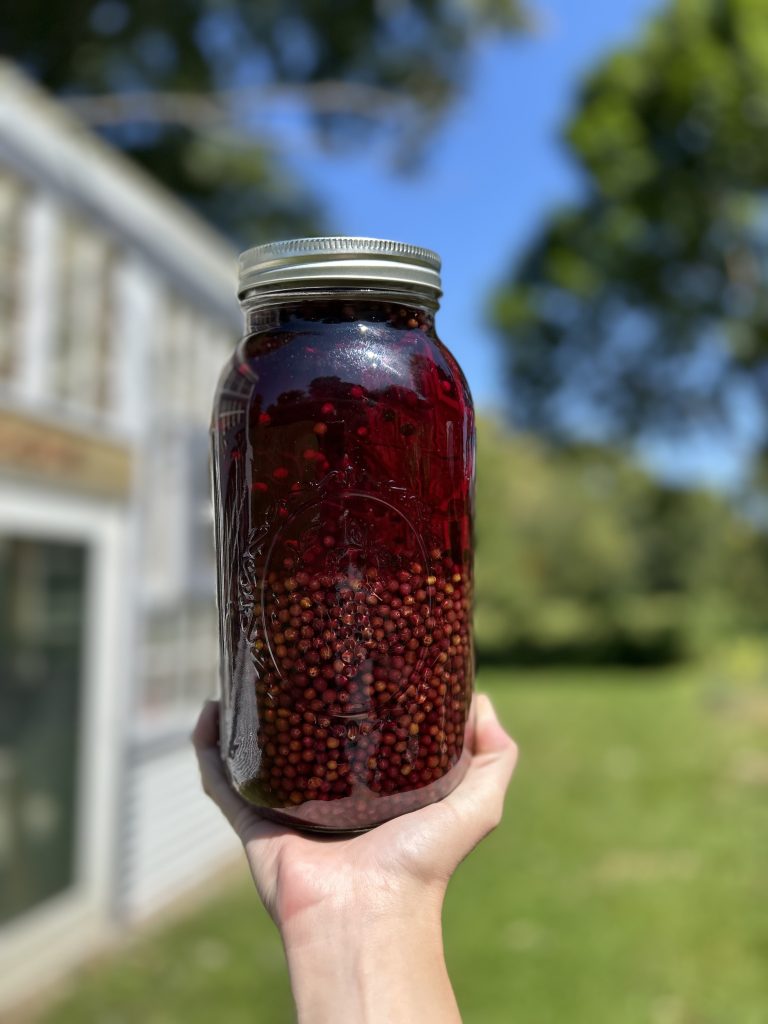
A tincture is a concentrated herbal extract made by soaking plant material in alcohol over time. In simple terms, alcohol pulls out and preserves the plant’s constituents, which then creates a shelf-stable preparation that can be used in small, potent amounts.
Because of this, it remains one of the simplest and most time-tested ways to work with herbs long-term.
Working with fresh herbs
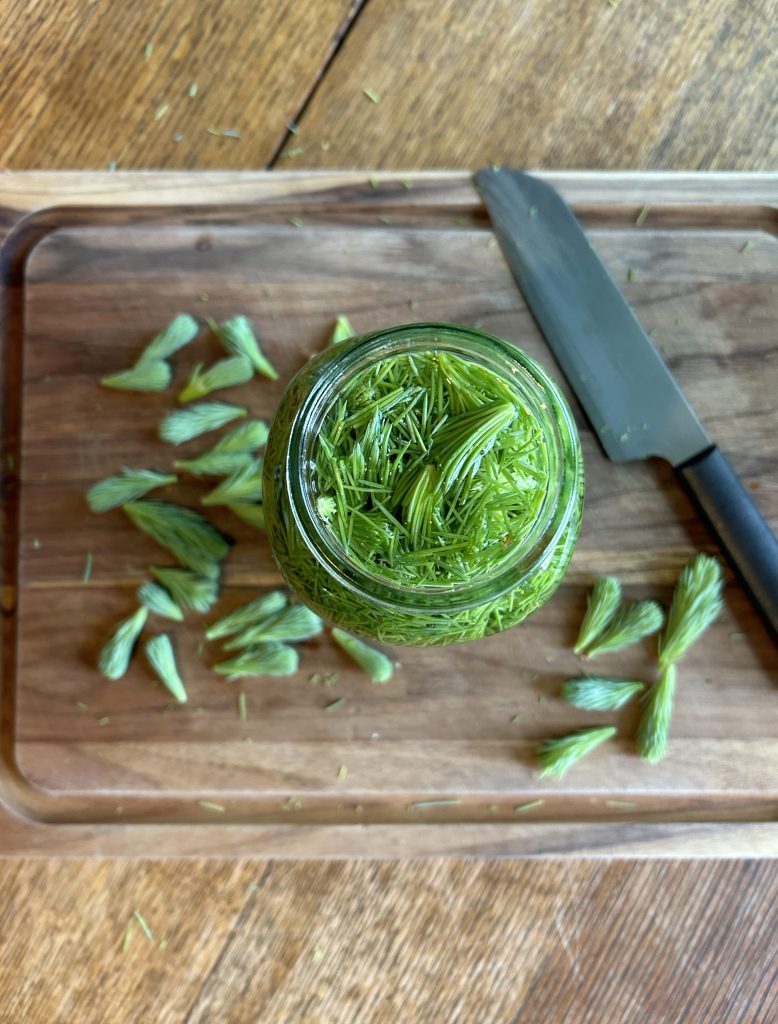
Fresh herbs are used most often in this approach. Typically, they are gathered at peak vitality and then placed directly into alcohol without drying.
However, because fresh plants contain natural moisture, full submersion becomes essential. As a result, alcohol acts as both solvent and preservative throughout the entire extraction process.
In this way, the method follows the rhythm of the seasons, using herbs at their peak and preserving them immediately.
The alcohol used for extraction
For this method, 80 proof vodka is used as the menstruum. The menstruum, in herbal practice, refers to the liquid used to extract plant constituents.
Generally speaking, vodka remains widely accessible and works well for many general herbal preparations. While stronger alcohol can be used in certain cases, this concentration works reliably for most fresh herb tinctures in a home setting.
Folk Method vs Ratio Method
Traditionally, the folk method is a hands-on way where herbs are placed in a jar and then covered with alcohol by visual estimation and intuition. Because of this, it has been used for generations and remains a valid approach in traditional herbal practice.
However, the ratio method replaces estimation with measured consistency.
In contrast, the ratio method creates repeatable strength across every batch. As a result, each tincture can be reproduced with the same proportions regardless of jar size, harvest amount, or season. This creates a dependable system that removes variability and guesswork over time.
Ultimately, this method supports long-term consistency in home herbal practice.
The 1:5 Ratio For How to Make A Tincture
The standard ratio used here is:
1 oz herb : 5 oz alcohol
From here, this 1:5 ratio becomes the foundation for how to make a tincture consistently at home. In addition, it allows batches to be scaled up or down while maintaining the same proportional balance of herb to alcohol.
As a result, every preparation stays predictable and uniform.
Equipment needed for how to make a tincture
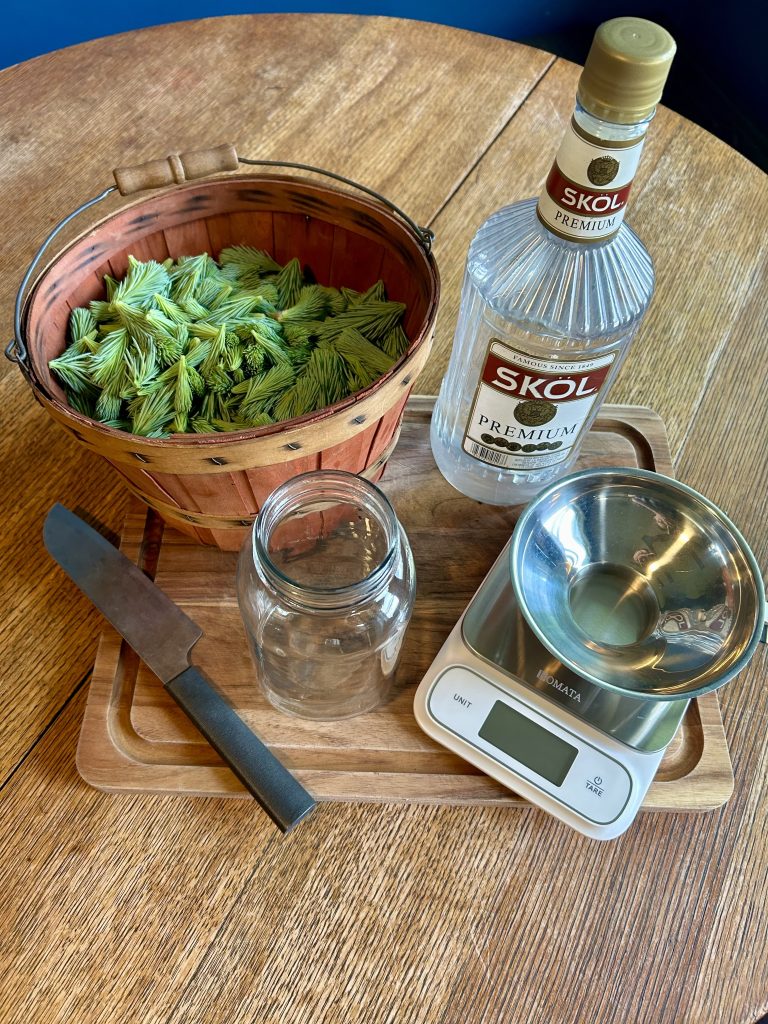
- Glass mason jar with tight-fitting lid
- Digital scale
- Measuring cup or liquid measuring container
- Labels or masking tape and pen
- Fine mesh strainer and flour sack towels (needed later for straining)
- Amber glass dropper bottles (needed later after strained)
- Cutting board and chopping knife for fresh herbs (possibly needed)
- Coffee grinder for dried herbs
Ingredients needed when learning how to make a tincture
- Fresh herb
- 80 proof vodka
Step-By-Step Process For How To Make A Tincture
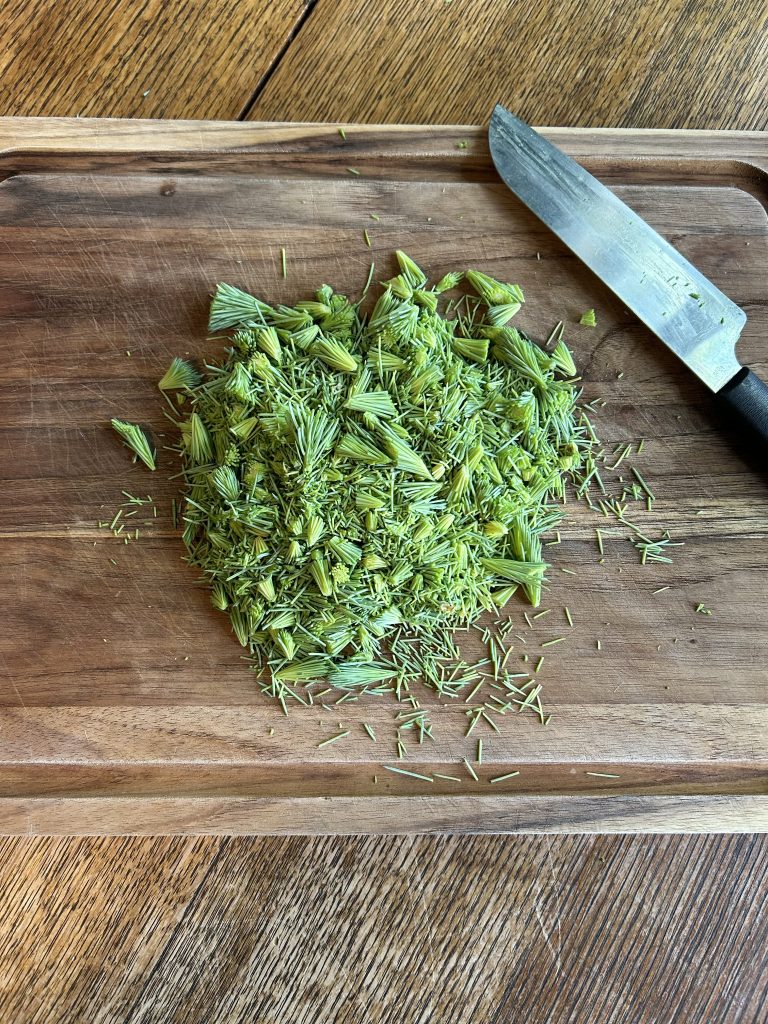
1. First, fresh herbs are weighed to determine the correct alcohol amount using the 1:5 ratio. This step ensures consistency from the very beginning. I am using 4oz of fresh herb in my tincture infusion.
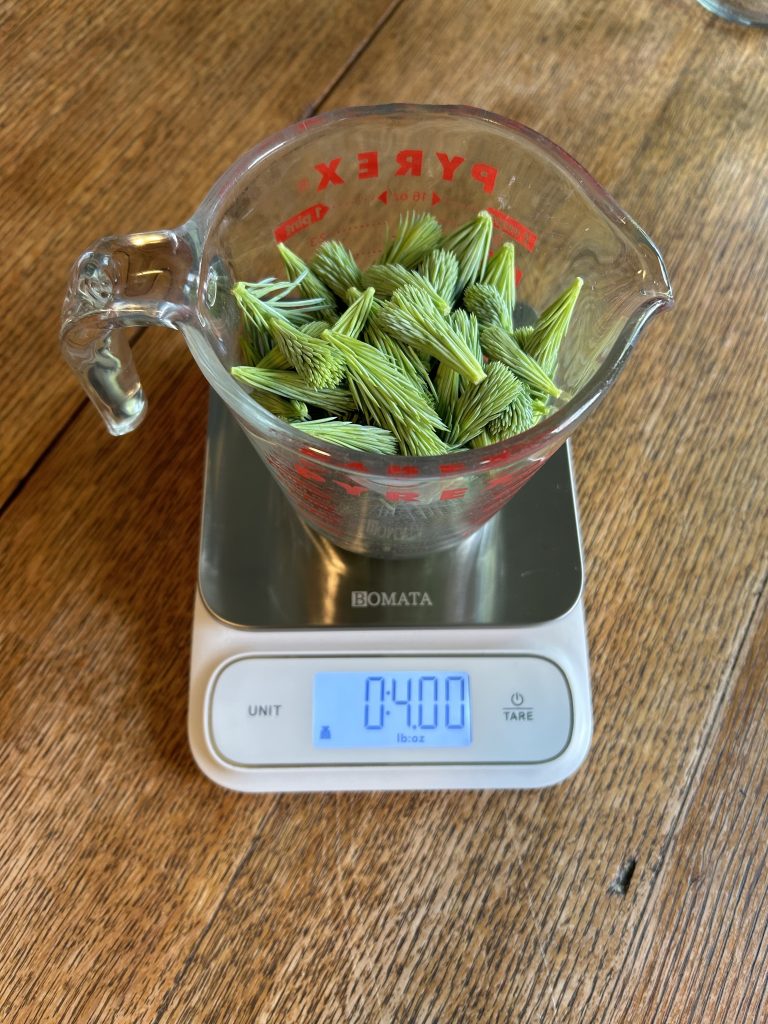
2. Next, the herb is roughly chopped and placed into a clean glass jar and lightly packed without compressing it too tightly.
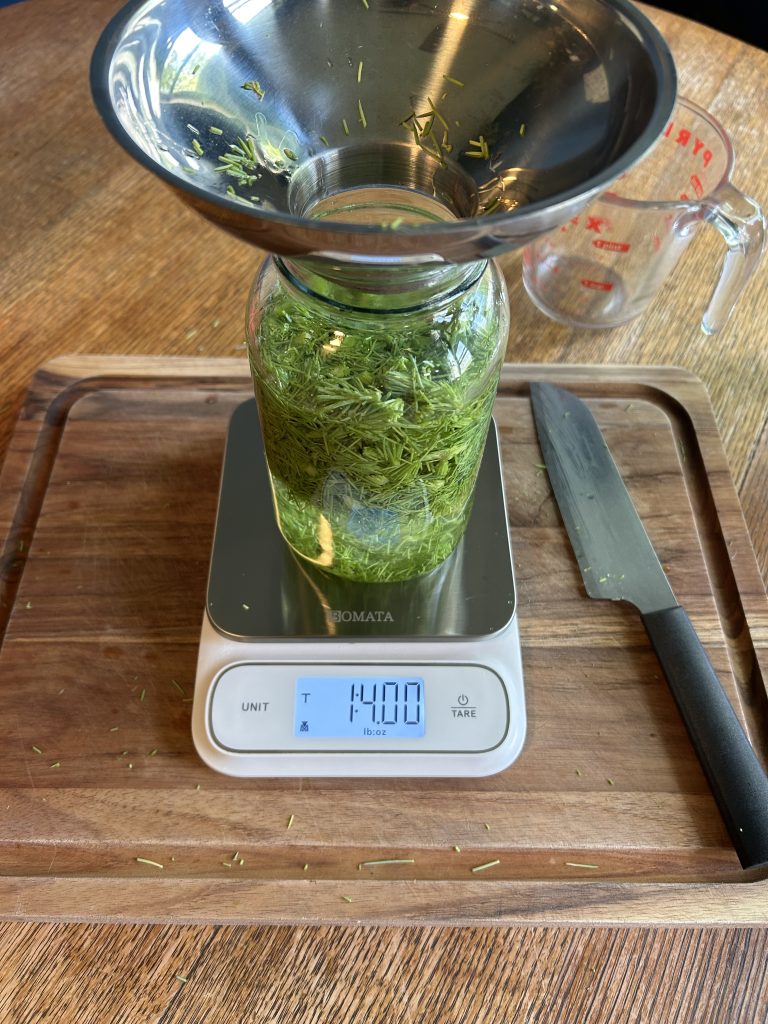
3. After that, alcohol is measured out according to the fresh herb weight and is poured over the plant material until everything is fully submerged. At this point, no herb should be exposed to air. I am using 20oz (or 1 lb 4oz on a scale) of vodka to cover 4oz fresh herb.
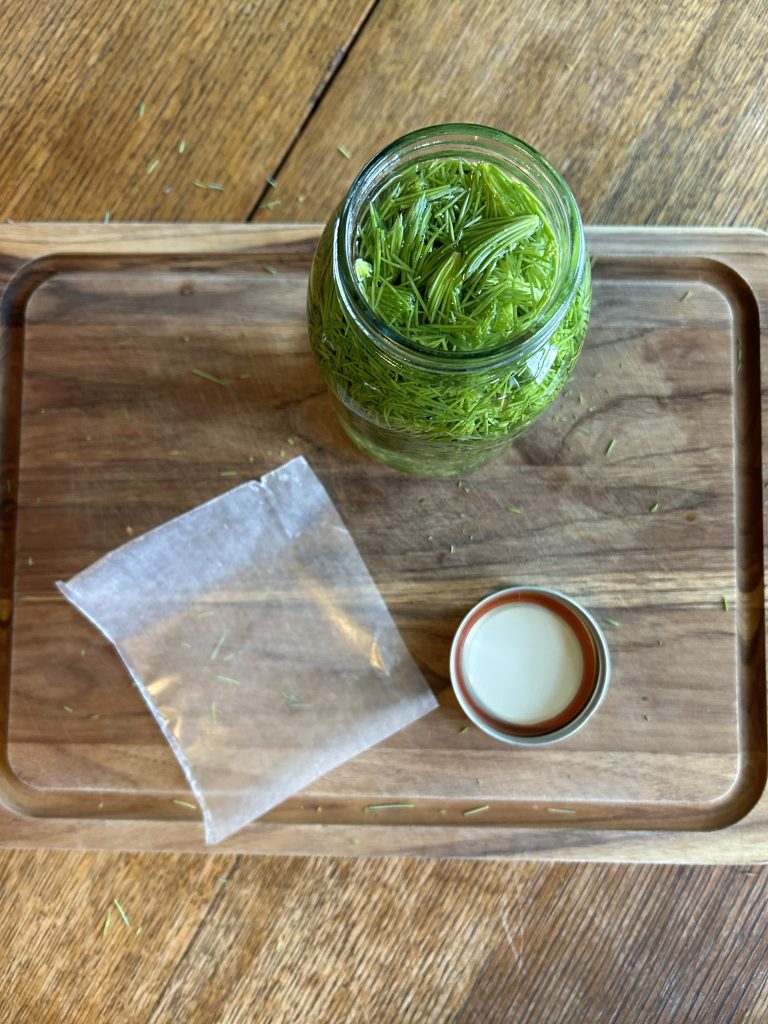
4. Once filled, place a 4"x4" of wax paper over the open jar, then seal tightly with lid and labeled with herb name, ratio, alcohol type, and date so it can be identified later.
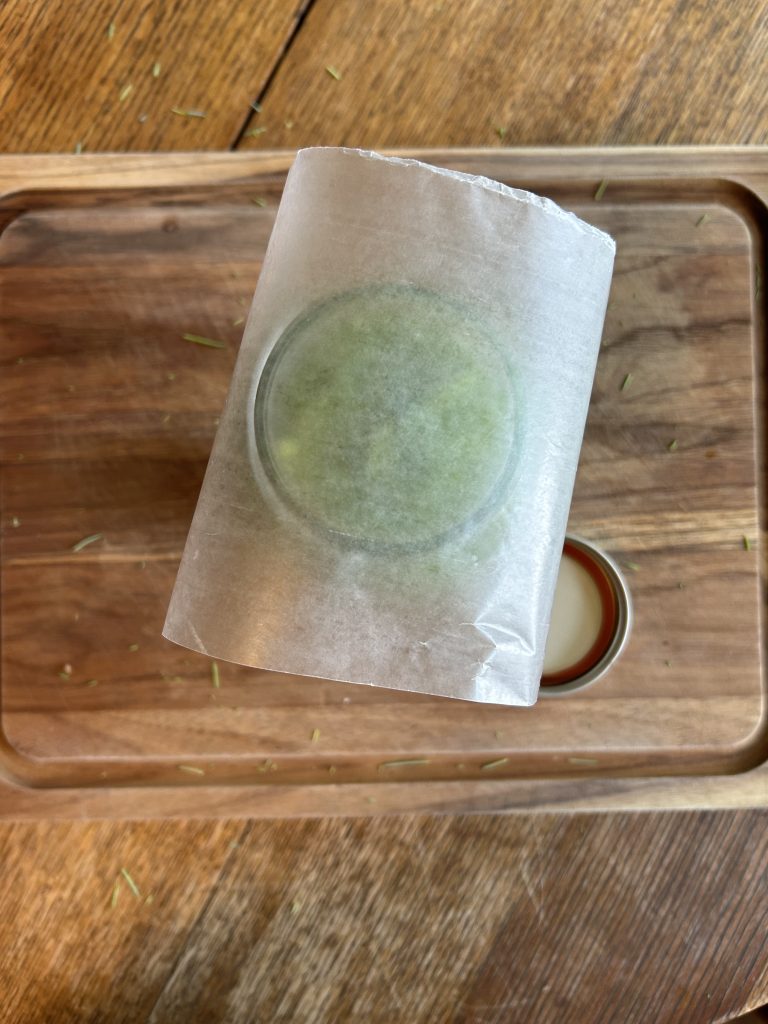
5. Then, the jar is stored in a cool, dark place where extraction begins slowly over time.
6. In the meantime, the jar is gently shaken occasionally when remembered to help distribute plant material evenly.
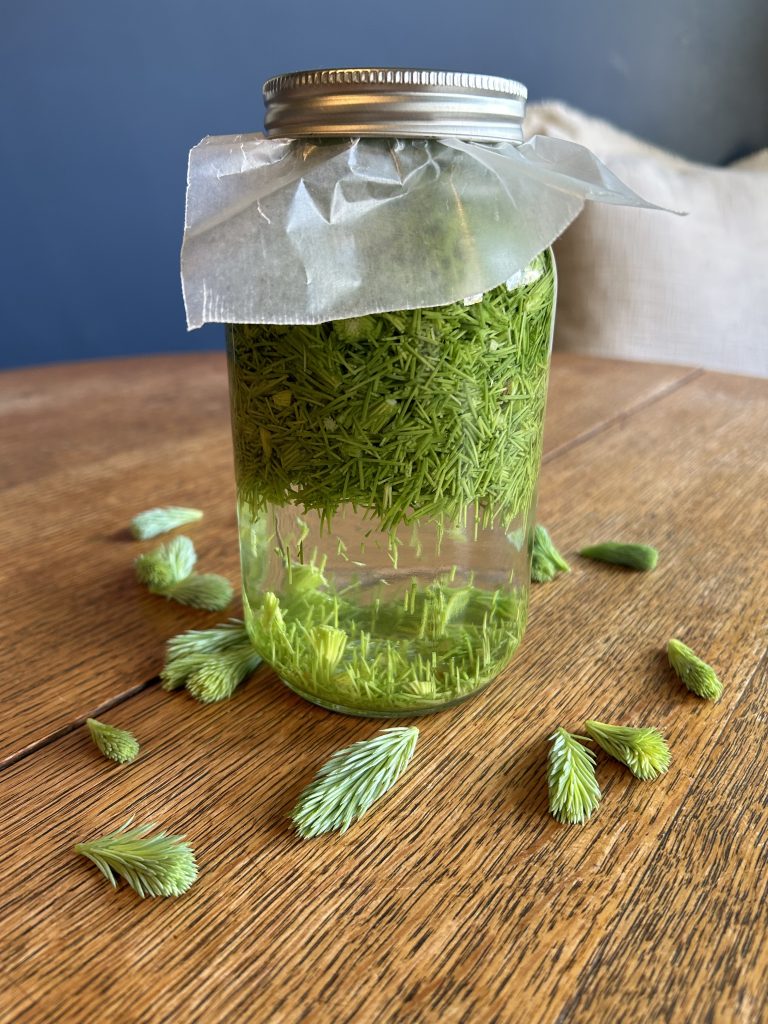
Infusion tip: Traditionally, infusion time ranges from 6–8 weeks when learning how to make a tincture. However, longer extraction periods—10 to 12 months or more—are also commonly used before straining depending on timing and preference.
7. Finally, once complete, the tincture is strained through mesh strainer lined with cheese cloth, squeezed and pressed removing all of the liquid, and transferred into amber glass dropper bottles for storage and use.
Closing Thoughts
Overall, learning how to make a tincture becomes less about rigid instruction and more about building a steady, repeatable rhythm.
As consistency develops, the process becomes simple to maintain season after season. Because of this, fresh plant material and a simple ratio system allow herbal preparations to remain reliable and easy to reproduce.