
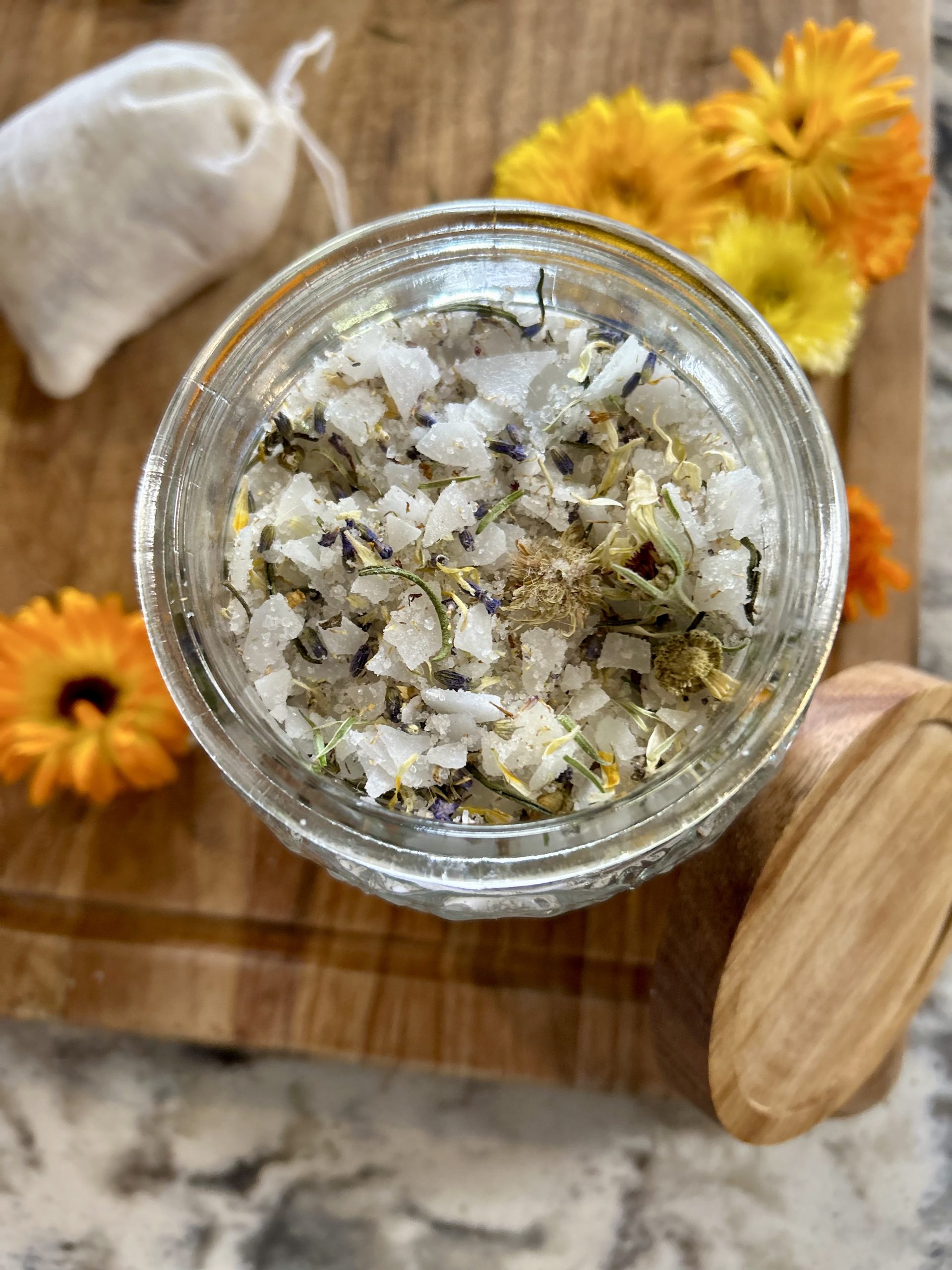
Soothing Herbal Bath Soak
Disclosure: This post may contain affiliate links. Learn more here.
As the seasons shift and our bodies adjust to cooler days, warm baths become more than a luxury — they become a form of therapeutic treatment. On our homestead, where hard work leaves our muscles tired and minds busy, we treasure the quiet unwinding of a soothing herbal bath soak. Blending salts, herbs, and oils eases tension and restores balance in ways that feel deeply nurturing. People across the ages knew the healing power of a good soak long before spas existed — and today, we're still keeping this knowledge alive.
My favorite way to unwind after a long day of mothering and homesteading is to climb into a steaming bath with a hot cup of tea in hand. The moment I sink beneath the surface, I can feel the tension of the day melt away — the ache in my shoulders from tending the garden, the hum of busyness still echoing from caring for little ones. Soaking in all that herbal goodness feels like breathing life back into my weary bones, preparing me for the early mornings of feeding babies, tending animals, and keeping the home. These quiet evening baths have become my little way of pressing pause — of recharging so I can show up as the best version of myself: mother, wife, and homemaker.
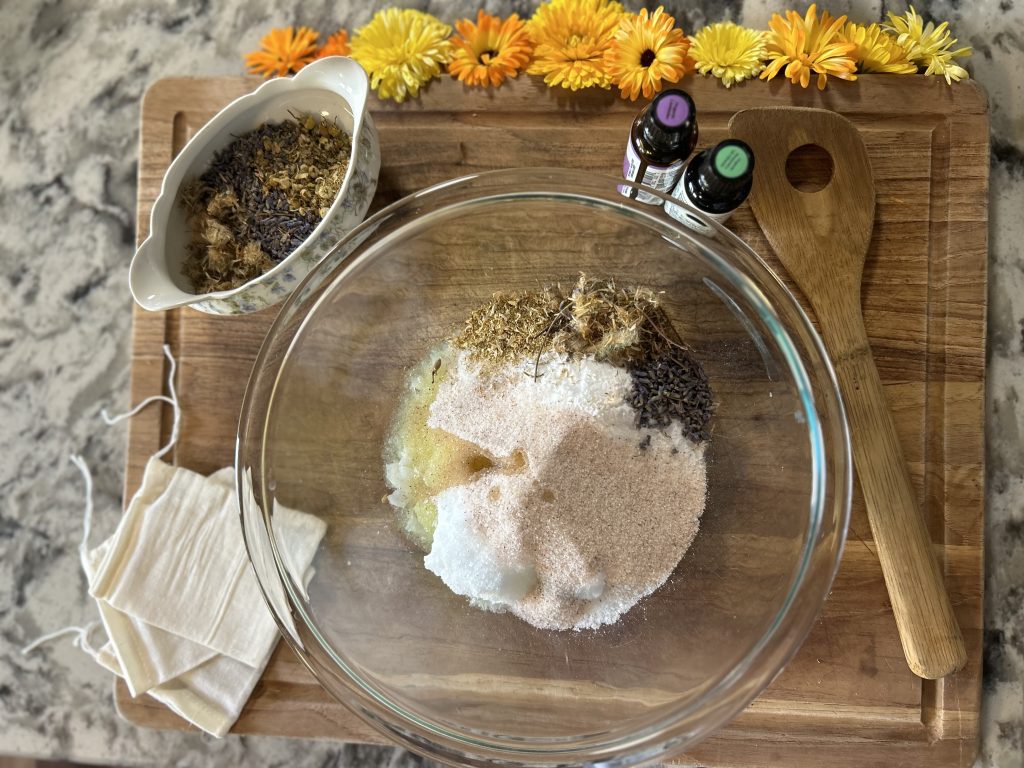
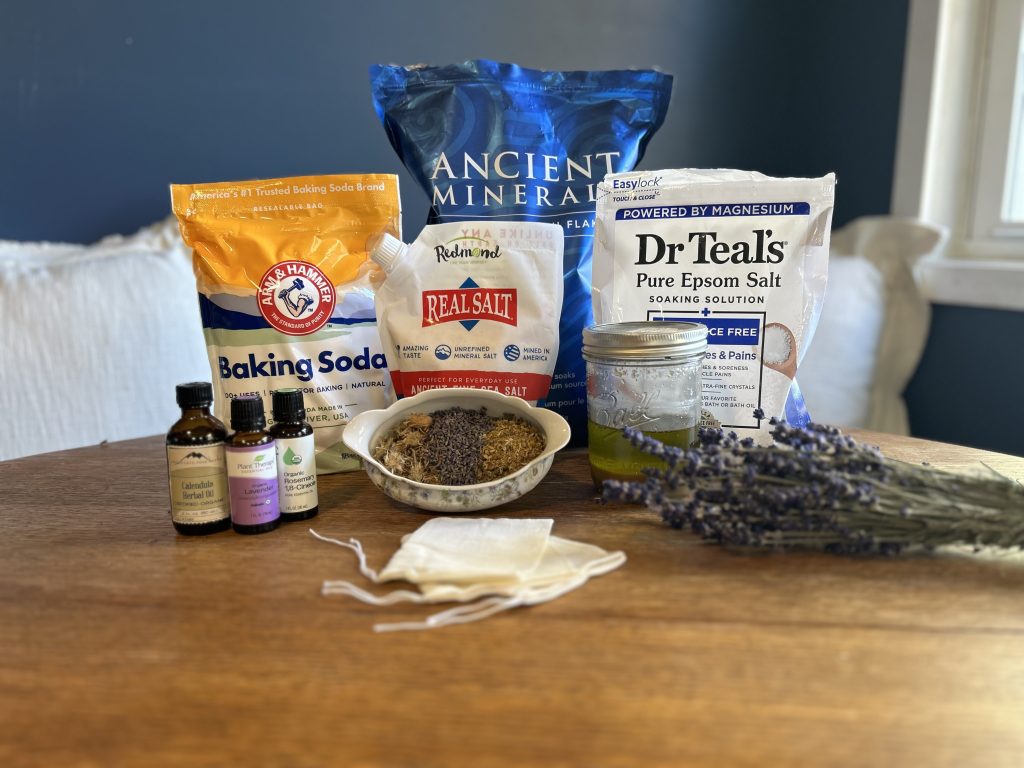
The Healing Benefits of Bath Soaks
Soaking in mineral-rich water offers both physiological and emotional benefits. Warm baths alone have been shown to reduce cortisol levels, ease muscle soreness, and promote better sleep, but when combined with natural minerals and botanicals, the effects are amplified.
Epsom Salt (Magnesium Sulfate)
Epsom salt is rich in magnesium — a mineral essential for over 300 enzymatic reactions in the body. Magnesium absorbed through the skin may help relax muscles, support nerve function, and promote calm (Waring, 2004). Regular soaks can reduce inflammation and ease muscle tension after long days in the garden or barn.
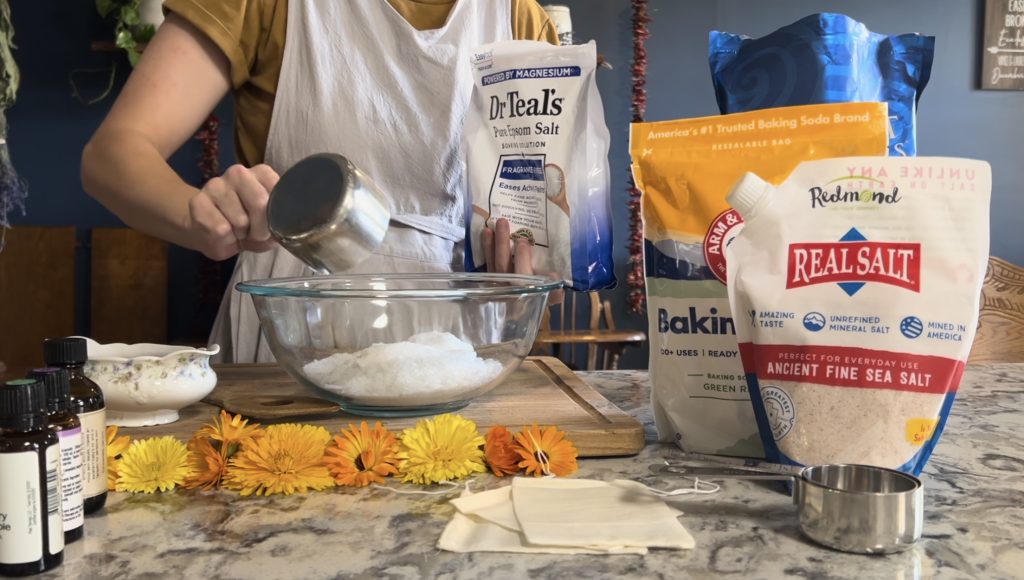
Magnesium Chloride Flakes
Similar to Epsom salt, magnesium chloride offers superior absorption and is gentler on sensitive skin. Studies show that transdermal magnesium can improve skin hydration and elasticity while also replenishing low magnesium levels (Engen et al., 2015).
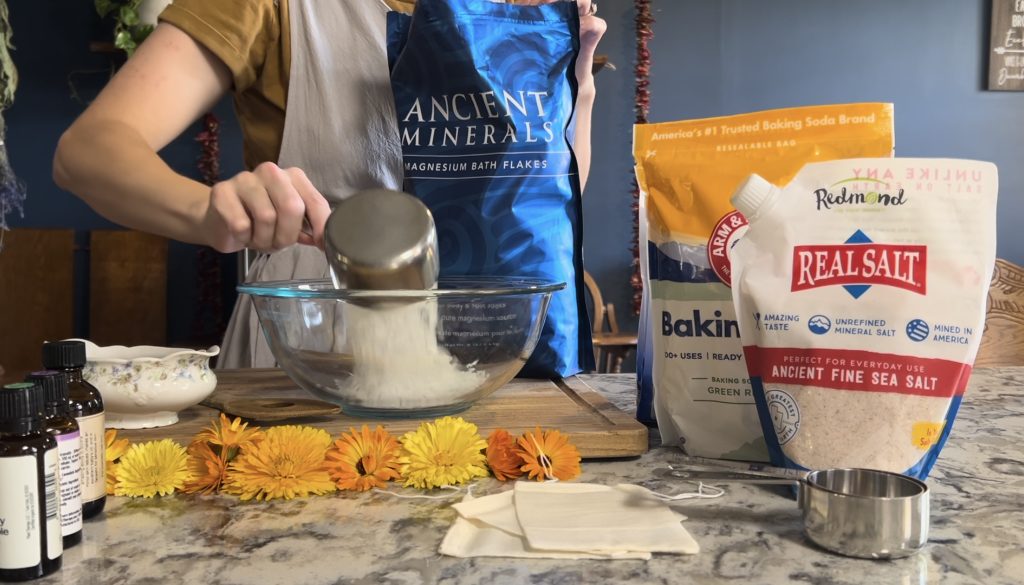
Dead Sea Salt and Trace Minerals
The Dead Sea is famous for its high mineral content — magnesium, potassium, calcium, and bromide — which promote skin healing and reduce inflammation (Proksch et al., 2005). Bathing in Dead Sea salt has been shown to improve conditions like eczema and psoriasis, making it a soothing choice for sensitive or dry skin.
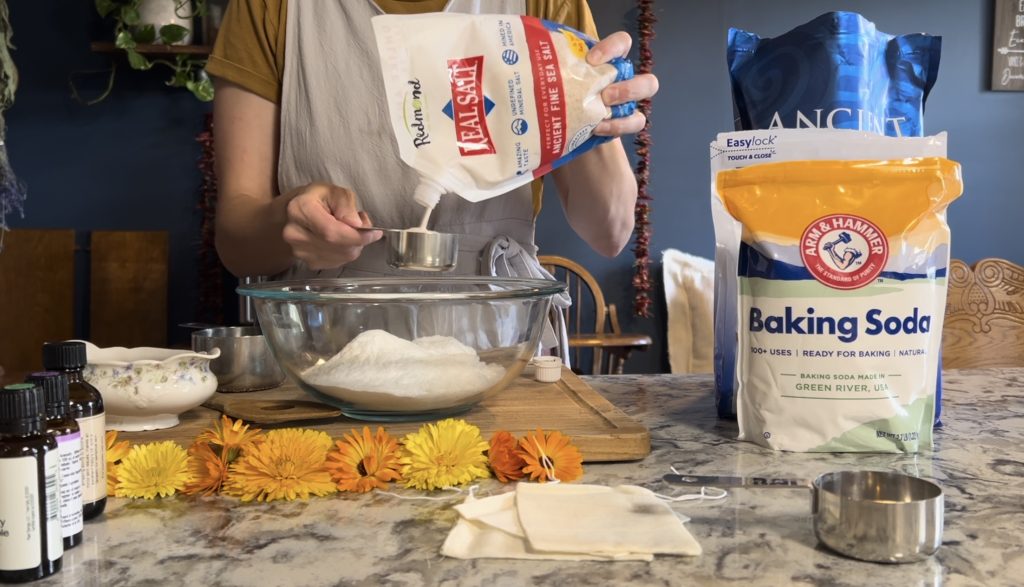
Baking Soda (Sodium Bicarbonate)
Baking soda, or sodium bicarbonate, is another valuable addition to bath soaks. It helps neutralize acids on the skin, gently exfoliates, and can calm irritation and itching. Studies have shown that baking soda baths may help soothe eczema, detoxify the skin, and restore pH balance (Berardesca et al., 2013). It also softens water, enhancing the feel of the bath and allowing minerals to absorb more effectively.
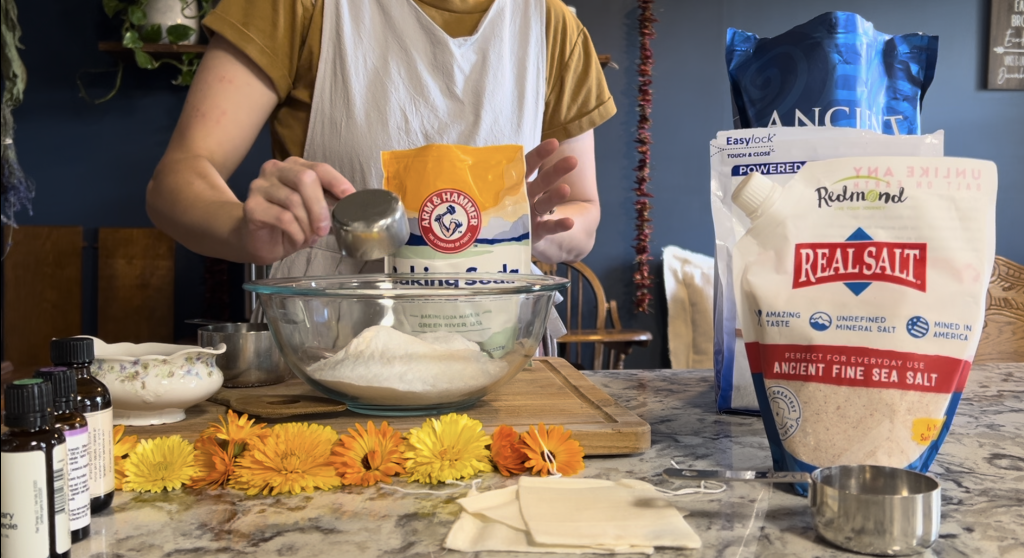
Clays: French Green, Bentonite, and Kaolin
Clays bring a gentle yet powerful detoxifying element to bath soaks. French green clay is rich in minerals like magnesium and calcium and helps draw out impurities while tightening and toning the skin. Bentonite clay, made from aged volcanic ash, carries a strong negative charge that binds to toxins, making it especially helpful for detox baths and skin purification (Sarikaya et al., 2002). Kaolin clay, the softest of the three, is ideal for sensitive skin—it gently cleanses, improves circulation, and leaves the skin feeling silky smooth. Adding a tablespoon or two of clay to your soak can turn an ordinary bath into a mineral spa treatment.
Herbs for a soothing herbal bath soak: Calendula, Rosemary, Lavender, Eucalyptus, and Ginger
Herbs add both aromatic and therapeutic value to bath soaks.
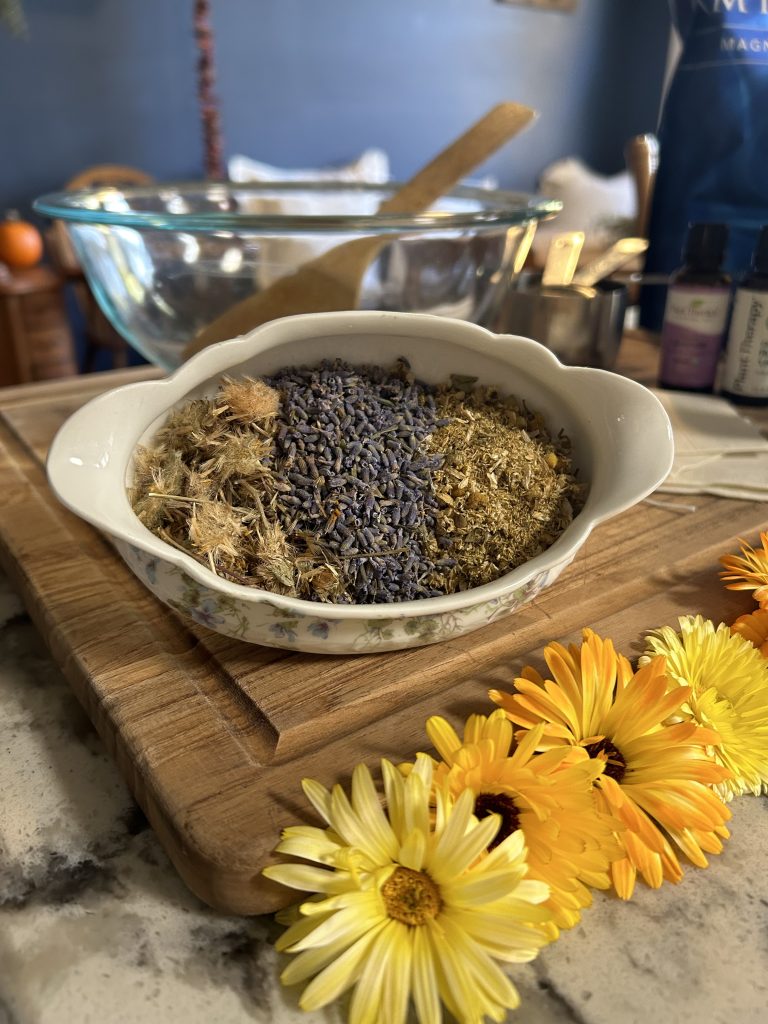
- Calendula soothes inflammation and encourages skin repair with its gentle, anti-inflammatory properties (Della Loggia et al., 1994).
- Rosemary increases circulation and helps relieve sore muscles.
- Lavender calms the nervous system and supports rest (Koulivand et al., 2013).
- Eucalyptus clears the sinuses and refreshes tired minds.
- Ginger provides gentle warmth, stimulating blood flow and easing stiffness.
Oatmeal and Milk
Both milk and colloidal oatmeal soften and moisturize the skin. Milk baths date back to Cleopatra, who was said to use them to maintain soft, radiant skin. Oatmeal binds moisture to the skin and soothes irritation — especially beneficial for dry or itchy conditions (Yuan et al., 2018).
Essential Oils
When used safely, essential oils provide aromatic comfort and targeted benefits. For example, lavender and chamomile encourage relaxation, peppermint cools sore muscles, and rosemary invigorates the senses. Always dilute essential oils properly and avoid them during pregnancy unless approved by a healthcare provider.
Three Soothing Herbal Bath Soak Recipes
Below are three of my go-to blends for muscle aches, stress relief, and skin nourishment.
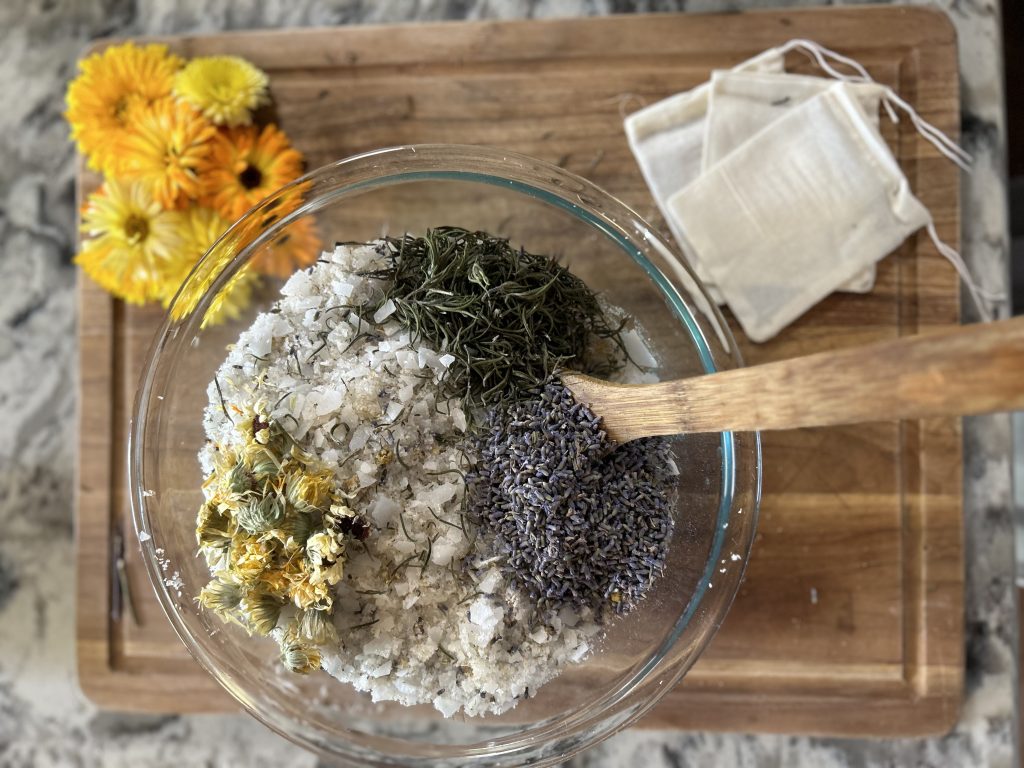
1. Muscle-Ache Soak
Makes: 1 bath
Ingredients
- 1 cup Epsom salts
- 1/2 cup magnesium chloride flakes
- 1/2 cup Dead Sea salt
- 1/2 cup baking soda
- 2 tbsp dried arnica flowers (optional — avoid broken skin)
- 10 drops rosemary essential oil
- 8 drops peppermint essential oil
Directions
Add salts and herbs to warm water and stir to dissolve. Add essential oils, swirl, and soak for 45 minutes to an hour.
Why it works: Magnesium supports muscle recovery; peppermint cools and reduces pain perception; rosemary stimulates circulation.
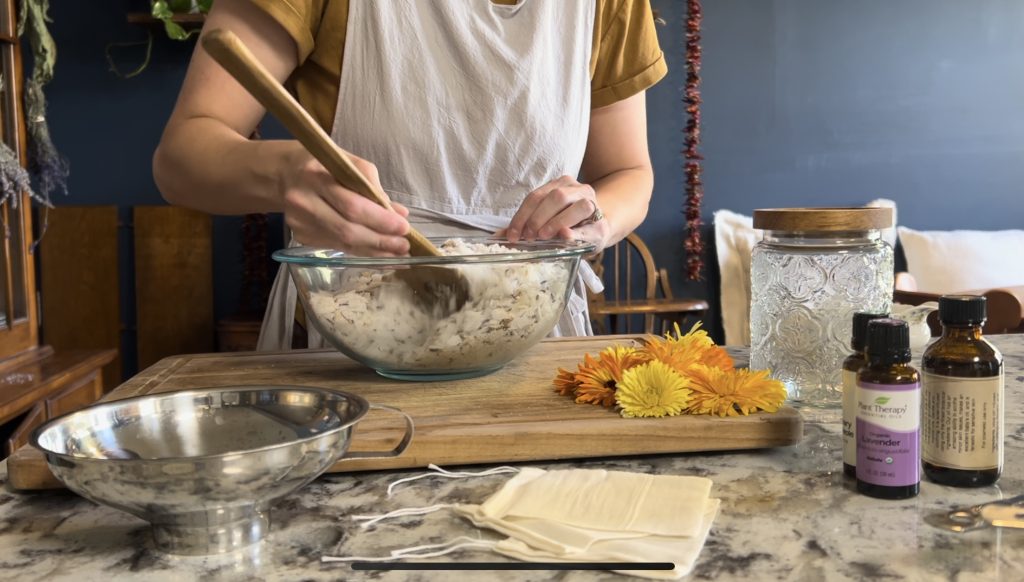
2. Stress-Relief Soak
Makes: 1 bath
Ingredients
- 1 cup Dead Sea salt
- 1/2 cup Epsom salts
- 1/2 cup baking soda
- 1/2 cup powdered milk or 1 cup full-fat milk
- 1/2 cup dried lavender flowers
- 1 tbsp dried chamomile flowers
- 8 drops lavender essential oil
Directions
Combine salts and milk under warm running water. Add herbs or essential oils and soak for 45 minutes to an hour while breathing deeply.
Why it works: The combination of magnesium and calcium promotes relaxation, while lavender and chamomile soothe the nervous system and reduce anxiety.
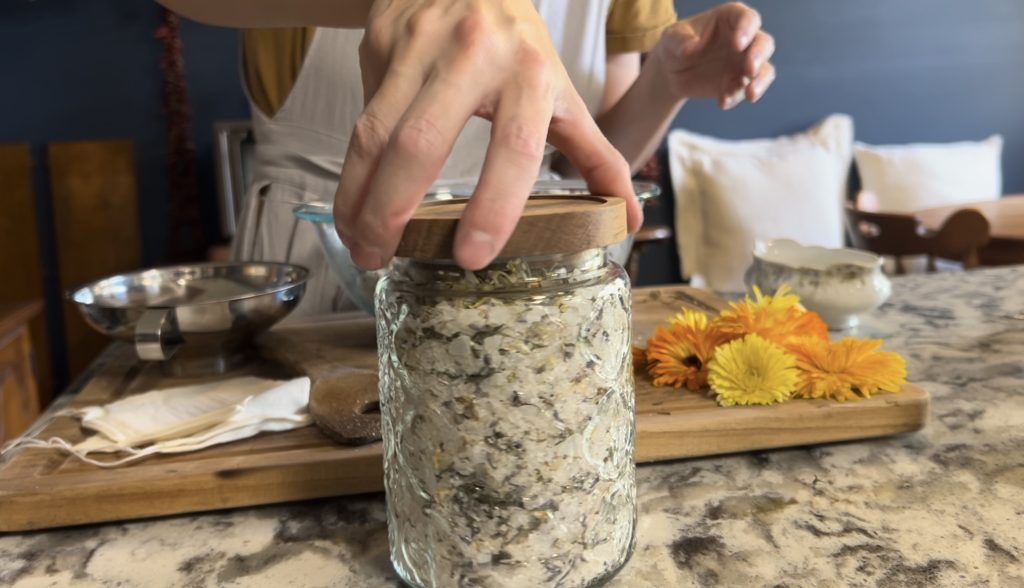
3. Soothing Skin Soak
Makes: 1 bath
Ingredients
- 1 cup colloidal oatmeal
- 1/2 cup Epsom or Dead Sea salt
- 1/2 cup baking soda
- 1/4 cup powdered milk
- 2 tbsp dried calendula petals
- 5 drops of chamomile essential oil
Directions
Mix all ingredients and add to a warm bath. Soak for 30-45 minutes, then pat dry.
Why it works: Oatmeal and calendula nourish and protect the skin barrier while easing irritation and redness.
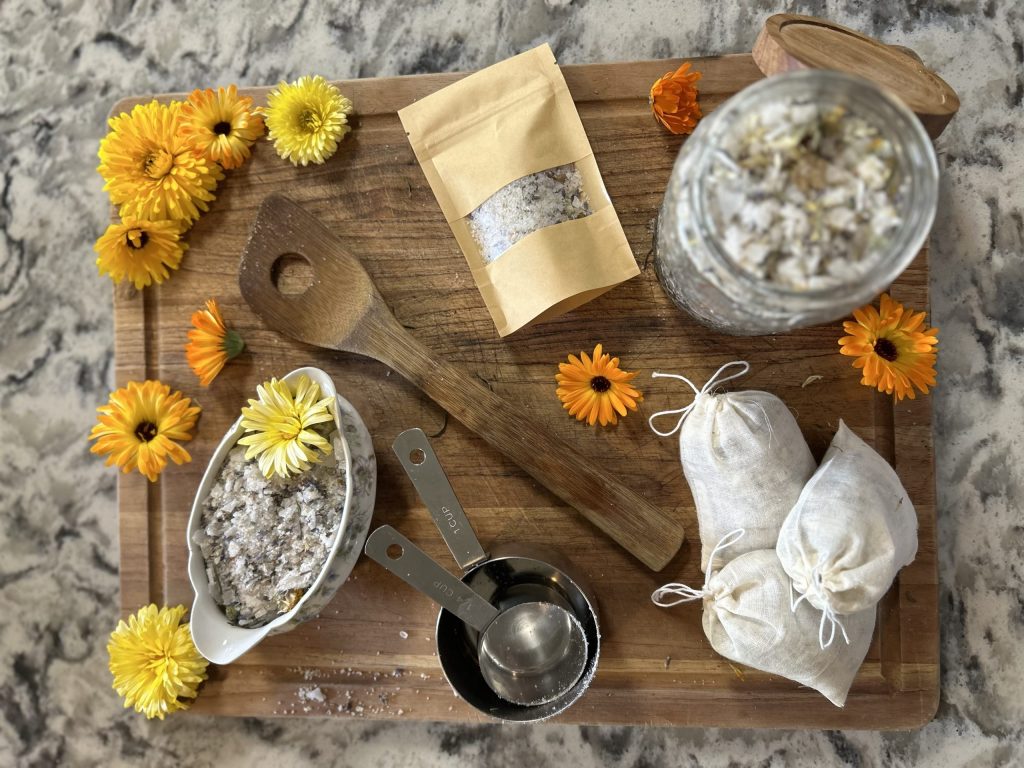
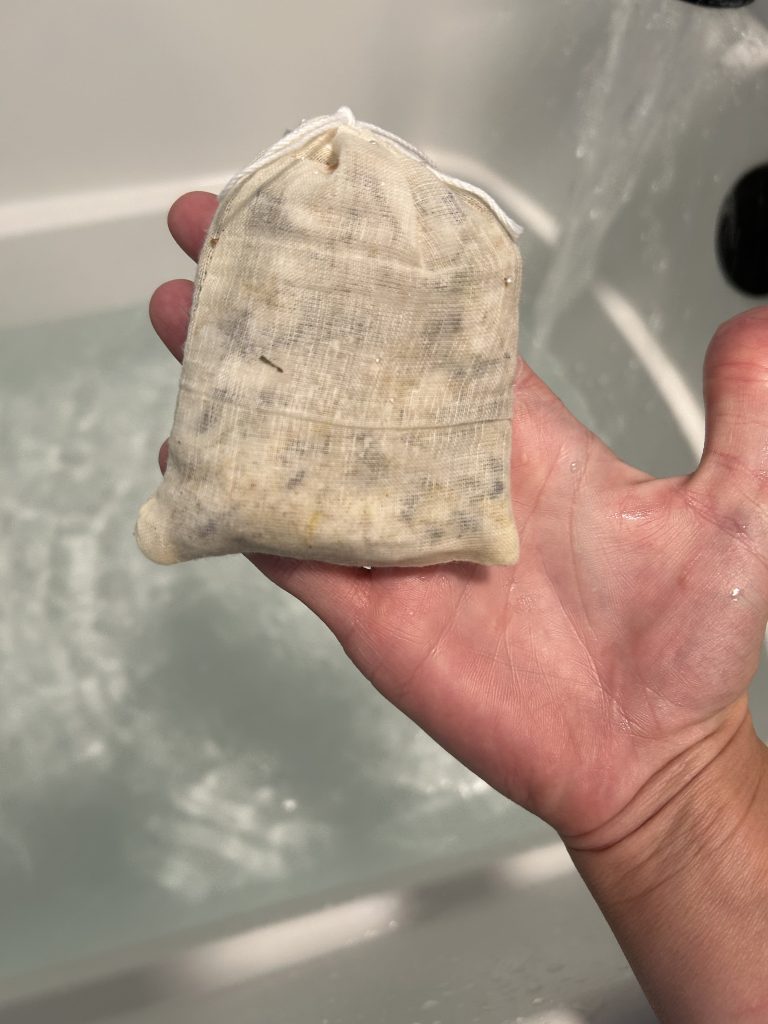
TIP: Don't feel like running a bath full of water but still want the effects of a soothing herbal bath soak? Grab a tub big enough for a few gallons of water, toss in the soak, and stick your feet in!
Pregnancy and Allergy Cautions
- Avoid hot baths during pregnancy; keep water at or below 100°F (37.7°C).
- Skip arnica, rosemary, peppermint, and strong essential oils if pregnant or nursing unless approved by a qualified professional.
- Always perform a patch test for herbs like calendula or chamomile if you have sensitivities to the Asteraceae family.
- Store dried herb mixtures in airtight jars and use within six months.
Closing Thoughts
A soothing herbal bath soak is more than self-care — it’s an act of restoration. It’s where you lay down the weight of the day, soothe your weary muscles, and reconnect with your own rhythm. From the healing salts of the earth to the aromatic comfort of herbs grown in your own garden, these simple, natural ingredients remind us that wellness can be as humble as a warm bath and as powerful as nature itself.
Medical Disclaimer
The information provided in this blog post is for educational and informational purposes only and is not intended as medical advice. I am not a licensed healthcare professional, and the content shared on this website is not a substitute for professional medical guidance, diagnosis, or treatment.
Always consult a qualified healthcare provider before making any changes to your health regimen, especially if you are pregnant, nursing, taking medications, or have any existing health conditions. Do not disregard medical advice or delay seeking it because of something you have read on this website.
Herbal remedies and natural wellness practices can support the body, but they are not one-size-fits-all. Every individual is unique, and what works for one person may not be suitable for another.
While I strive to share accurate, up-to-date, and well-researched herbal knowledge based on traditional and modern sources, I make no guarantees regarding the results you may experience.
By using this blog and engaging with its content, you acknowledge that you do so at your own risk. I am not responsible for any adverse effects or consequences resulting from the use or misuse of any information provided here.
