
Cloth Napkins
Making the switch to Cloth Napkins
Disclosure: This post may contain affiliate links. Learn more here.
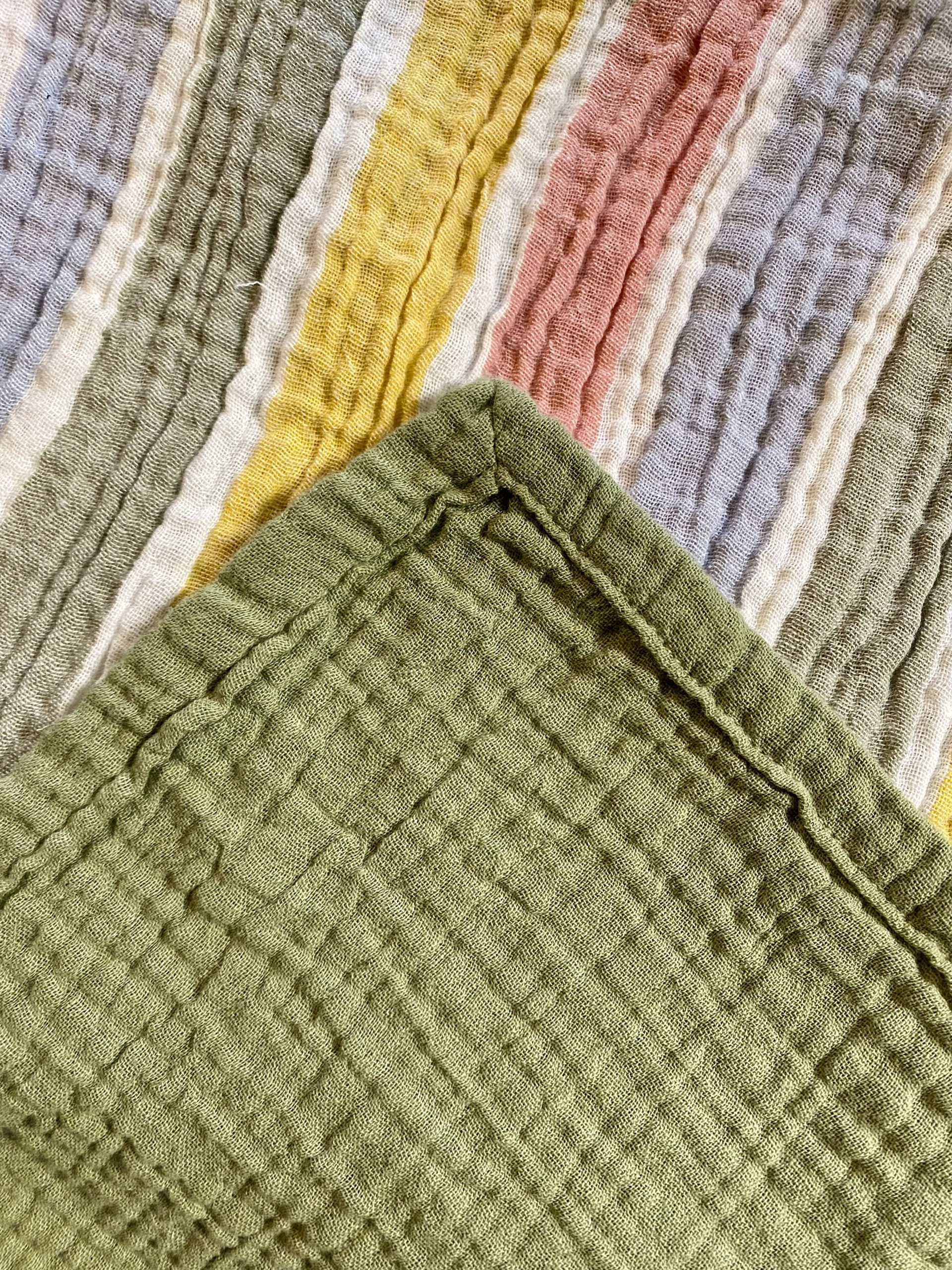
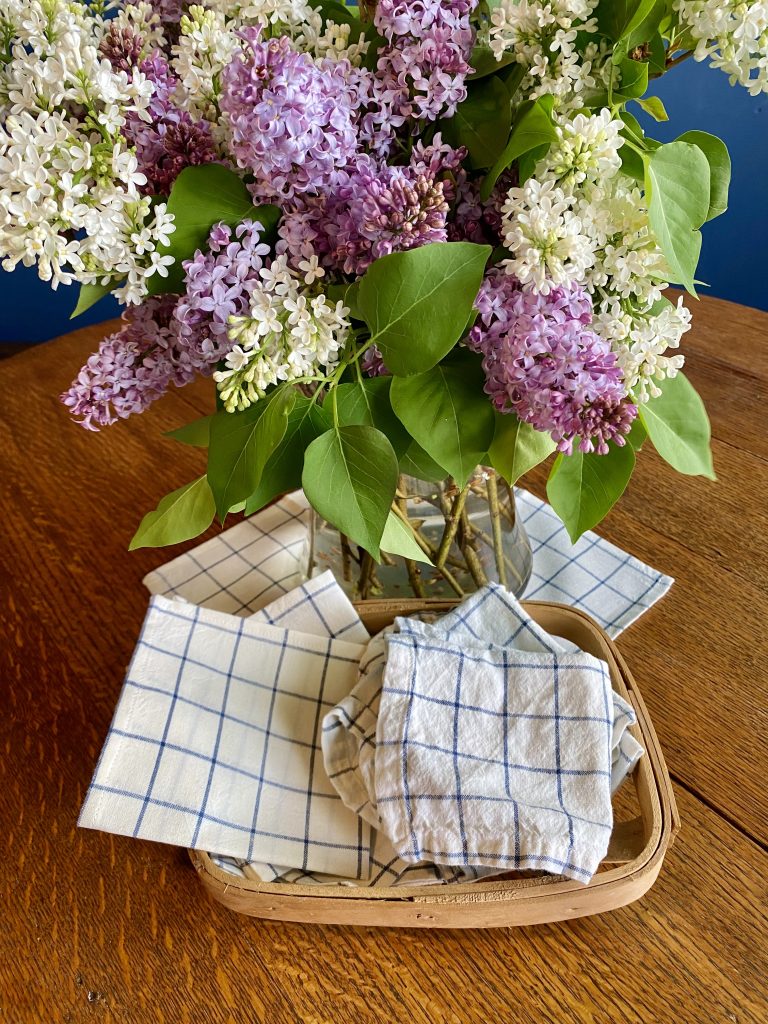
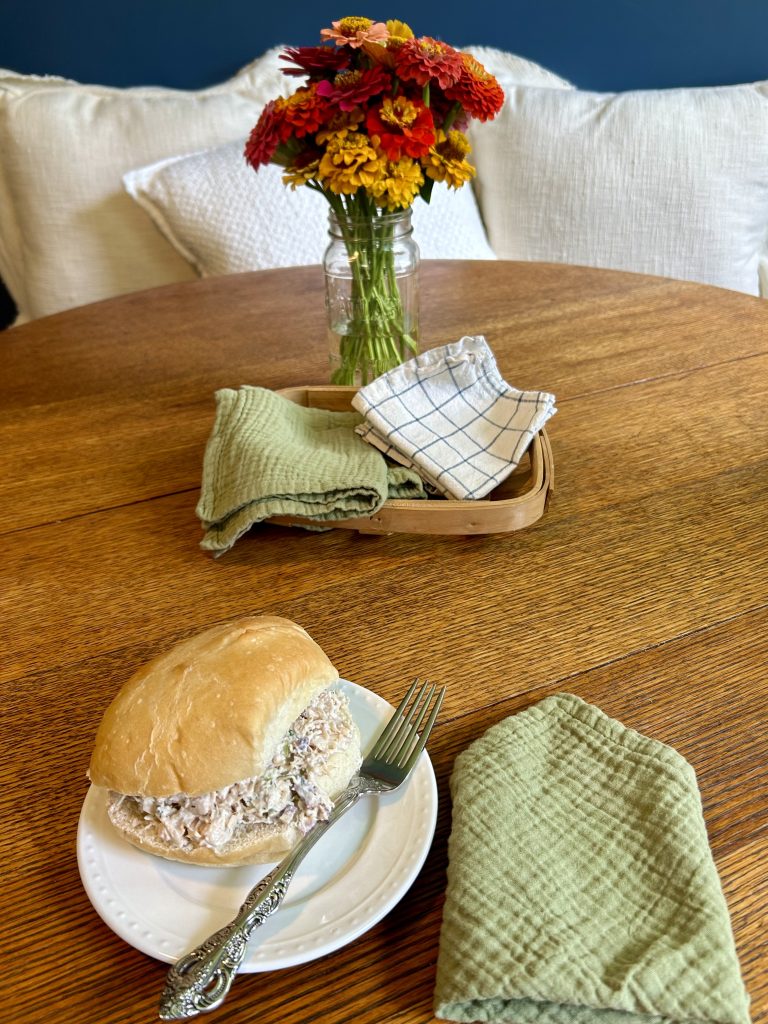
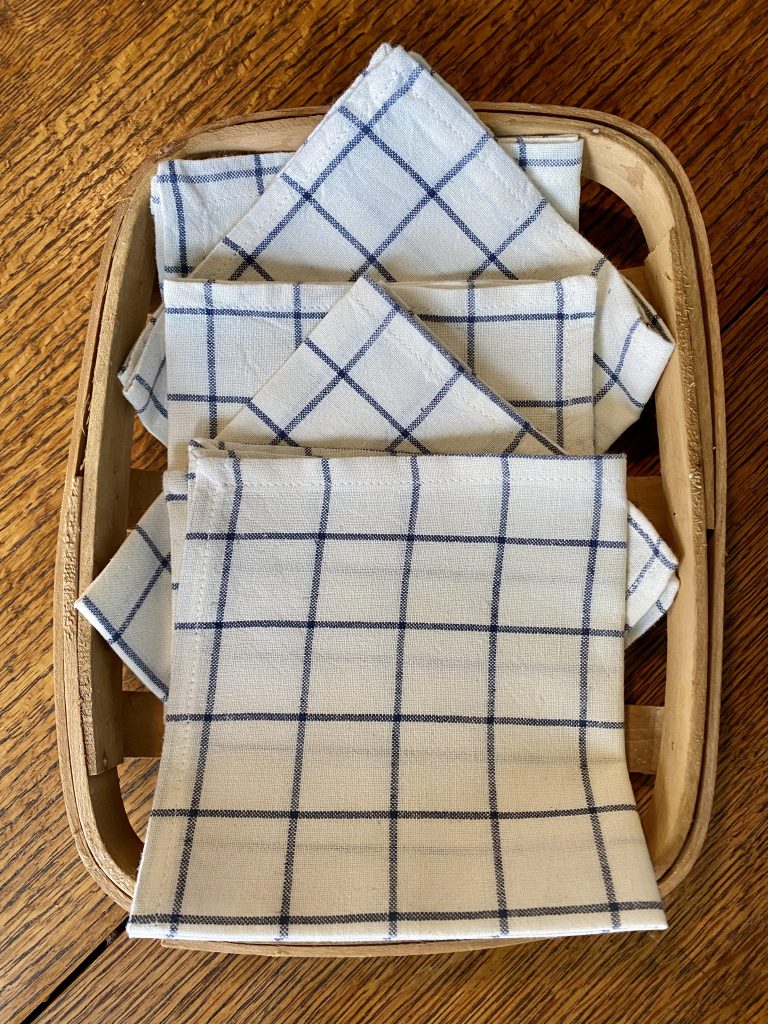
In a personal attempt to reduce consumption and waste from our family, I embarked on the journey of learning a new skill, sewing. I made cloth napkins out of 100% cotton and cotton muslin. As a family with small children, our mealtimes are often very messy with chubby fingers smearing food everywhere several times a day. We were using 2-3 paper napkins per person per mealtime, and I noticed the waste starting to build up.
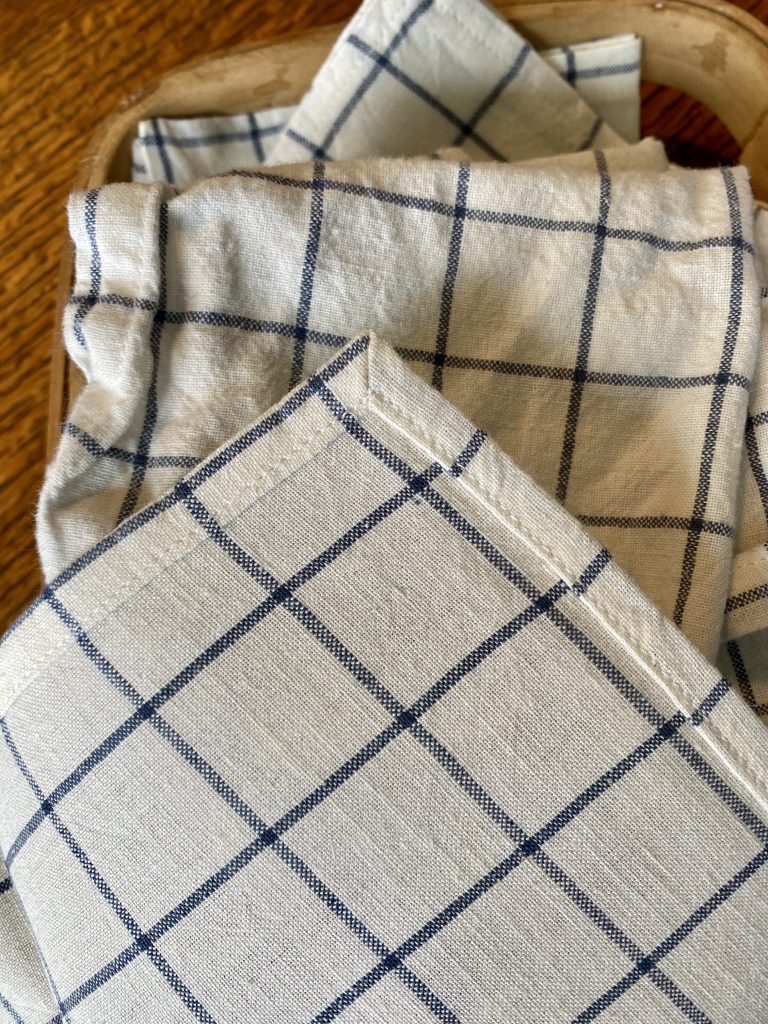
Being a homesteader, one of my goals is to be sustainable as possible. Buying paper napkins each week was proving to be unsustainable for our family and pocketbook. Instead of using 2-3 napkins per meal, I was able to reduce our napkin usage to just one cloth napkin per person, per day! Now, we just toss them in the washing machine at the end of each day. I also wanted to ensure that my napkins would last through constant washings, so I mitered the corners.
We are happy to have stopped spending money on paper napkins and reduce the waste that ends up in landfills. The extra benefit to sewing your own napkins is getting to personalize them according to your style and decor! My children definitely prefer using soft cotton muslin over scratchy paper too!
The Benefits of Switching from Paper Napkins to Cloth Napkins
Switching from paper napkins to cloth napkins is a simple yet impactful step toward a more sustainable lifestyle. Not only does this change benefit the environment, but it also enhances your dining experience in various ways. Let’s explore the key benefits of making this switch.
1. Environmental Impact
- Reduction in Waste: One of the most significant advantages of using cloth napkins is the reduction in waste. Unlike paper napkins, which are single-use products, cloth napkins can be reused countless times. As a result, you significantly lessen the amount of waste you generate, which, in turn, reduces the strain on landfills.
- Conservation of Resources: Additionally, the production of paper napkins requires substantial amounts of water, trees, and energy. In contrast, while the initial production of cloth napkins may require resources, their reusable nature means they have a much lower environmental footprint over time.
- Decreased Carbon Footprint: Furthermore, the manufacturing and transportation of paper napkins contribute to greenhouse gas emissions. By choosing cloth napkins, especially those made from natural fibers like cotton, you effectively lower your carbon footprint across their lifecycle.
2. Economic Savings
- Cost Efficiency: Initially, the cost of cloth napkins may seem higher. However, when you consider that they are reusable, the long-term savings become apparent. Over time, a set of cloth napkins can save you a considerable amount of money compared to the continuous purchase of paper napkins.
- Less Frequent Purchases: In addition to saving money, switching to cloth napkins means you won’t need to restock as often. This reduces both the frequency of shopping trips and the associated costs, making your household more efficient and economical.
3. Aesthetic and Practical Benefits
- Enhanced Dining Experience: Moreover, cloth napkins bring a touch of sophistication to any meal. Whether it’s a casual family dinner or a formal gathering, cloth napkins can elevate the dining experience. They are available in a wide range of colors and patterns, allowing you to customize your table setting to match the occasion.
- Durability: Another practical benefit is the durability of cloth napkins. They are far more robust than paper napkins, meaning they can handle spills and messes more effectively. Additionally, they are softer on the skin, offering a more comfortable dining experience.
- Versatility: Beyond dining, cloth napkins are incredibly versatile. They can double as placemats, kitchen towels, or even gift wraps, making them a multi-functional addition to your home.
Tutorial: How to Sew 12-Inch Cotton Table Napkins
Creating your own cloth napkins is a rewarding and eco-friendly project that not only aligns with sustainable practices but also allows you to personalize your table setting. Follow this simple step-by-step guide to sew your own 12-inch cotton table napkins.
Materials Needed:
- 1 yard of 100% cotton fabric (will yield 4 napkins)
- Scissors or rotary cutter
- Ruler or measuring tape
- Iron and ironing board
- Pins or clips
- Fabric Pen
- Sewing machine
- Coordinating thread
Step 1: Choose and Prepare Your Fabric
- Select Fabric: First, choose a high-quality cotton fabric in a pattern or color that complements your table setting. To prevent shrinkage and remove any chemicals or dyes, it’s important to pre-wash the fabric before starting your project.
- Iron Fabric: After washing, iron the fabric to remove any wrinkles and ensure a smooth, even surface for cutting.
Step 2: Measure and Cut the Fabric
- Measure: Next, using your ruler or measuring tape, measure and mark 12.5-inch squares on the fabric. The extra half-inch will serve as the seam allowance.
- Cut: Then, carefully cut out the squares using scissors or a rotary cutter. From one yard of fabric, you should be able to cut four 12.5-inch squares.
Step 3: Create the Hem
- Fold the Edges: Now, starting with one side of the square, fold the edge over 1/4 inch toward the wrong side of the fabric and press it with an iron. After that, fold it over another 1/4 inch to enclose the raw edge and press again. Repeat this process on all four sides of the napkin.
- Pin or Clip: Once all the edges are folded, pin or clip them in place to prepare for sewing.
Step 4: Sew the Hem
- Set Up Sewing Machine: Before you start sewing, thread your sewing machine with coordinating thread and set it to a straight stitch.
- Sew: Beginning at one corner, sew along the inner edge of the folded hem, about 1/8 inch from the edge. As you reach each corner, lift the presser foot with the needle down, pivot the fabric, and continue sewing along the next side. Continue this process until all four sides are sewn.
- Secure Threads: Finally, backstitch at the end to secure the threads, then trim any excess threads.
Step 5: Finish the Napkins
- Iron Again: To complete your project, give your napkins one final press with the iron to ensure crisp edges.
- Repeat: Repeat the process for each napkin until you have the desired number of napkins.
Final Thoughts
By sewing your own cloth napkins, you not only create a sustainable alternative to disposable paper napkins but also add a personal touch to your dining experience. Over time, these napkins can be reused for years, making them a practical and eco-friendly choice for your home.
