
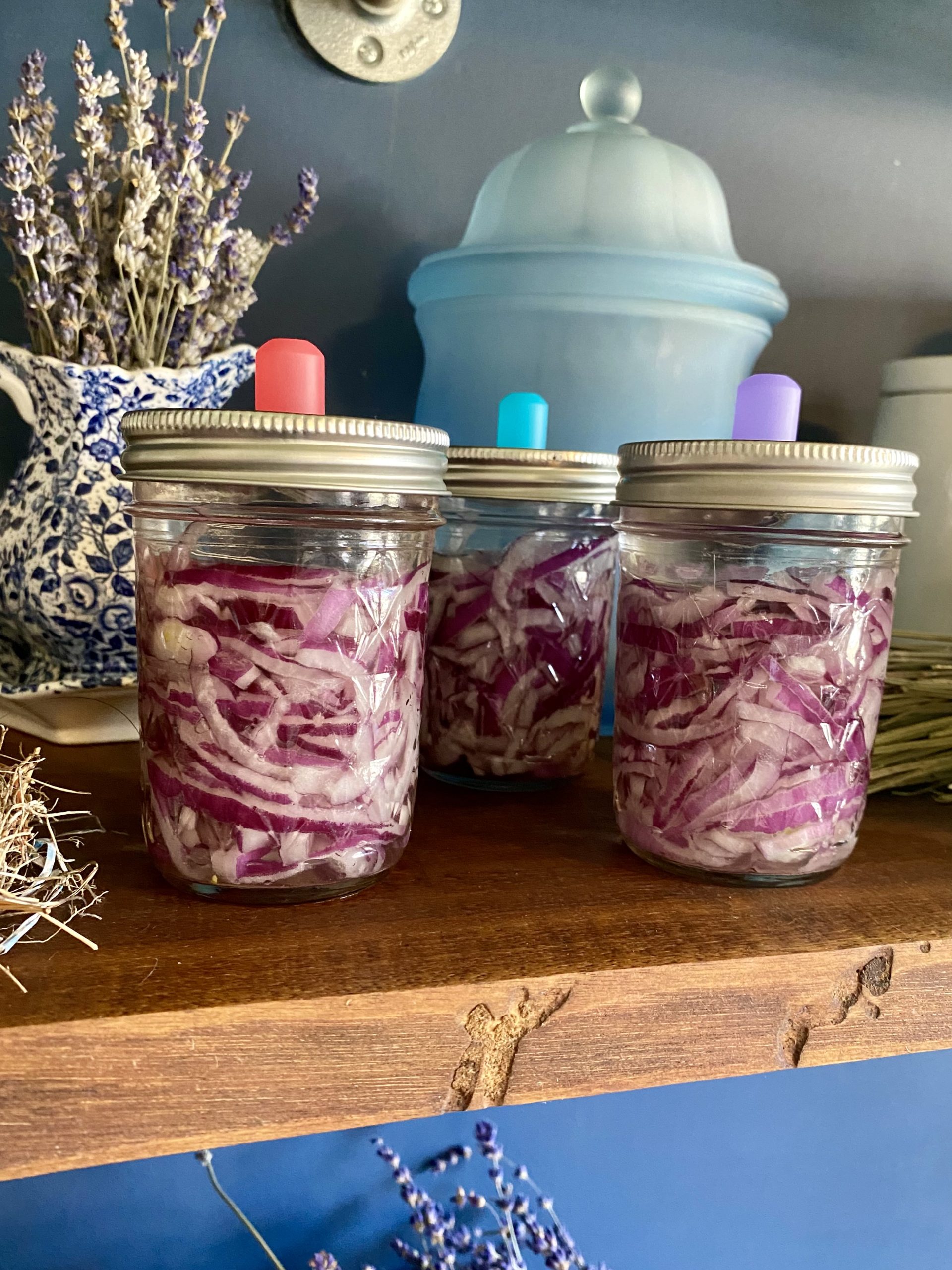
Pickled Onions
Disclosure: This post may contain affiliate links. Learn more here.
There is something deeply satisfying about opening a jar from your own kitchen and pulling out something simple that completely transforms a meal. Pickled onions are one of those things.
They start as an ordinary red onion from the garden or grocery store, but after a few days of natural fermentation they turn into something vibrant, tangy, and alive with beneficial probiotics.
On our homestead, they are a staple. They find their way onto burgers hot off the grill, tucked into tacos on busy weeknights, tossed into fresh garden salads, or layered into wraps for a quick lunch while the children play outside.
They are simple to make, require only a few ingredients, and are one of the easiest fermented foods to add to your kitchen routine.
If you’ve been wanting to start fermenting foods at home, this a perfect project to begin with.
Why Make Pickled Onions by Fermentation?
Most pickled onion recipes rely on vinegar. While vinegar pickles are quick and tasty, traditionally prepared pickled onions are made through natural fermentation.
This method:
• preserves the onions naturally
• creates beneficial probiotics
• develops a deeper, more complex flavor
• softens the sharp bite of raw onions
Instead of tasting harsh, lacto-fermented onions become bright, tangy, and slightly sweet.
And the best part is, nature does the work for you.
What Do Pickled Onions Taste Like?
If you’ve never had fermented onions before, the flavor is beautifully balanced.
They are:
• tangy
• lightly sour
• slightly sweet
• crisp yet tender
The bite of raw onion mellows into something much more enjoyable and versatile.
Ways to Use Pickled Onions
Once you have a jar in the fridge, you’ll start reaching for them often.
We use them on:
• burgers
• tacos
• salads
• wraps
• sandwiches
• eggs
• grain bowls
They add brightness and balance to almost any meal.
Ingredients
This is a simple, small-batch recipe perfect for beginners.
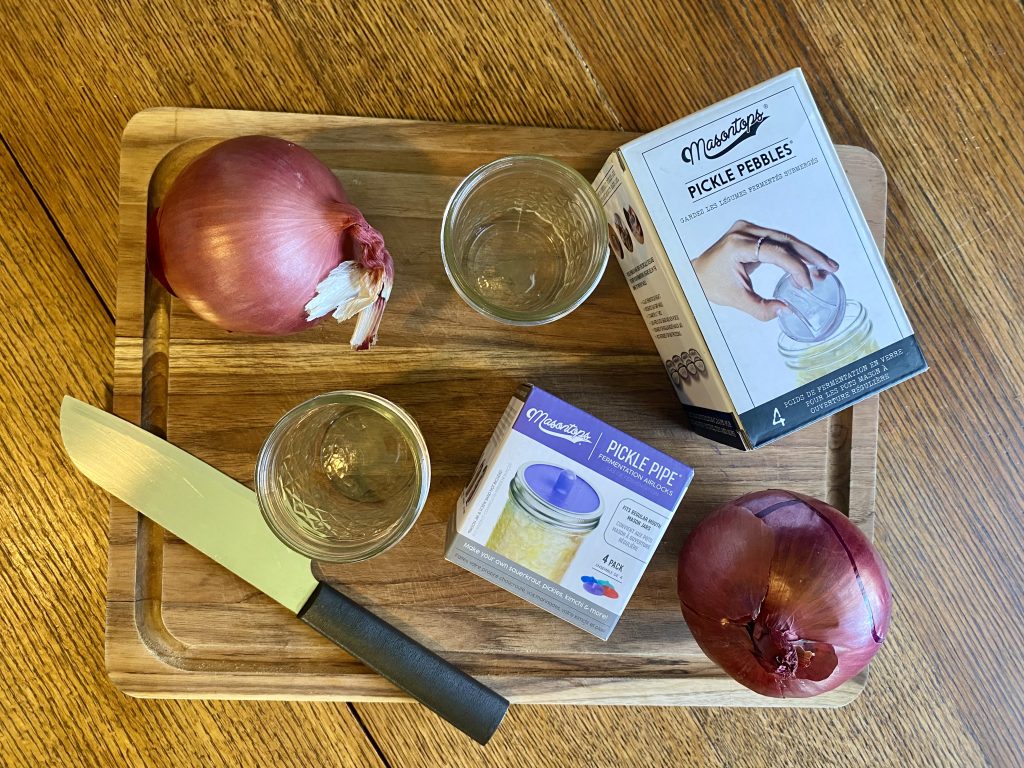
You will need:
• 1 whole red onion
• 1½ cups filtered water
• 1 tablespoon + ⅛ teaspoon fine sea salt (3% brine)
Optional:
• garlic
• peppercorns
• mustard seed
• fresh herbs
Understanding the 3% Brine
A proper salt ratio is what makes fermented pickled onions safe and successful.
A 3% brine allows beneficial bacteria to thrive while preventing harmful microbes.
For this recipe:
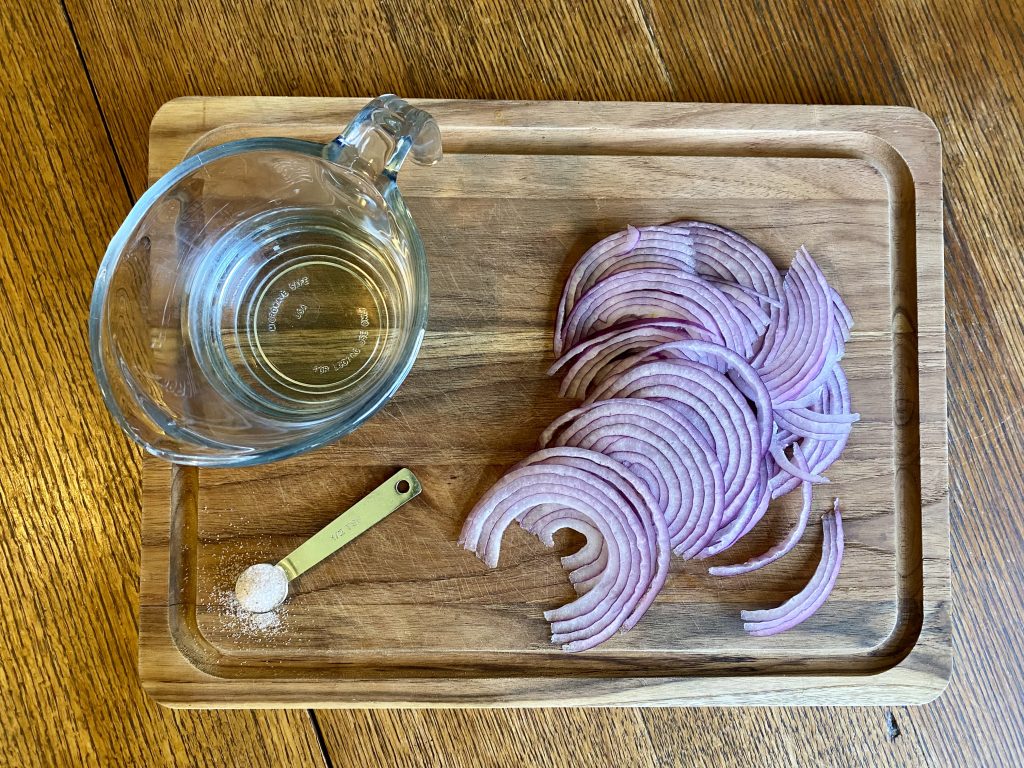
1½ cups water + 1 tablespoon + ⅛ teaspoon salt = 3% brine
Once you learn this, you can confidently ferment almost any vegetable.
How to Make Pickled Onions
Step 1: Slice the Onion
Peel and thinly slice one red onion into rings or half moons.
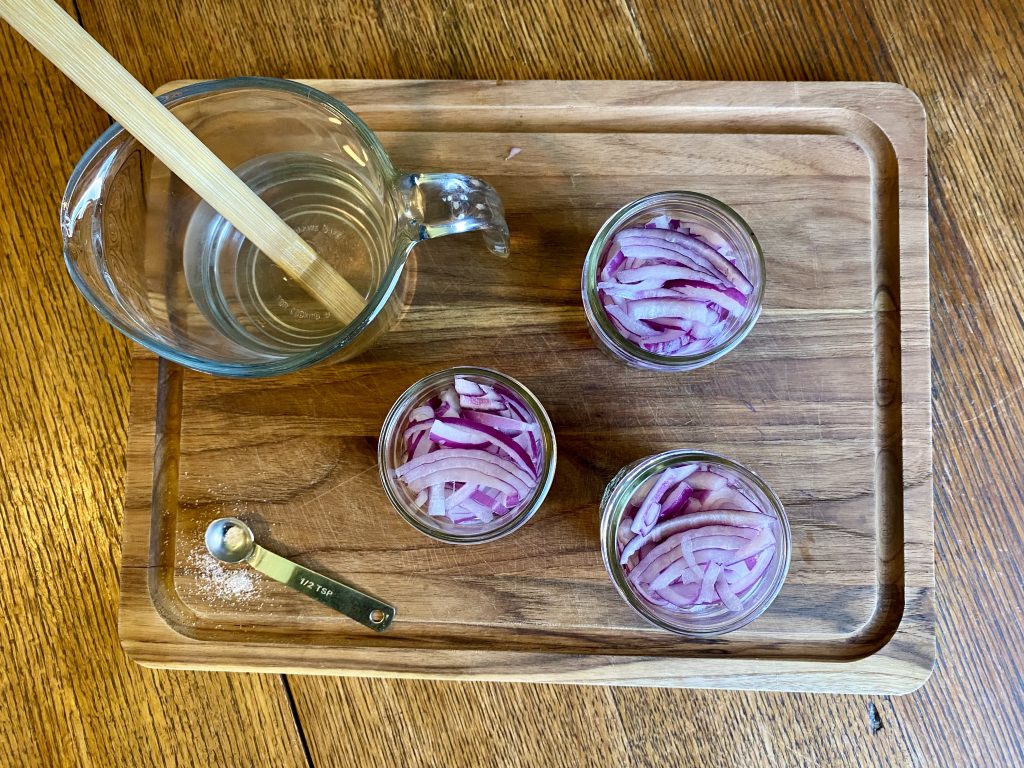
Step 2: Pack the Jar
Place onions into a clean jar, pressing gently to fill space.
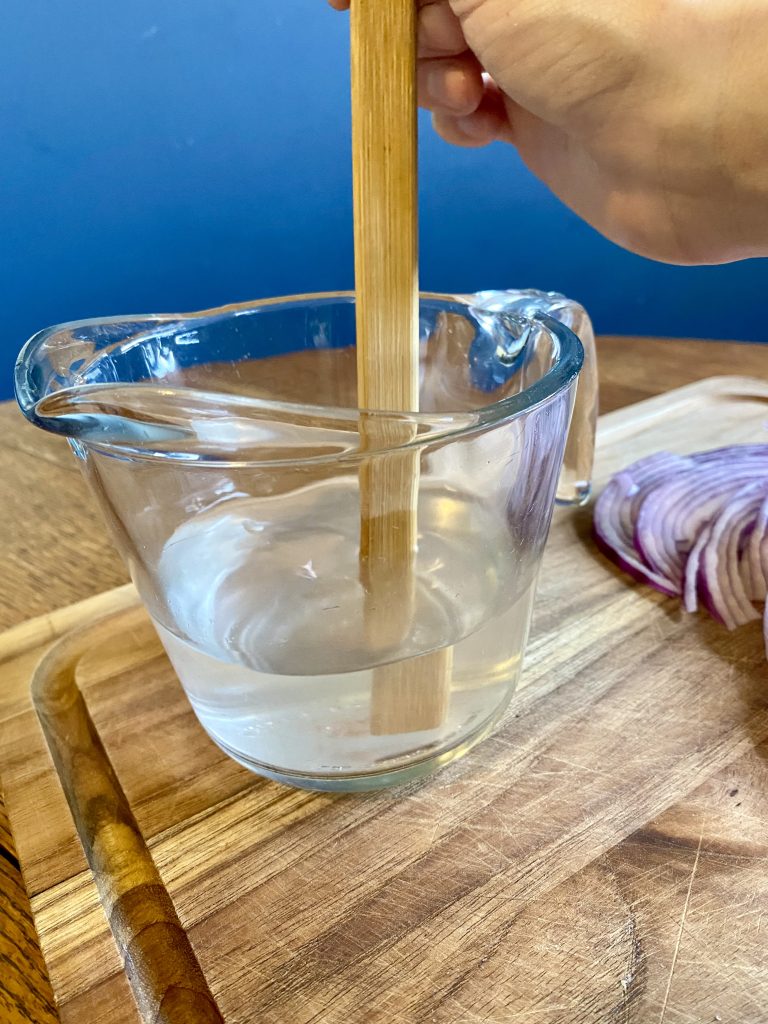
Step 3: Make the Brine
Mix:
• 1½ cups water
• 1 tablespoon + ⅛ teaspoon salt
Stir until dissolved.
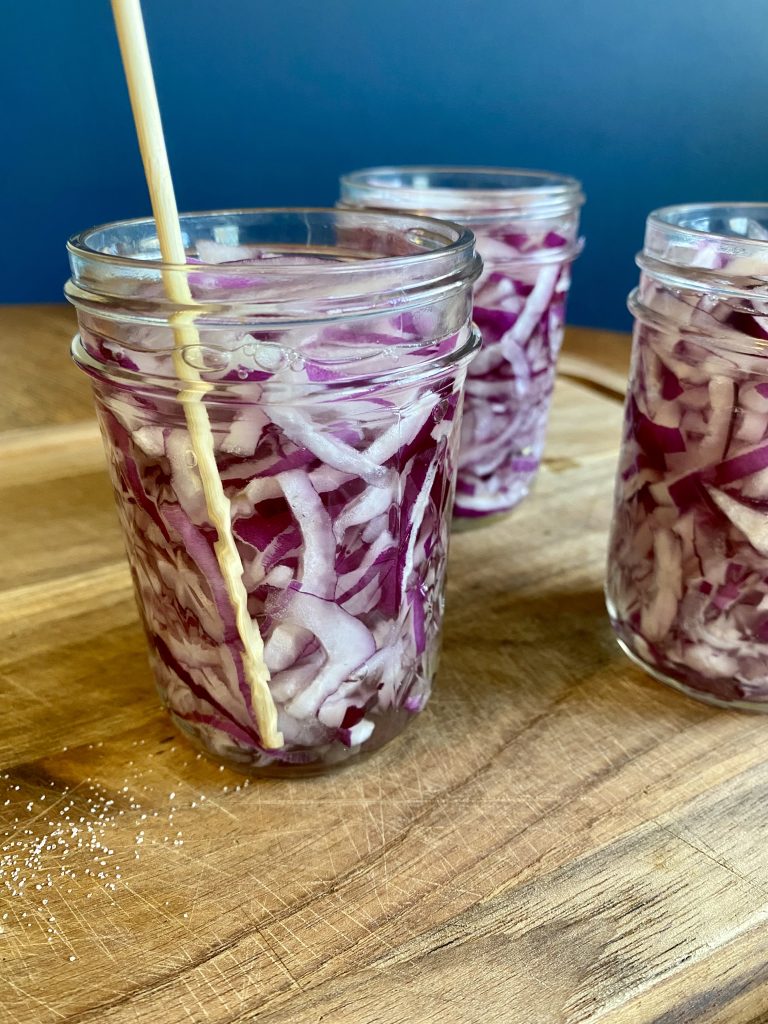
Step 4: Pour the Brine
Cover onions completely with brine.
Leave about ½ inch headspace.
Step 5: Ferment the Pickled Onions
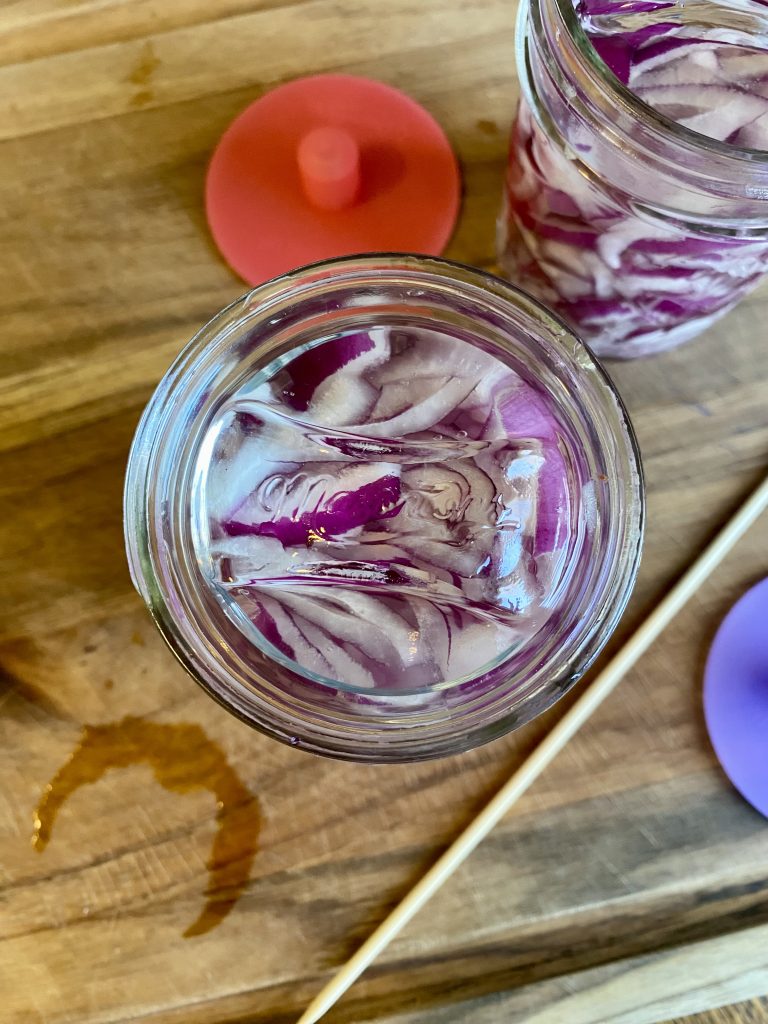
Once your onions are fully submerged in the brine, place a pickle pebble (fermentation weight) on top to keep everything safely below the surface. This is an important step to help prevent mold and ensure a successful ferment.
Next, secure a lid fitted with a pickle pipe.
Pickle pipes are a simple, reliable tool that allow gases to escape during fermentation while keeping oxygen out—creating the ideal environment for your pickled onions to ferment safely without needing to burp the jar.
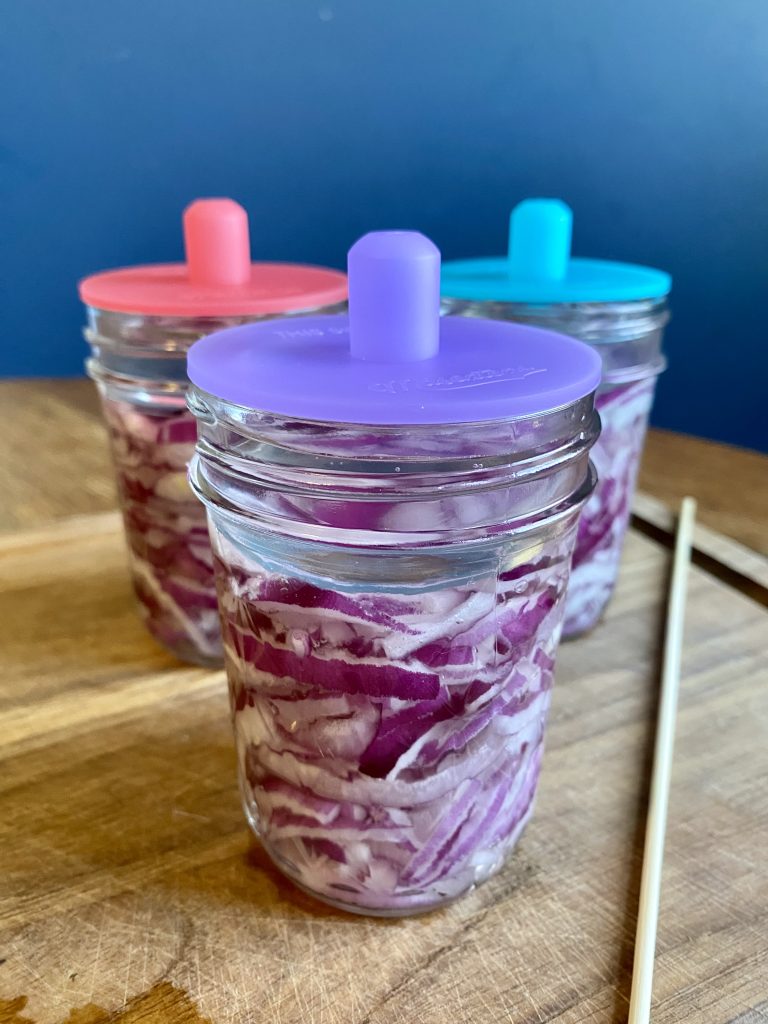
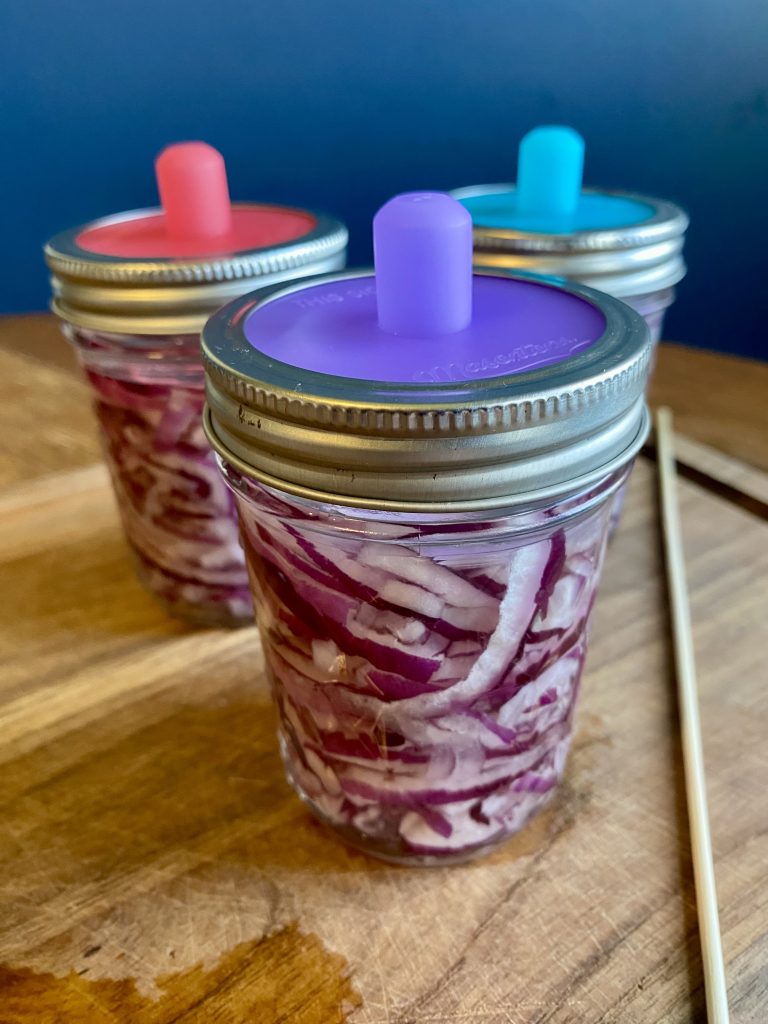
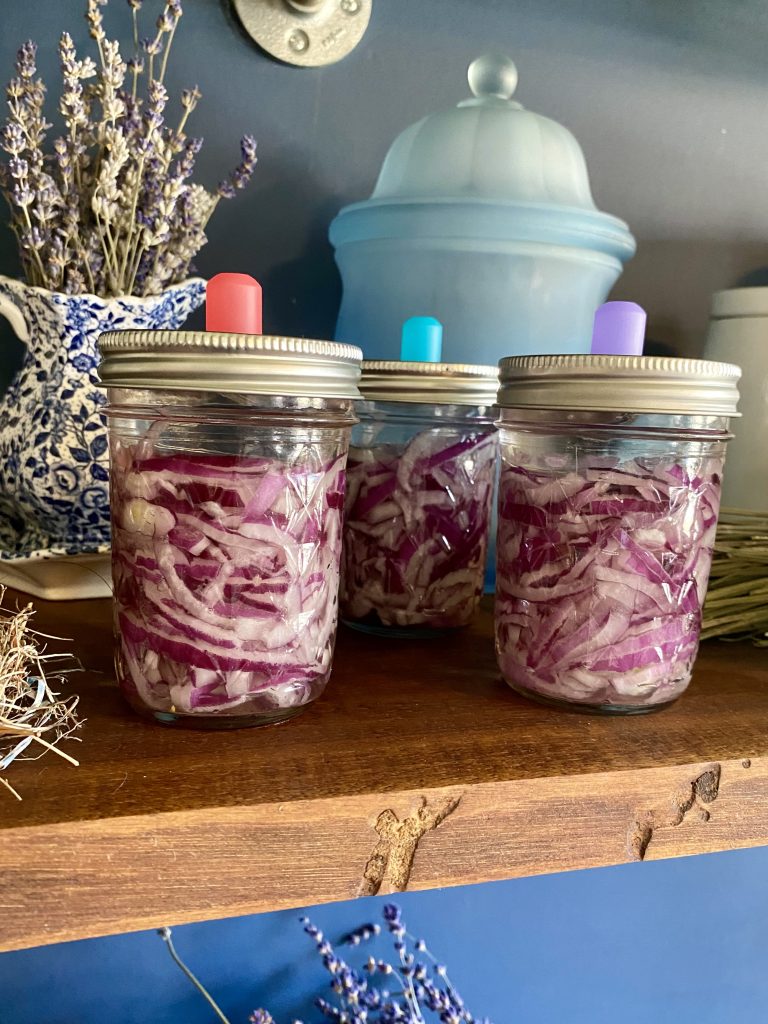
Place the jar at room temperature, out of direct sunlight.
Over the next few days, you may notice:
• bubbles forming
• brine becoming slightly cloudy
• a pleasantly tangy aroma developing
These are all signs that your pickled onions are fermenting just as they should.
How Long to Ferment Pickled Onions
• 3–5 days → mild flavor
• 7–10 days → stronger flavor
Taste and decide what your family prefers.
Then refrigerate.
How Long Do They Last?
Stored in the refrigerator, pickled onions can last several months.
Their flavor will continue to deepen over time.
Are Pickled Onions Healthy?
Fermented onions are more than just flavorful.
They contain naturally occurring probiotics that support digestion and gut health.
They may help:
• support a healthy gut microbiome
• improve digestion
• enhance nutrient absorption
Combined with the natural benefits of onions, they are a nourishing addition to everyday meals.
Fermented Onions vs Vinegar Pickled Onions
Fermented Pickled Onions
• naturally preserved
• contain probiotics
• deeper flavor
• take time
Vinegar Pickled Onions
• quick to make
• sharp flavor
• no probiotics
Both are useful, but fermented onions offer both flavor and nourishment.
Why Do Pickled Onions Turn Pink?
As onions ferment, the natural pigments in red onions react with the acidic environment.
This turns them a beautiful bright pink color.
It’s completely natural—and a good sign your ferment is working.
Troubleshooting Pickled Onions
Cloudy brine → normal
Bubbles → good fermentation
Floating onions → push them below brine
Trust what you see and smell.
What If My Onions Mold?
This is one of the most common concerns when making fermented pickled onions.
First, determine what you’re seeing.
Kahm Yeast (Safe)
• thin white film
• flat, not fuzzy
• may look cloudy or wrinkled
What to do:
- skim it off
- keep onions submerged
- continue fermenting
Mold (Unsafe)
• fuzzy or hairy
• green, blue, black, or white fuzz
• raised or patchy growth
If you see mold: discard the entire batch! Do not try to save it.
How to Prevent Mold
• keep onions fully submerged
• use correct salt ratio (3%)
• sanitized and clean jars and tools
• avoid food above brine
• ferment at 65–75°F
These simple steps help prevent most issues.
Frequently Asked Questions About Pickled Onions
How long do they take?
3–7 days typically.
Do pickled onions need refrigeration?
Yes, after fermentation is complete. Replace the pickle pipe with an airtight lid before placing in the refrigerator.
Can I use other onions?
Yes—white and yellow onions work too.
Why keep onions under brine?
Exposure to air can cause mold.
Final Thoughts
Pickled onions are one of the simplest ways to begin fermenting at home.
They are affordable, easy to prepare, and bring life to everyday meals—from burgers and tacos to salads and wraps.
In a homestead kitchen, it’s often the simplest foods that become the most loved.
A jar of pickled onions in the refrigerator is a small thing—but it’s one that connects us to traditional ways of preparing and preserving food, right in our own homes.
